
Hasharate Index: Current situation of mining in Bolivia in 2026 Parsed
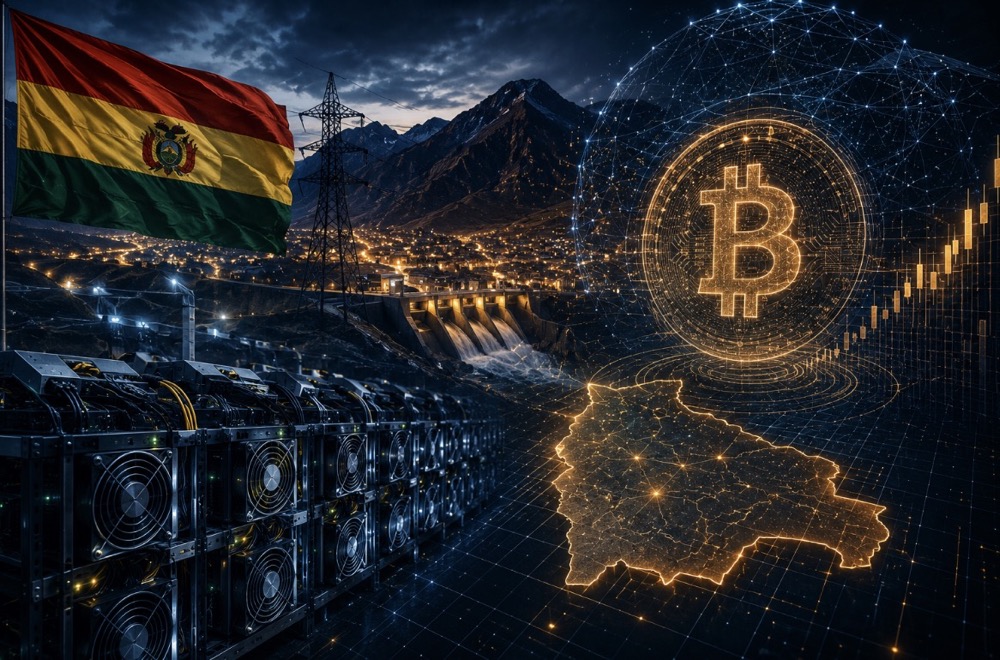
Photo by Hasharte Index
Original link: https://mp.weixin.qq.com/s/z ADE6vOcBVyx8BzdNM8zA
Statement: For the purpose of reproduction, readers can obtain more information by linking to the original language. If the author has any objection to the reproduction, please contact us and we will proceed with the modifications requested by the author. Reproduction for information-sharing purposes only does not constitute any investment proposal and does not represent the views and positions of Wu。
Core summary
- Bolivia's previous surge of 2,400 per cent was essentially a pure arbitrage based on government-subsidized gas(SUPREME PRICE 1.30/MMBTU COMPARED TO $8-12'S INTERNATIONAL MARKET PRICE) - AND THE FALL IN THE SECOND QUARTER OF 2026 INDICATES THAT THE MARKET HAS PRICED THE EXPIRATION OF THE SUBSIDY POLICY AHEAD OF SCHEDULE。
- The Italian Data Centre Group Alps is currently the only operator with a sustainable development logic:& nbsp; through the “U.S. dollar settlement, self-contained (Auto-consumption)” business model, they planned to move forward with a 127 MW power plant in a idle state of Cochabamba, thus completely circumventing Bolivia's current exchange rate crisis。
- Bolivia has a solid long-term energy asset, without a phased gas dividend& nbsp; - including the Zongo Plateau of 188 MW, Uyuni Highland Solar, and the Geothermal Resources of Laguna Colorado - the new government is actively opening doors to foreign capital。
- Bolivia’s real opportunity is perfect for replicating Paraguay’s path as the fourth largest mining country in the world:& nbsp; Structural Power Surplus + Government's Will to Advance the Legislative Framework + Entry of Top Institutional Capital. The first two conditions are now available in Bolivia, and Alps is working on the third。
preface & nbsp;
In Latin America, Bolivia ' s Bitcoin mining story is one of the most unknown and easily misinterpreted cases。
As of the beginning of 2026, in about 18 months, the country had managed to achieve an amazing leap from “near data available” to “over 2,400” in the global computing heat of Hasharte Index, one of the fastest growing mining markets in the world. By the second quarter of 2026, however, this momentum had begun to fall. The difference between explosive headline data and the subsequent strategic retreat reveals the true face and limitations of Bolivia ' s mining market。
BOLIVIA IS NOT PARAGUAY. IT DOES NOT HAVE LONG-TERM STRUCTURAL POWER AND WATER SURPLUSES (SUCH SURPLUSES CAN LOWER THE PRICE OF ELECTRICITY TO NEAR ZERO MARGINAL COSTS) THAT DEPEND ON LARGE, ALREADY DEPRECIATED HYDROPOWER PLANTS. BOLIVIA ' S BOTTOM LINE IS ITS GRID STRUCTURE: 70 PER CENT OF ITS ELECTRICITY DEPENDS ON NATURAL GAS, WHILE THE NATIONAL OIL COMPANY YPFB PROVIDES IT WITH HEAVY SUBSIDIZED PRICES OF UP TO US$ 1.30/MMBTU, WHILE THE INTERNATIONAL LIQUEFIED NATURAL GAS (LNG) MARKET HAS TRADED PRICES OF UP TO US$ 8-12/MMBTU. IT IS THIS HUGE PRICE GAP THAT HAS LED TO EXTREMELY LOW INDUSTRIAL ELECTRICITY PRICES, CREATED A WINDFALL SPACE FOR BITCOIN MINING AND WAS QUICKLY CAPTURED BY SENSITIVE OPERATORS。
However, this arbitrage is valid. Bolivia is on a two-to-five-year path to net gas-importing countries. Once this transformation is completed, the underlying economic base that underpinned the previous surge in power will rapidly deteriorate。
However, Bolivia ' s energy story did not end with the end of natural gas subsidies. The Italian Data Centre Group Alps and Qurubiqa are working together to set up a 127 MW gas power plant in the Cochabamba region, which is largely inactive as commercial operations have stalled as a result of Bolivia ' s foreign exchange crisis. In addition, Bolivia has an escalator level of hydropower, a highland solar resource comparable to the Atacama desert, and a new right-wing Government that is actively introducing foreign investment to alleviate the liquidity crisis of the dollar. This combination of “inactive industrial energy infrastructure” and “governments in desperate need of dollar inflows” is the underlying reason for the attraction of Alps and Qurubiqa to Cochabamba, which also makes Bolivia’s mining market more resilient than the 2,400 per cent surge in the previous report on the state of mining in Bitcoin in Latin America in 2026。
Network decomposition: analysis of Bolivia ' s energy matrix
The National Interconnected Power System (SIN) in Bolivia is managed by CNDC (National Load Control Commission) and supervised by AETN (the Superintendence of Electricity and Nuclear Technology). Power demand in the country has increased by 85 per cent since 2010, from 5,664 GWh to about 10,450 GWh in 2024. The state-owned electricity company ENDE Corporation is an absolute lead operator whose subsidiary, ENDE Andina, is responsible for 57% of the system's electricity input。
Bolivia ' s power generation structure and core constraints (2026)
1. Fire and power hubs
ENDE Andina's three main power stations, located in Cochabamba, Tarija and Santa Cruz, are the backbone of Bolivia's electricity grid. These plants use combined recycle gas technology to maximize the efficiency of generation per cubic metre of YPFB-subsidized gas sources by recycle residual heat for secondary vapour generation。
Termoelectrica Entre RiosCOCHABAMBA 526.77 MW
Termoelectrica del Sur| TARIJAYAVA 505.83 MW
Termoelectrica WarnesSANTA CRUZ VARNES 527.41 MW
NATURAL GAS IS SUPPLIED BY YPFB AT A PRICE OF ABOUT US$ 1.30/MMBTU UNDER THE DOMESTIC SUBSIDY PRICING MECHANISM. IN CONTRAST, INTERNATIONAL LNG PRICES FLUCTUATE OVER TIME BETWEEN $8 AND $12/MMBTU. THIS IS UP TO $6.70-10.70/MMBTU, WHICH IS BOTH THE SOURCE OF CHEAP INDUSTRIAL ELECTRICITY IN BOLIVIA AND THE STRUCTURAL VULNERABILITY THAT DETERMINES MEDIUM-TERM ENERGY PATTERNS。
2. Renewable energy blocks
Bolivia ' s renewable energy assets are of limited size but of high quality. COBEE ' s Zongo hydroelectric system (which has been in operation since the 1930s) consists of 10 Peyton water turbine power stations on the Zongo River, totalling 188 MW, and the ENDE Corani ' s Misicuni, 120 MW and San Jose-class hydropower (San Jose, 124 MW), which together constitute approximately 472 MW with marginal costs close to zero. These high-quality assets constitute the cornerstone of long-term, robust mining opportunities in Bolivia。
ENDE Guaracachi operates three wind farms in Santa Cruz, totalling 108 MW, with a fleet of 30 Vistas (3.6 MW) and 62.5 MW is deployed in the Uuni salt marsh, above 3,700 metres above sea level (the project requires the use of IP54 protection-grade equipment and specific reverser reduction designs due to the high altitude environment). In addition, Lake Laguna Colorado in Potosi has a 5MW Geothermal Pilot Power Station, with the long-term goal of expanding to 100 MW. Although these new energy assets are currently lacking in a co-ordinated and adequate grid integration to provide 24/7 power supply to industrial-grade mines, they will become the strongest long-term base once battery storage policies are kept up。
3. Structural crisis: natural gas depletion countdown Time
Bolivia ' s gas reserves are consumed at a much faster rate than the exploration of new gas fields. The country ' s fire power facilities consume about 1.5 billion cubic metres of natural gas annually. Bolivia is expected to convert into a net importer of natural gas within two to five years, and the Government is now even studying the use of existing infrastructure in Tarija for the reverse transmission of shale gas from Vaca Muerta, Argentina。
THE FINANCIAL ACCOUNTS BEHIND IT ARE VERY SERIOUS: IF MEASURED AT INTERNATIONAL MARKET IMPORT PRICES, THE ANNUAL ELECTRICITY COST OF OPERATING THE CURRENT FIRE ENGINE FLEET WOULD INCREASE BY ABOUT $4. ENDE, THE STATE-OWNED ELECTRICITY COMPANY, HAS A TOTAL ANNUAL PROFIT OF ABOUT $160 MILLION. THIS MEANS THAT THE SCALES WILL BE TILTED — EITHER INDUSTRIAL ELECTRICITY PRICES WILL RISE SHARPLY, NATIONAL FINANCES WILL BE FORCED TO SWALLOW UNSUSTAINABLE STRUCTURAL ENERGY DEFICITS OR POWER STRUCTURES WILL BE COMPLETELY DEGASIZED. FOR MINERS BASED ON SUBSIDIZED ELECTRICITY AND ELECTRICITY PRICES, THE DIVIDEND WINDOW IS CLOSING。
On the back of the surge, what happened
By the beginning of 2026, Bolivia had managed to achieve an explosive growth of 2,400 per cent on a year-on-year basis, which was essentially a rational choice for capital tracking to determine the difference in value. The miners discovered subsidized electricity at a rate of only 0.03-0.06/kWh and quickly deployed machines to try to complete the arbitrage before macro-conditions changed. And the fall in the second quarter of 2026 was the risk hedge that the market made ahead of schedule before the formal announcement of the subsidy policy。
This dynamic is common within industry. Over the past decade, Iran, Kazakhstan, and Kosovo have all performed exactly the same scripts: the low price of electricity generated by specific policy dividends has attracted large amounts of mining capital, followed by pressure on the government to adjust electricity prices or restrict access, leading to a similarly rapid influx of calculations. Most of the 2,400 per cent surge in operators that contributed to the wave were simply capturing short-term dividends rather than deep-farming infrastructure。
The key question in Bolivia ' s mining market is, therefore, is whether there are solid assets at the bottom that are resilient to the cycle, after the agitated arbitrage tide has receded. The answer depends entirely on whether private capital can take over the trapped industrial energy assets directly from a business model denominated in United States dollars before natural gas subsidies collapse。
Alps: Bolivia ' s first industrial bitcoin mining operation Business
One operator is uniquely independent in Bolivia ' s volatile calculations. The Italian mining and data centre enterprise Alps, created by CEO Francesco Buffa and CFO Francesca Failoni, did not come to Bolivia to blindly pursue subsidized gas. Alps chose to work with the indigenous company Qurubiqa to carry out a completely idle 127 MW gas thermal power plant in the Cochabamba region — a typical “embargoed asset” that had been rendered assetless by the Bolivian exchange rate crisis. By taking advantage of the pre-emergence of the market, Alps led the country's first large-scale “autonomous, off-site” mining project and paid electricity directly in United States dollars, which met the Government's urgent need for such assets。
This business logic is fundamentally different from other operators in the country that pursue short-term dividends。
Cochabamba Breakpoint: Digging bitcoin to break the exchange rate
Alps has locked this 127 MW heat plant into a structural paradox: The plant is required to pay in United States dollars for the purchase of natural gas raw materials, but when it sells electricity to the Bolivian national grid, it can only collect its own boliviano at the official rate of 7:1. However, the current private real market exchange rate has fallen to 12-13:1. Under this huge exchange-rate distortion, the plant is running at a loss. Thus, the power plant shut-down was not a technical failure, but rather a monetary system in Bolivia that deprived it of its economic legitimacy。
Alps introduced the Auto-Consumption model, which completely solved this knot. By direct inputting electricity from the plant into the Bitcoin mine, Alps was able to pay hard currency dollars directly to the plant at an agreed price, thus providing the plant operator with valuable stable foreign exchange. For the Government of Bolivia, which urgently needs a dollar inflow to safeguard its foreign exchange reserves, this has led to an industrial user that can stabilize the introduction of foreign exchange and allow idle assets to re-create economic benefits. The parties completely bypassed the distorted Boliviano exchange rate。
“..If Bolivia were to learn from other markets and reject speculative small miners, it would have a huge chance of breaking the rules. The core dividend here is not natural gas subsidies, but rather that we can effectively help Bolivia address its core economic distress through a win-win business model. — Francesco Buffa, Alps CEO
ENERGY LANDING: FROM 30 MW TO 127 MW
Alps ' first objective was to activate the 30MW capacity at the Cochabamba site, which was moved directly from their existing mines in Paraguay. This pragmatic decision addresses two difficulties: on the one hand, the reduction of idle capital in Paraguay at a time of tight market regulations and increased competition, and, on the other hand, the direct injection of mature hardware assets into Bolivia without the need to relive the complex process of clearing new equipment。
Their scalding road map is ambitious: Alps plans to increase its capacity to 45 MW by 2026, which will allow the single turbine unit at Cochabamba power plant to operate at full capacity. Its ultimate goal is to swallow all 127 MW production capacity, by which time Alps will become Bolivia's undisputed number one mining giant and one of the largest mining sites in South America (with the exception of Paraguay)。
In addition, two new sites are being evaluated: one in the plateau area near La Paz and the other near the Argentine border, both of which are expected to have access to different energy structures and logistics corridors。
Why is Alps an industry “pre-emptive” rather than an ordinary “early speculator”
In the mining market, there is a wide gap between the “First Mover” and the “Early Entransant”. Speculators only earn initial arbitrage spreads, leaving the environment as soon as it changes, while pre-emptiveists work to build infrastructure, rationalize business relations and exploit the regulatory environment, thus sinking into a permanent core barrier。
Alps can be defined as Bolivia's pioneer for three reasons: first, its “self-in-situ” model for industrial fire plants, which is fundamentally different from those that have direct access to the subsidized electricity prices of the ENDE grid, which survives a subsequent collapse of gas subsidies by negotiating directly with a single power plant rather than relying on a large national grid; and, second, its own partner, through the Parak entity, which has established a direct channel of dialogue with the new government, even to reach the Bolivian Ministry of Economy, with a very high degree of voice in regulatory rule-making; and, third, the company has classified Bolivia as the leading growth market for its global operations, rather than the secondary alternative, with its global core capital and high level of energy leaning towards Bolivia in 2026。
Logistics challenges: double pressures on customs and inland transport
Operating in Bolivia is by no means easy, and Alps frankly says there are many frictions throughout the process. As a landlocked country, Bolivia ' s ASIC mine transport must rely on complex two-module complex logistics: goods first arrive by sea at the port of the Pacific/Atlantic in Argentina or Brazil, then at the port of Genefer (Puerto Jennefer) through the Paraguay-Baranane river route, and then transit long distances by land truck to sites such as Cochabamba. It is worth mentioning that 30 Vistas 3.6 MW giant wind turbines, previously used at the Santa Cruz wind station, were also delivered through this route, which proves that the logistics chain is fully capable of carrying large industrial goods across the border。
IN THE AREA OF CUSTOMS POLICY, THE NEW BOLIVIAN GOVERNMENT HAS ELIMINATED CUSTOMS DUTIES ON THE IMPORT OF ASIC MINES, WHICH IS A MAJOR POLICY ADVANTAGE. I DON'T KNOWA 15 PER CENT VALUE ADDED TAX (VAT) STILL EXISTS AND CANNOT BE OFFSET。 This 15% hard cost cannot be optimized in the face of large-scale mine containers. Alps highlighted the cumbersome clearance and clearance cycles of customs as the main point of pain in current operations. For multinational miners who are accustomed to a simple importing environment, Bolivian customs bureaucracy is a very high hidden threshold, which can only be tempered by local experience and deep ties and cannot be fully circumvented。
Market patterns: Who else digs in Bolivia
With the exception of Alps, Bolivia currently has mining maps consisting mainly of small- and medium-sized dispersed households. Most of them have been influxed during the natural gas subsidy window, and the risk resistance of these occupants is extremely fragile as the next price adjustment for electricity. The previous increase of +2,400 per cent on a year-on-year basis reflects the tactics of large numbers of small and medium-sized aircraft that capture short-term spreads, rather than institutional players who build permanent infrastructure。
The Paraguayan market experienced a wave of shuffles between 2022 and 2024 (when institutional players were forcibly separated from the speculative diaspora by significantly raising the electricity price threshold and introducing a system of guarantees), a period that had not yet occurred in Bolivia, but it was bound to come. Once Bolivia's fire and electricity prices begin to return to real market costs, those miners who do not have direct access to idle “confined assets” or long-term, high-quality new energy contracts will be able to repeat what happened in Paraguay in the middle of the year. What can be retained at that time can only be, as Alps did, early access to the source of electricity, locking in the dollar into the self-service agreement, and immunizing the country's overall price volatility。
The real opportunity to cross the cycle: new energy assets beyond fire and electricity
For strategic miners willing to take a long-term perspective, Bolivia has very competitive low-cost new energy assets. The COBEE ' s Zongo ladder hydropower system, which has been in operation since the 1930s, provides 188 MW of marginal cost almost zero clean electricity. The long-term power purchase agreement (PPA) with COBEE is one of the most structurally sound energy options available in South America as a whole, with the exception of Paraguay。
THE PHOTOVOLTAIC RESOURCES OF THE UYUNI SALT MARSH, DESPITE THE TECHNICAL CHALLENGES OF HIGHLAND ENGINEERING (E.G. THE NEED TO PROCURE IP54 PROTECTION-GRADE EQUIPMENT, THE STRICT 90-100 PER CENT REDUCTION LIMIT FOR RETROVERTS DUE TO AIR THINNESS, AND SPECIAL HEAT-DISPERSION MANAGEMENT), ARE EXTREMELY FAVOURABLE. WITH THE LANDING OF FUTURE BATTERY STORAGE POLICIES AND THE INTEGRATION OF GRIDS INTO LARGE-CAPACITY RESERVES, THE PV WILL HAVE THE CAPACITY TO SUPPORT THE CONTINUOUS AND STABLE OPERATION OF MINES. THE GEOTHERMAL PILOT PROJECT IN LAKE COLORADO (CURRENTLY 5MW, FORWARD PLANNING 100MW) REPRESENTS THE COUNTRY ' S MOST RELIABLE LONG-TERM CAPITAL ASSETS: 24/7 ROUND-THE-CLOCK, ZERO-FUEL PRICE VOLATILITY RISK, MAKING PERFECT USE OF BOLIVIA ' S UNIQUE VOLCANIC GEOLOGICAL DIVIDEND。
Policy direction: full open window for the new Government
The transformation of Bolivian politics to a right-wing Government has fundamentally reshaped the rules of private capital games in the energy sector. The previous Government introduced a strong State monopoly on new energy and foreign investment and strongly excluded market-based pricing. The new management sees the introduction of foreign investment as the core player in resolving the foreign-exchange liquidity crisis, and has demonstrated a great deal of action: the abolition of the ASI Corporation tax, the establishment of an on-site legal framework that Alps is using, and the initiation of direct dialogue with major overseas miners。
Alps ' partners in Bolivia served as key cabinet ministers, a highly representative event. Bolivia has not yet established a mature legal framework for industrial-grade bitcoin mining by creating a special CGIE industrial electricity price category, as in Paraguay. Which means..The rules of the game are in the real time phase of developmentI don't know. Proponents who are already operating within the market and who can engage directly with government counterparts will be deeply involved and shape future regulatory boundaries, an advantage beyond their reach。
As Francesco has made clear, the major risk at the moment is that Bolivia, if it attracts too many speculative, irregular and poor-quality miners, can easily provoke a backlash in political opinion, forcing the Government, like Paraguay, to sacrifice punitive electricity prices and stringent bond thresholds. Thus, in addition to its own commercial interests, Alps ' current long-term contribution to Bolivia ' s mining industry is to demonstrate to the Government that it is a model of a formal army that should be protected and encouraged by decrees and policies that can introduce real-dollar investments, employ indigenous workers and cultivate industrial assets。
Concluding remarks
Bolivia ' s 2,400 per cent calculus is a short-sighted arbitrage, but Bolivia ' s long-term mining dividend is by no means an aeroplane。
The country has industrial energy assets trapped by system distortions, a government desperate for dollar inflows, a regulatory window that is actively open to foreign investment, and at least a head player with the right business model (Alps) to enter at the right time。
The structural risks here cannot be ignored: the depletion of natural gas is an ongoing reality; the exchange rate distortions that led to the shutdown of the Cochabamba power plant reflect deep-seated fiscal ills that are difficult to overcome in the short term; the friction of customs clearance is a mandatory course of daily operations; and the lack of clear regulations for long-term industrial mining means that rules for the deployment of hundreds of millions of dollars of assets are still in the process。
However, Alps’ pedals are real and inspiring: a 127 MW thermal power plant that cannot be commercialized under the Bolivian currency-distorted system, rocking through a bitcoin mine, has become a superpower engine that can pay off the dollar for the owner of the plant, create hard currency foreign exchange for the country, and provide a fully immune national gas subsidy to the risk of a landslide. This bottom-up logic, unlike the speculative mentality that had previously driven 2,400 bahts, is the only way to sink into a truly solid base of arithmetic。
It is no accident that Paraguay could become the fourth largest Bitcoin miner in the world. It is the result of a structural power surplus, the Government's determination to move forward with industrial passivation legislation and the resonance of formal institutional capital at the same historical node. Today, Bolivia holds the first two conditions in its hands. And the third condition, which is being continually constructed by Alps, is moving from ideal to reality。
