
Tether, both sides: USAT's legal bilocation, and USDT's grey empire

Author:Peggy, it's night in the woodsBlack Beats
The most stable asset in the encrypted market is a dollar without an identity card。
OVER THE PAST DECADE, USDT HAS TURNED ITSELF INTO THE WORLD'S "FACTUAL DOLLAR" WITH $170 BILLION IN ASSETS AND UBIQUITOUS LIQUIDITY. BUT THE MORE SUCCESSFUL IT IS, THE MORE ACUTE THE ANXIETY OF IDENTITY: THE DOLLAR WITHOUT UNITED STATES ENDORSEMENT REMAINS A LOOPHOLE。
Over the years, Circe applied for a trust bank license, Paxos built a global clearing network, and Visa and Mastercard also added to the stable currency settlement. In contrast, Tether has been stuck in the narrative of the "Fshore Shadow Empire"。
In September 2025, the USDT parent company Tether finally came up with a new answer: USAT. This was the first time that it had tried to fill in that long-lost identity card。
Meanwhile, Tether appointed Bo Hines, a 29-year-old former White House consultant, as CEO. Ten years ago, he took over as a star of the Yale football team; today he is pushed to the most sensitive battleground in global financial markets, becoming Tether’s “legitimate front” in the United States。
Hines is not airborne. In January 2025, the White House of the United States established the Presidential Digital Assets Advisory Board, whose name is, of course, on the Executive List. He was only 28 years old and was involved in the promotion of GENIUS Act legislation, which laid the foundation for a stable currency regulatory framework in the United States. A few months later, he resigned from the White House and joined the world's largest stabilizer, Tether, to take over the United States market's heavy responsibility of "opening the land."。
For Tether, it was a strategic test that was embedded in the political and regulatory system of the United States. The accession of Hines is both the leverage of Tether in Washington and the first step in its initiative to correct the image of the "shadow empire"。
But this is only the beginning. The real opportunity for USAT to get rid of the "offshore dollar clone" is the boxing of compliance that it has designed behind it: from the introduction of local high-level political and economic resources in the United States to the institutional arrangement to connect with traditional financial markets, Tether tried to write himself into the logic of US regulatory narratives and capital markets with three cards。
The release of USAT is by no means just an expansion of the stable currency map. It means that Tether is starting to build a "legitimate dichotomy" for himself: no longer content with the role of a global financial channel, but rather to re-establish his identity as part of the United States financial order。
THE BIRTH OF A LEGAL DOUBLE, THREE CARDS OF USAT
In the past few years, the currency of stability is becoming the most delicate asset in financial history. It is neither a complete dollar nor a completely encrypted currency, but it has pervaded every corner of the globe over the past five years. Tether, which is impacting a $500 billion valuation, built a huge “shadow dollar” system with USDT: in Latin America, it is a lifeline for workers' remittances; in Africa, it replaces local inflationary currencies; and in South-East Asia, it serves as a clearing tool for cross-border electricians。
However, as the largest supplier of the system, Tether has been swimming through the regulatory gap. Fuzzy audits, complex offshore structures, money-laundering and the shadow of sanctions have made them labeled as "shadow empires". The existence of Tether is a paradox for United States regulation: on the one hand, it drives the globalization of the dollar; on the other hand, it is seen as a potential systemic risk. One of the most widely circulated "digital dollars" in the world is the absence of American legal identity cards。
This wrong identity finally forced Tether to hand over a new solution. In September 2025, it launched USAT, dedicated to the United States market. It's not a simple word, it's a three-card experiment: people, money, systems. Tether's gonna use these three steps to bet that a shadow dollar can be accepted by the US narrative。
First card: People
USAT's first card was a political endorsement of the man, Bo Hines。
Bo Hines, 29 years old. In college, he was the first of Yale football teams. An injury brought him to an early conclusion of his sportsman ' s career and then into politics。
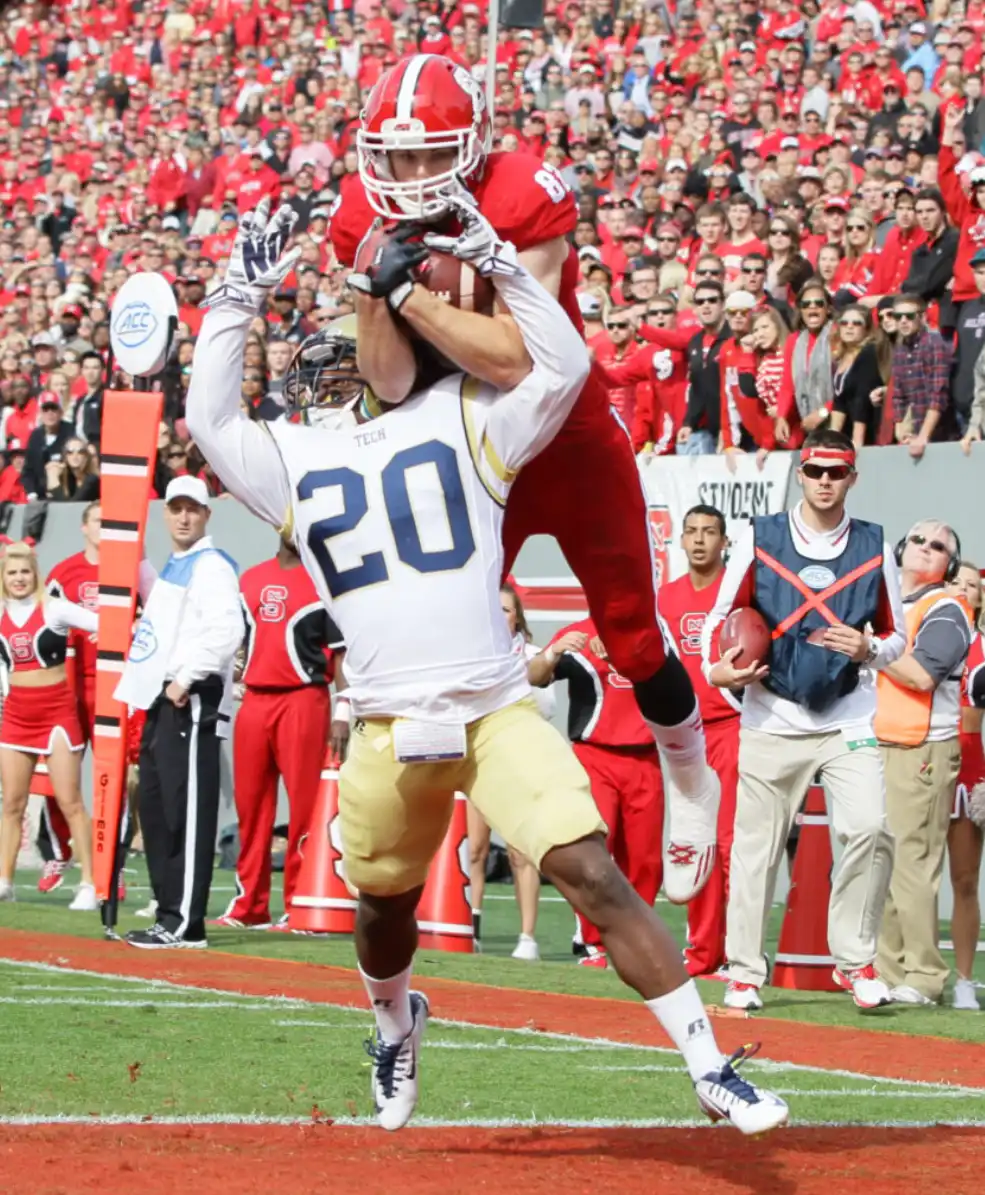
Bo Hines (Red) plays football at the Yellow Daily News
In 2020, he was unsuccessfully elected to the National Assembly as a Republican candidate. But after that, he entered the policy circle. Since 2023, Hines served on the White House Digital Assets Advisory Committee and was later promoted to Executive Director. According to publicly available information, during his tenure he participated in the drafting of the GENIUS Act, which was the birthplace of the first United States draft legislation on stable currency regulation and served as a reference for subsequent proposals。
In August 2025, Hines left the White House. On 19 August, Tether announced his appointment: Hines will join the company as a strategic consultant responsible for compliance and policy communication in the United States market. In the same bulletin, Tether also indicated that a stable United States-controlled currency, USAT, would be introduced in the coming months。

Bo Hines attended the event and gave a presentation from CCN
Less than a month later, in September 2025, Tether announced the launch of USAT and formally appointed Hines as the first CEO of USAT. This means that he will lead the business push and regulatory interface of the product in the United States market。
Public information indicates that this was the first time that Tether introduced a senior executive from a White House background into management. Previously, Tether ' s management was mostly in the financial or technical context, lacking direct United States policy experience。
The addition of Hines has tied USAT to the United States regulatory environment from the outset。
Card 2: Money
The second card is to give Tether the money to endorse a set of credits. In the past, the composition of Tether ' s reserves has been controversial. Early audit documents indicated that the USDT reserve contained a large number of commercial notes, short-term loans and a combination of assets that were difficult to trace. The lack of transparency of these assets has also become the main focus of external questioning of Tether: is it really "one dollar"
In the design of USAT, Tether tried to dispel this suspicion. According to the September 2025 bulletin, the reserve custodian of USAT is Cantor Fitzgerald. Founded in 1945, this is one of the first-class dealers in the United States Treasury Department, who has long been involved in the sale and distribution of United States debt and has a solid credit position on Wall Street。
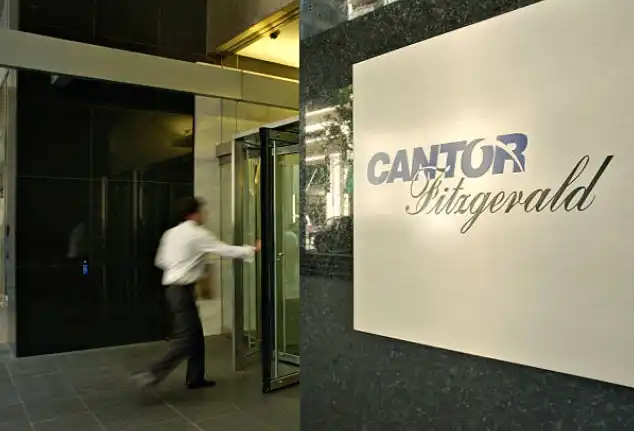
Cantor Fitzgerald New York office entry source: Getty Images
According to Tether's plan, Cantor Fitzgerald will ensure that USAT's reserve assets are dominated by United States Treasury bonds. This means that the value support of USAT no longer depends on complex offshore asset structures, but is directly anchored in the liquidity and credit system of the United States Treasury debt market。
This arrangement has led Tether to establish deeper ties at the asset level with the US financial system: from a "shadow dollar" supplier to a "distributor in the United States debt chain". From public information, this is also the first time that Tether has explicitly introduced Wall Street traders as core partners in its products。
Number three: System
USAT distribution and compliance will be implemented by the Angelage Digital Bank. This was the first digital asset bank in the United States to obtain a federal trust licence and a small number of subjects of compliance that could be subject to direct federal control. Unlike UNSDT, which relies on offshore structures, the USAT reserve and audit process will be incorporated into the United States institutional framework. This not only meets the regulatory requirements of the GENIUS Act for the issuance of stabilization currency, but also means that Tether has completed an "identity register" at the institutional level。
Geographic selection is equally interesting. Tether had the USAT headquarters in Charlotte, North Carolina, the second largest financial centre in the United States, bringing together traditional financial institutions such as American banks. Charlotte, compared to New York and Washington, has both a strong financial climate and a relative distance from the spotlight of the regulatory centre. This detail shows that Tether is not content with changes at the design level of the system, but is trying to “real land” in real practice。

Source of the American Banking Centre at Charlotte: SkyscraperCenter
USAT, therefore, is not only an additional stable currency, but rather a formal handshake between Tether and the United States market. The political Bo Hines, the financial Cantor, and the institutional Anchorage form a complete package of compliance punches that push Tether from a "shadow dollar" supplier to a new identity as an "institutionalized participant."。
But how far this transition can go remains a pending issue. Tether ' s background has not changed: its business path remains globalized, its structure remains offshore and its financial flows remain complex. USAT may have brought an American identity card, but it is difficult to rewrite the market’s basic perception of Tether immediately。
The launch of USAT meant that Tether extended the move to issue a stabilization currency into an identity reconstruction: shadow dollars began to ring the door on Wall Street。
Stable currency market patterns wash cards
In the U.S. market, Tether's new move points straight to the Circle with its distribution USDC。
OVER THE PAST FEW YEARS, USDC HAS BEEN REPRESENTATIVE OF THE UNITED STATES COMPLIANCE MARKET. HOWEVER, THE VOLUME AND CIRCULATION OF USDC IS MUCH SMALLER THAN THAT OF USDT, WITH A MARKET VALUE OF ABOUT $70 BILLION AS OF SEPTEMBER 2025, OR 25-26 PER CENT OF THE STABLE CURRENCY MARKET。
Although only one third of USDT's size, USDC has built strong trust in American politics and Wall Street through exclusive cooperation with Coinbase and endorsements from agencies like BlackRock。
Circe even bought back the shares of the joint venture Center in 2024 and became the sole issuer of USDC to further strengthen control. For a long time, the implicit narrative of USDC is US compliance = security, offshore market = risk。
But it's the same path that gives Tether room for pressure。
The CEO of Tether Paolo Ardoino has repeatedly stressed that the significance of USAT is to break the monopoly that USDC may have in the United States market。
“WITHOUT USAT, A STABLE CURRENCY MARKET IN THE UNITED STATES COULD BE LOCKED IN A FEW INSTITUTIONS. IN OTHER WORDS, THE STRATEGIC MISSION OF USAT IS NOT JUST TO UPGRADE THE PRODUCT, BUT ALSO TO CONFRONT THE USDC MARKET。
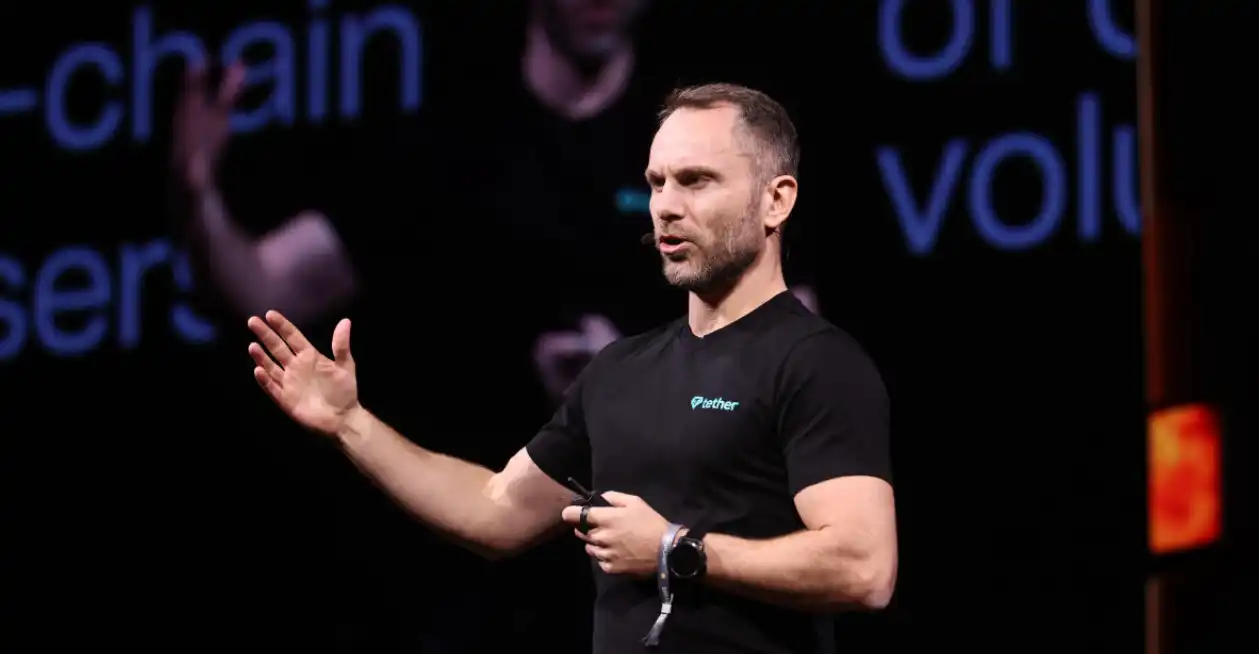
The CEO of Tether, Paolo Ardoino, spoke at the 2025 Bitcoin Congress in Las Vegas
Tether's launch of USAT is an attempt to fill the compliance gap with its huge volume. The significance of USAT is that, for the first time, Tether would pose a direct threat to the USDC moat by combining specific quantities and compliance。
If Circe is a top-down compliance school on American soil, Tether is building a "dual narrative" through USAT: maintaining a huge network of "grey empires" around the globe while shaping a "compulsory bipartite" in the US market。
The future stable currency market is likely to evolve into a kind of " The two-track pattern: USDT continues to maintain a strong base of use globally, especially in Latin America, Africa and South-East Asia, while USAT focuses on local and institutional clients in the United States. Such a structure would both stabilize Tether ' s advantage in emerging markets and attract more institutional funding at the compliance level, giving new impetus to expansion across the tracks。
For Tether, it is not just the issuance of a new currency or the promotion of a listing, but a transformation of identity. Once it is able to mark the capital market in the United States, it will be able to move away from the shadow empire and enter the global financial arena as a "dollar company."。
However, Tether's attack is bound to elicit a reaction from his opponent. Circle is likely to accelerate its cooperation with regulators and institutions to further stabilize the USDC compliance river, while licensees such as Paxos may take the opportunity to expand their distribution in sub-markets such as payments, cross-border settlements, etc。
The traditional financial giants have also shown interest in exploring ways to embed stable currencies in existing systems, from Visa, Mastercard to Wall Street. It is foreseeable that the launch of USAT will not only be the starting point for Tether ' s identity transformation, but may also be the trigger for a new round of stable currency track competition。
End
The launch of USAT has created unprecedented opportunities for Tether and has been accompanied by new risk tests. Will the market believe that a questionable "shadow empire" can really cut itself with a compliance split
Historical experience shows that the "transmission" of grey power is not without precedent。
At the end of the nineteenth century, there was widespread distrust of financial capital in American society, and the Morgan family was even called "financial oligarchy". Strictly speaking, Morgan did not break the law, but in the absence of modern regulation, his enormous capital and influence were often seen as “abducting the public interest”, thus becoming a “grey force” at the time。
However, banker John Pierponte Morgan changed his image in real terms: while helping the Government issue its national debt, resolving the fiscal crisis and restructuring the debt of railway companies. For a long time, it went from being a capital oligopoly to being a financial agent of the State。
Tether’s idea of buying a dollar debt today and pushing for a stable currency is a little like Morgan’s, in exchange for legal status by solving problems for the country。
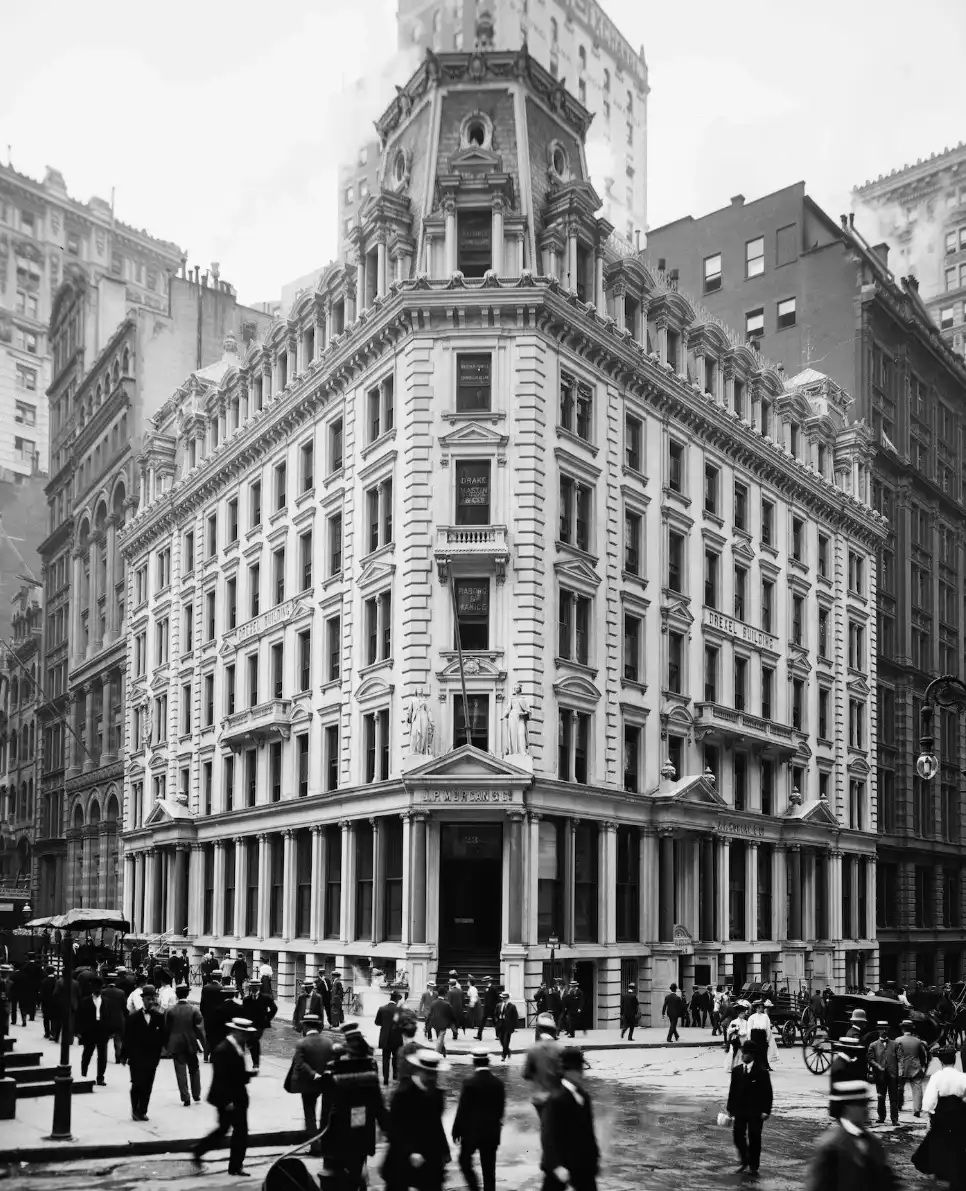
The Morgan family's old address on Wall Street: NYC Urbanism
However, not all "grey giants" have succeeded in this transformation。
As one of the world's largest encrypted trading platforms, currency was almost completely "off-shore" at an early stage, moving outside of regulation. In recent years, it has begun to apply for licences in markets such as France and Abu Dhabi, attempting to move towards compliance and attempting to enter the United States market. In the United States, however, it experienced the most severe regulatory resistance and eventually had to scale down and tighten its operations. This precedent shows that the grey giant wants to "transform" and that regulation is not easy to let go。
This means that the future of Tether is still full of uncertainty. Transparency in reserves, compliance enforcement and interaction with regulatory bodies will be indicators that will continue to be tested in the coming years。
At the same time, the acceleration of competition is already emerging。
Circle is applying for a US National Trust Bank license to strengthen its compliance capacity and further consolidate bindings with regulatory and institutional investors; Paxos is revealing a significant increase in its demand for a stable currency infrastructure, and, with MasterCard, has launched a “global dollar network” in an attempt to expand the use of the dollar-stable currency; and Visa is expanding its support for stable currency settlements to facilitate the embedding of such products into existing payment systems. At the same time, Plasma is trying to embed a stable currency directly into the bottom of the global payment network with chain clearing and cross-border payments as entry points。
The stable currency market is entering a more intense and institutionalized phase of competition from its early brutal growth。
USAT, let Tether try to present his identity card in Washington for the first time. The real test is not on the chain, but on the table: who can leave a name on the regulatory agenda is entitled to define the next generation of digital dollars. Whether the shadow empire can go into the sun will be the biggest preoccupation of encrypted finance。
RECOMMENDED READING:
AFTER THE PREMIUM HAS BEEN RESET, MTR IS COMING IN
Delphi Digital: What is the future of encrypted money
Pantera Capital Partner: Status and Future of the Internet Capital Market
Three-year valuation of $2 billion. How does Redotpay play
a16z depth longitude: how to understand correctly the threat of quantum calculations to block chains
