
The hidden financial war? Iran collects tolls for the Strait in stable currency
This is the first time that a sovereign State has incorporated a stabilization currency into its strategic payment infrastructure。
Original title: “Invisible financial war? Iran's Stable Currency for Channel Tolls
Original by Mah, Foresight News
ON 2 APRIL, THE DEPUTY MINISTER FOR FOREIGN AFFAIRS OF IRAN, GARIB ABADI, PUBLICLY CONFIRMED AT THE REGULAR PRESS CONFERENCE IN TEHRAN THAT ALL SUPER-LARGE TANKERS PASSING THROUGH THE STRAIT OF HORMUZ WERE REQUIRED TO PAY TOLLS TO THE ISLAMIC REVOLUTIONARY GUARD CORPS (IRGC) AND EXPLICITLY EXCLUDED THE UNITED STATES DOLLAR SETTLEMENT CHANNELS. THIS STATEMENT FORMALLY INSTITUTIONALIZED THE RUMOURS PREVIOUSLY TRANSMITTED TO THE SHIPPING COMMUNITY -Instead of being content with the traditional tools of geopolitical games, Iran has transformed the control of the straits into a financial experiment against dollar hegemony。
Fee mechanisms land faster than market expectations。
By reference to internal IRGC naval documents, Bloomberg indicated that the system had completed its technical deployment at the end of March。There are only two ways in which Iran has chosen to receive tolls this time: by wire transfer or through a decentrized network, the dollar is fixed。
The Iranian Customs Service has set up a dedicated encrypted currency exchange window on Gshm to ensure that funds are quickly converted to riyals or transferred to overseas accounts after recording。
This arrangement is well designed。
TRADITIONAL INTERNATIONAL SHIPPING SETTLEMENTS RELY ON THE SWIFT NETWORK AND CORRESPONDENT BANK SYSTEM, AND ANY TRANSACTIONS INVOLVING IRAN TRIGGER SECONDARY SANCTIONS BY THE UNITED STATES TREASURY DEPARTMENT. A COMBINATION OF THE RMB CROSS-BORDER PAYMENT SYSTEM AND THE PUBLIC-CHAIN NETWORK HAS CREATED A PARALLEL CHANNEL BYPASSING THE UNITED STATES DOLLAR SURVEILLANCE。
According to the London Shipping Broker, Braemar, at least two tankers flying an unknown flag of convenience had completed the payment and safe passage through the strait at the end of March. This mechanism, in addition to the Act on the Regulation of Access to the Straits of Hormuz, adopted by the National Security Council of the Iranian Parliament on 30 March, provides endorsement at the domestic legal level。
It is worth mentioning that Iran has also priced differentiated handling fees for class vessels based on geopolitical relevance。
Bloomberg quotes from the source about the oil bill in the Straits of Hormuz, which started at $0.5 per barrelCountries divided into five tranches depending on the relationship。
The first is an ally special, China, Russia, US$ 0.5-0.7 per barrel, with a dedicated green corridor, which allows free navigation on a regular basis。
The second tranche consists of friendly partners, India, Pakistan and others, with US$ 0.8-0.9 per barrel。
The third tranche, neutral States, African States, South-East Asia and Latin America, is $1 per barrel, requiring declaration and clearance without hostile assets。
The fourth is a high-risk country, with close ties to the United States but without hostile action towards Iran, such as Japan and Korea, and a large number of EU countries, with $1.2-1.5 per barrel, Iran with full surveillance and a long queue for vetting。
The fifth is the United States of America, Israel and its allies。
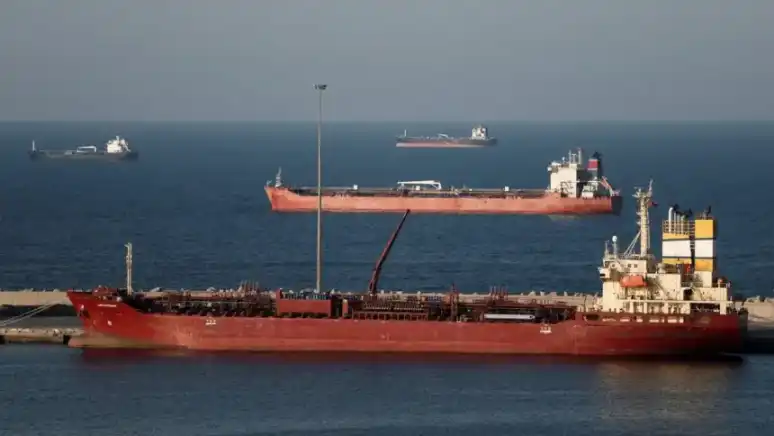
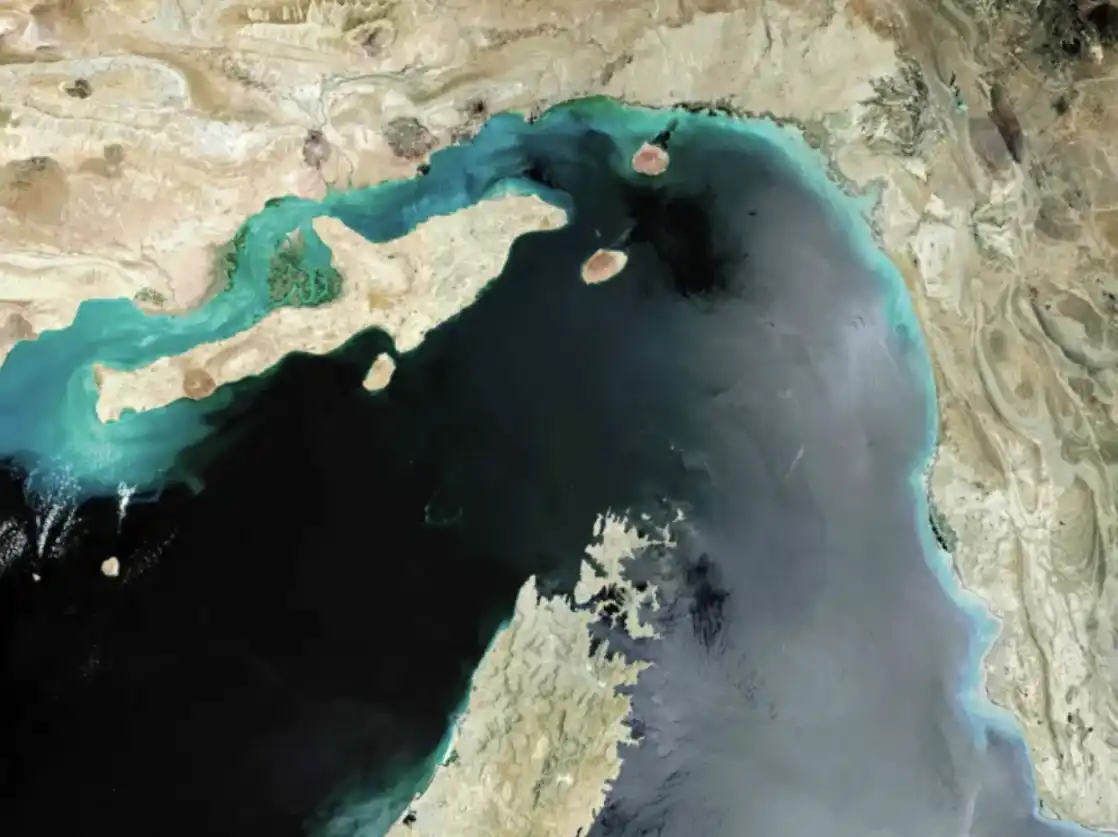
Once the super-large tankers have paid for the journey, the Iranian Islamic Revolutionary Guard Corps will issue licence codes and route instructions. Ships are required to fly the flag of a State that has negotiated passage agreements and, in some cases, to change their official place of registration to that State. When ships approach the Strait of Hormuz, their passwords are broadcast through VHF radio, followed by a patrol boat to greet them and escort them through the Strait, in close proximity to the coastline, between a group of islands that have been referred to by insiders as “Iran's toll stations”。
This is the first time that a sovereign State has incorporated a stabilization currency into its strategic payment infrastructure。
Unlike El Salvador ' s previous symbolic initiative to decorate bitcoin, Iran ' s choice had a mandatory commercial dimension. The Straits carry 21 per cent of the world's crude oil by sea, and there are dozens of ships passing by daily。
If the mechanism continues to function, it is expected that more than $20 billion of stable currency will pass through Iran-controlled digital wallets each year, forming a grey pool of mobility protected by sovereign forces。
THE DEEPER SHOCK WAS THE RIPPLE EFFECT OF SHIPPING INSURANCE AND TRADE FINANCE. THE INTERNATIONAL GROUP OF P & I CLUBS (IG) HAS ISSUED AN INTERNAL WARNING THAT THE PAYMENT OF FEES TO IRGC MAY TRIGGER THE RISK OF EU-UNITED KINGDOM SANCTIONS COMPLIANCE, LEADING TO THE EXPIRATION OF THE POLICY。This forced shipowners to make a cruel trade-off between the economics of shipping and legal risks:The 15-day flight and tens of thousands of dollars in fuel costs are increased by bypassing the Cape of Good Hope, while paying tolls in encrypted currency is at risk of freezing accounts. Some large commodity traders have begun to try to re-engineer the route through Pakistani intermediaries, and Islamabad has recently announced that 20 international tankers will be allowed to fly under the Palestinian flag, essentially providing an offshore channel for the Iranian system。
Iran is not the only country to do so. Russia has previously announced a similar fee policy for the northern channel and has publicly considered accepting encrypted currency settlements。This digital finance logic of “nodalizing” the geographical hub is reshaping the payment infrastructure of global energy trade。
WHEN MERCHANT SHIPS COMPLETE THE USDT SETTLEMENT THROUGH A CHAIN AGREEMENT AT THE GASHM ANCHORAGE, IT IS NOT ONLY A PASS-THROUGH PAYMENT BUT ALSO A SYSTEMATIC OFFLOADING OF THE RESIDUAL ARCHITECTURE OF THE BRETTON WOODS SYSTEM。
THE VULNERABILITY OF THIS EXPERIMENT IS EQUALLY EVIDENT. AS THE USDT/USDC REMAINS ESSENTIALLY ANCHORED IN THE UNITED STATES DOLLAR AND IS BEING TRACKED BY OFAC, THE RISK POINT IS HOW THE SHADOWS ESTABLISHED BY THE ISLAMIC REVOLUTIONARY GUARD CORPS (IRGC) CAN BE WIDELY "DECENTRALIZED" INTO PHYSICAL ASSETS OR LEGAL CURRENCY。However, as long as Iran maintains its geographical monopoly over the Strait of Hormuz, this financial war, with the use of encrypted currency as a medium, will continue to reformulate the global trade rulebook。
