
Bian, Live AMA, Depth Review: Polaris is building the Web3 ultimate safety base

The encrypted market was volatile, the BTC and ETH were at critical support levels, and the ETF was released eight days in a row, with up to US$ 18.8 billion leaving. Under extreme conditions, the total net derivatives burst in billions, leaving large amounts of money. And every year, more than $100 billion is evaporated because of the contract warehouse alone, and the losses caused by the DeFi security incident are as high as $780 million, and every cold figure behind it is zero real personal wealth。
Behind these extreme liquidity games is a core contradiction that has long been selectively blinded by the industry but is extremely dangerous: The total market value of the encrypted market is now close to $2.5 trillion, and the total warehouse volume of the DeFi agreement has remained stable at a level of $100 billion. However, the security coverage of encrypted assets remains below 5 per cent。
IF YOU LOOK AT TRADITIONAL FINANCE, THE INSURANCE PENETRATION RATE IS ON AVERAGE BETWEEN 60% AND 80%. THIS MEANS THAT EVEN WITH CONSERVATIVE ESTIMATES THAT ONLY HALF OF THE CHAIN HAS A HEDGE DEMAND FOR ASSETS, THERE IS STILL AN ALMOST COMPLETE VOID IN THE VAST UNIVERSE OF ENCRYPTED WORLD MARKETS (TAM) OF MORE THAN $1.5 TRILLION。
Why has there never been a standardized safeguard programme in a high-risk market that has lost hundreds of billions of dollars this year? On the evening of 27 May, an in-depth dialogue focused on asset security in the chain of focus arrived at Binance Live. The event was hosted by Moonlight, the top anchor of Web3, and invited Polaris Global Operating Growth Officer Ray to a live booth with the well-known European encryption of KOL Alex and Jason. The core issues of technology accumulation, bottom actuarial logic and the future path of Web3 insurance are discussed in depth。
First re-analysis: the extreme mismatch between rigid demand and structural supply failure
In the slow development of the security track, the industry is often caught in the false sense that encryption users are born with a very high risk preference and are “bloody traders” and therefore do not have the need for risk avoidance and hedge. In AMA, Polaris' operator Ray refuted the stereotype that demand was not only real, but extremely rigid and long-standing. The real bottlenecks are the structural failures at the supply end。
In the face of a huge market vacuum, the traditional financial giants are not undetected but remain helpless. Why can't traditional insurance make chain assets? The answer is not a question of will, but of capacity. In the black-and-white clause of the global mainstream insurance company, virtual assets are explicitly excluded from coverage. There are five natural obstacles behind this:
first, the bottom-up compliance rule that does not cover virtual assets limits access to traditional institutions. second, the traditional actuarial system was unable to price in real time and its actuarial tables were significantly behind the millisecond changes in chain data. thirdly, the conventional process inertia, which is highly dependent on artificial safeguards, simply fails to cope with a secure market that operates 24 hours a day, 7x. in addition, there is a natural contradiction between the centralization of traditional finance and the logic of the decentralization of encrypted assets. finally, the high cost of cross-border compliance that attempts to cover anonymous users worldwide is sufficient to deter large traditional insurance institutions。
This is not an optimisation that can be addressed by patches, but an overall disconnect between the bottom structures. Traditional actuarial systems rely heavily on large-number laws and data from very long cycles, with rate tables usually updated on a monthly or even quarterly basis. The methodology is extremely effective in assessing slow-changing physical world risks such as human life, probability of vehicle accidents, etc. However, the indicators for the encryption market are as violent as the storm. Asset prices, real-time fluctuations, absolute distances from liquidated prices, each dimension has changed dramatically. Using a static form updated on a monthly basis to lock a risk exposure that blinks every second, the accuracy of the calculation has completely lapsed from the start。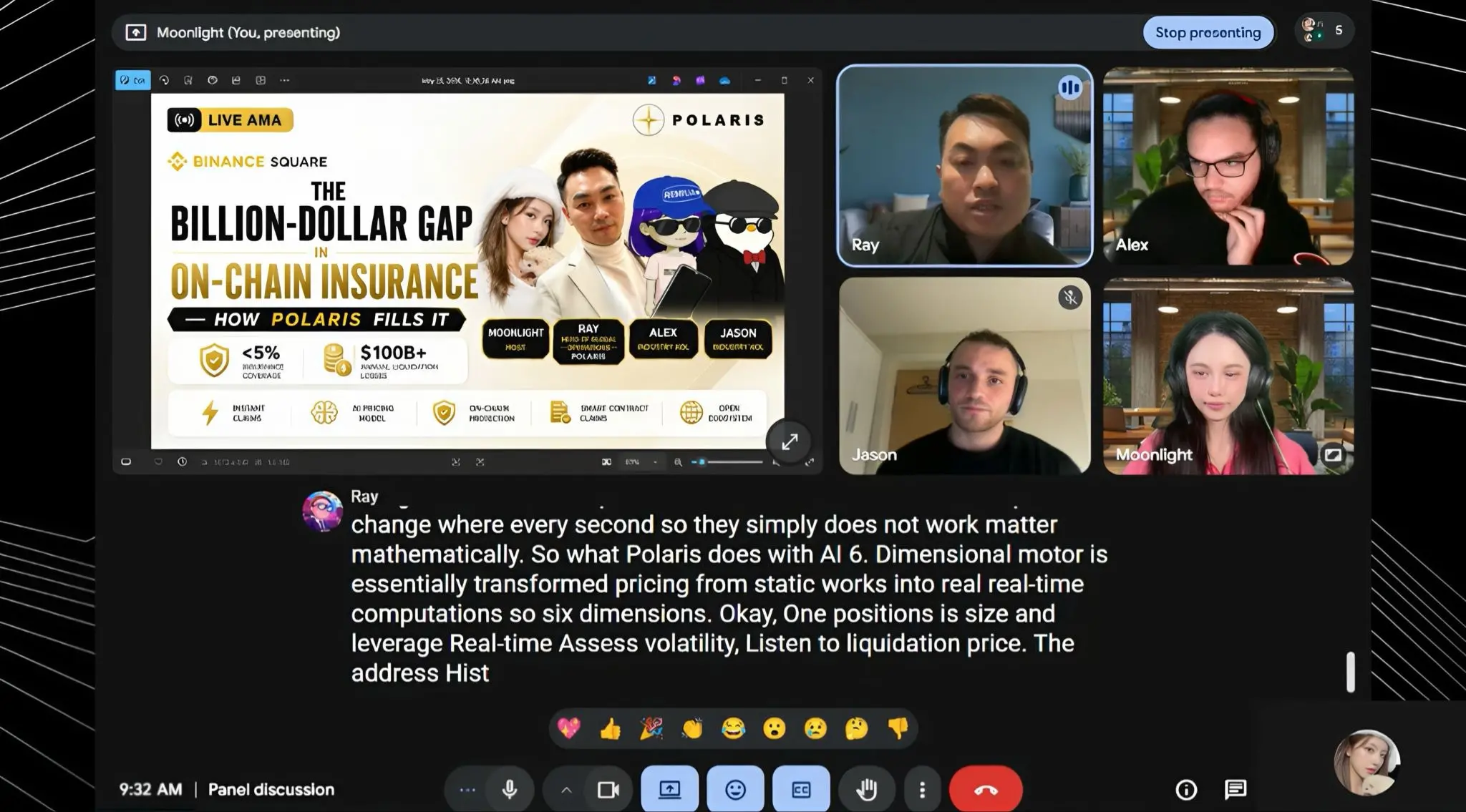
Second resection: the incompatibility of the old system in the chain with the three dead knots
SINCE TRADITIONAL INSURANCE INSTITUTIONS WERE POWERLESS, WHAT WAS THE PERFORMANCE OF THE CENTRALIZATION PROGRAMME ON THE CHAIN? IN FACT, SEVERAL PROJECTS HAVE TRIED IN THIS AREA IN THE PAST FEW YEARS, BUT UNFORTUNATELY, THE PENETRATION RATE OF THE ENTIRE TRACK HAS BEEN DOWN FIVE YEARS BELOW THE 5 PER CENT LINE, AND TVL HAS BEEN STAGNANT FOR A LONG TIME WITHOUT ANY QUALITATIVE BREAKTHROUGH。
Ray typifies three critical closing points for the existing DeFi program。
One is the severe delay in the time limit for settlement of claims. The current mainstream programme ' s resolution cycle is generally between 3 and 30 days and is highly dependent on a lengthy community voting process. For contracting warehouse users, what he needed most was immediate back-to-back blood and cross-flowing of funds when the highly leveraged positions were exposed to extreme conditions that were flattened and the bonds were flat. Users need a “second-rate” payment, not a “check and wait for weeks”. The time lag directly stifles the core claim。
The second is the abyss of reverse choice resulting from uniform pricing. A large number of early projects introduced a one-size-fits-all flat rate mechanism to reduce development difficulties. This has fatal deficiencies in financial risk management. Low-risk users essentially subsidize high-risk users when robust traders face exactly the same rates as high-risk radical traders. Quality and robust users can be significantly lost as a result of unfairness; on the contrary, high-risk radical users can be seen as arbitrating hotbeds. Ultimately, the underwriting pool will be fully filled by high-risk populations and the pressure for payment will continue to accumulate until the pool is completely pierced. This is the inevitable punishment of mathematical law。
Third is the extremely narrow coverage of the risk species. The coverage of existing products is extremely limited, supporting only a few specific agreements and scenarios. The vast majority of users are exposed to risk exposures in real chain games, such as extensive contract silos, various kinds of stable currency de-stabilization, etc., and no matching protection tools are available. These three dead knots are intertwined and together create an insurmountable ceiling。
3RD RESECTION: AI-DRIVEN THOUSANDS OF PRICE AND SECOND-CLASS STORM CRASH
In the face of the old system, the path Polaris has given us is extremely subversive. – A complete release of risk pricing from the actuary's static monthly statements to be calculated in real time using AI-driven chain-wide calculations。
During this dialogue, Ray made it clear that AI risk pricing is not simply conceptual packaging, but a substantive technological revolution that moves wind control from “static statistics” to “dynamic real-time computing”. The 6-D risk assessment system, which Polaris leans towards, is a non-sleeping digital brain. The engine allows for multifactor weighting and real-time precision pricing。
These 6 core dimensions include the size of the warehouse and leverage multiplier, real-time volatility of the target asset, absolute distance from the bursting warehouse price, historical flat frequency of the wallet address, macromarket sentiment and financial rates, and potential chain anomalies。
With this 6-dimensional data, the AI engine is able to make a dynamic adjustment of the millisecond premium per interactive output height personalized price. For example, it would be absurd for a robust user with a low-multiplier, deep-seated and unsatisfied history to pay the same price as another high-risk user with a super-high-multiplier, with frequent exposure to high-risk users. And in Polaris' AI pricing logic, the risk is spoken by the data themselves. The pricing logic evolved from a crude “one-size-fits-all” to a precise “thousands of people price”. This not only provides users with an extremely fair experience, but also more fundamentally disrupts the risk of reverse choice and ensures long-term resilience of the underwriting pool。
As subversive as AI pricing is the mechanism for re-engineering and silo-linking of claims. Polaris was able to automatically adjust the premium by adding or reducing it, and in extreme cases the rate moved up, thus effectively protecting the underwriting pool and all users. In addition, the logic of settlement of claims is fully parameterized, and smart contracts are automatically executed when the precise data captured by the chain predictor touches the trigger conditions. The amount is paid in respect of the bursting warehouse and the funds are up to the right level and need not be manually reviewed or waited. It is true that risk guarantees are resonated with trade speed。
Fourth Resection: trust re-construction and absolute code transparency degrees
In the context of the great narratives and decentrization of Web3, any agreement requiring users to hand over data or control of assets faces very high barriers to trust. The building of trust is no longer dependent on the bright institutional building or a card plate on Wall Street, but is based on pure transparency and de-trustability。
In response to this pain, Ray gave clear guidelines: certifiableness always takes precedence over oral commitments。
Throughout the chain of performance in Polaris, the terms of the policy are all entrenched in smart contracts and are open to the whole network. Users do not have to pray for the moral bottom line of the team, but simply believe that the code, which is deployed on the block chain, does carry out the task it claims. The logic of claims resolution also functions automatically on the chain, where users are ready to go to the block browser to read the open source code and verify the Hashi records of each settlement. When all processes can be publicly audited and all trigger conditions enforced by objective code rigidity, trust is based on an emotional dependency that needs to be “convinced” and completely elevated to an objective fact that can be “verifiable”。
AT THE SAME TIME, THE SYSTEM HAS THE CAPACITY TO EVOLVE ITSELF. EACH UNDERWRITING AND COMPENSATION DATA IS GIVEN BACK TO THE AI MODEL. DATA DRIVERS ALLOW THE PLATFORM TO CONTINUE TO OPTIMIZE, AND AI WILL BECOME SMARTER AS DATA ACCUMULATE, CREATING AN EXTREMELY DEEP TECHNICAL BARRIER THAT IS DIFFICULT TO REPLICATE EASILY。
Fifth Resection: ecological and solid strategic escorts
The types of assets in the chain world are complex, with different bottom-of-the-ground protocols, differentiated user portraits, producing extremely complex and unbridled demand for wind control. The contract traders fear an instant explosion, the DeFi lending pool is worried about an intelligent contract gap, the stabilizers are wary of the exchange-rate anchorage, and the cross-chain hubs are constantly exposed to the shadow of the theft of bridge funds。
In the face of endless scenarios and limited capacity, the growth ceiling is bound to be narrow if it is limited to a single home-grown scenario. In response, Polaris has chosen a very ambitious strategic expansion - – Create a network of multi-hazard species with an open ecological landscape。
Polaris' core path is to encapsulate the most sophisticated AI real-time pricing engine into a standardized API interface with the chain automated settlement system. This means that third-party projecters can quickly build their own customized insurance products through standardized API calls and contracts. At the same time, it opens the door for traditional insurance institutions to access the AI pricing and chain-based settlement system at zero threshold and to issue Web3 insurance products。
Such an open-ended structure would give rise to an invincible web cycle of feedback. Polaris is well positioned and its core source of income is the cost of technical services, which in no way consumes user premiums, and the larger the ecology, the greater the synergy。
Final vision: Invisible defensive armour will become the bottom-up marker
At the end of this high-powered conversation, Ray painted the final blueprint for Polaris for the future。
In the future mature encryption market, the question of whether your agreement has a secure base will be the same as today's audit of whether your code has passed. The audit addressed the technical clearance of the “codes with or without loopholes”, while the safeguards agreement addressed the ultimate end of the “who will bear the loss in the event of an extreme black swan”. They are both the opposite and the opposite of a coin。
The far-reaching effect is that chain guarantees will completely fade away from the rigid label of “aftercare” and evolve fully into an integral “pre-infiltration” original component of the trading structure. Polaris ' vision is to become a chain-insured infrastructure, allowing for the safeguarding of protochemicals. The guarantee is automatically embedded when the user opens a contractual space or puts it in a DeFi protocol. This extreme security experience, like today's HTTPS protocol on the Internet, will be invisible, insensitive and indispensable as air, and will be an interactive default base on every chain。
The one-hour-long Binance Live AMA, which attracts a lot of attention, has gone beyond the functional logic of a single application. From the point of impact of the contract explosion, Polaris is steadily building a global wind control matrix that covers diverse scenarios such as smart contract loopholes, stable currency breakdowns, etc。
In the face of hundreds of billion-degree security gaps and nearly-completed incremental blue sea, the efficiency and precision of AI pricing and second-grade settlement have been created. In this vast process of reshaping the climate-control order at the centre, Polaris' indestructible technological bastion is bound to protect every asset in the chain that travels through the dark forest, with a real ultimate guardian。
