
THE ZHEJIANG RESEARCH TEAM PROPOSED A NEW PATH: TEACHING AI HOW TO UNDERSTAND THE WORLD
The dominant view is that the more the model parameters, the closer the way humans think. However, a paper published by the Zhelong team on April 1 in Nature Communications presented different perspectives. They found that, when models (mainly SimCLR, CLIP, DINOV2) grow in size, the ability to identify specific things does continue to improve, but the ability to understand abstract concepts has not improved, or even decreased。
Large models have been growing, and the more the dominant view is that the more the model parameters, the closer the way humans think. However, a paper published by the Zhelong team on April 1st in Nature Corporations presented different viewshttps://www.nature.com/articles/s41467-026-71267-5I don't know. They found that, when models (mainly SimCLR, CLIP, DINOV2) grow in size, the ability to identify specific things does continue to improve, but the ability to understand abstract concepts has not improved, or even decreased. When the parameter rose from 2.206 million to 304.37 million, the specific conceptual tasks rose from 74.94 per cent to 85.87 per cent and the abstract conceptual tasks from 54.37 per cent to 52.82 per cent。
Differentiation between humans and model thinking
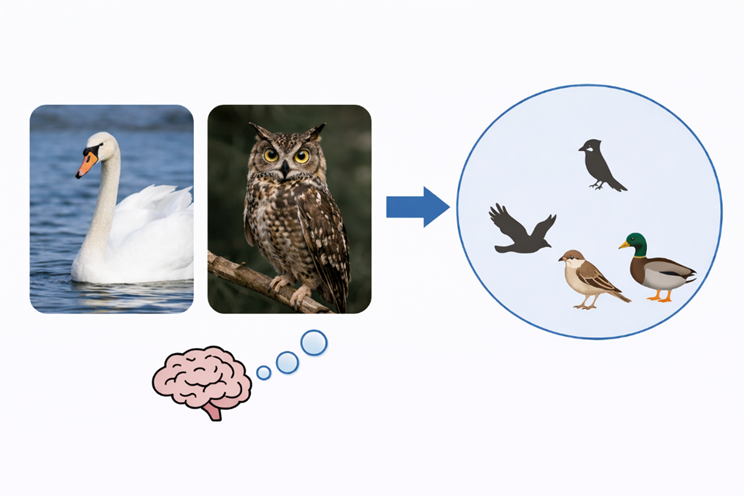
When the concept of the human brain is handled, a classification relationship is developed. The swans and owls are different, and people still put them in birds. Up, birds and horses can continue to be placed in the animal layer. When people see something new, they often start to think about what it's like, and what it's probably like before. People continue to learn about new concepts, then organize their experiences and use them to identify and adapt to new situations。
Models can also be classified, but in different forms. It relies mainly on the recurring forms in large-scale data. The more specific objects appear, the easier the model will be to recognize them. At this point in the larger category, the model is more laborious. It needs to capture the commonalities between multiple objects and then group them into the same category. Existing models also have obvious slabs here. As parameters continue to grow, specific conceptual tasks will rise and abstract conceptual tasks will sometimes decline。
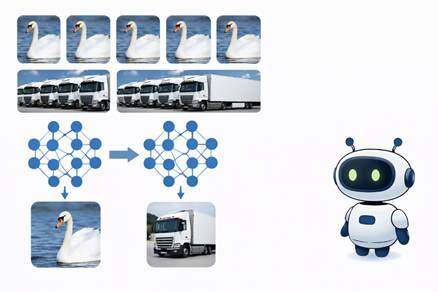
The common denominator between the human brain and the model is that there is an internal classification relationship. However, there is a different focus and the high-level visual regions of the human brain naturally distinguish between the broad categories of living and non-living. Models can separate specific objects, but it is difficult to stabilize this larger classification. This difference makes it easier for the human brain to apply old experience to new objects, so we can quickly classify things that we have never seen before. Models, on the other hand, rely more on existing knowledge, so that when new objects are encountered, it is easier to stop on surface features. The approach suggested in the paper was to develop around this feature, using brain signals to limit the internal structure of the model to bring it closer to the human brain classification。
Zheung's solution
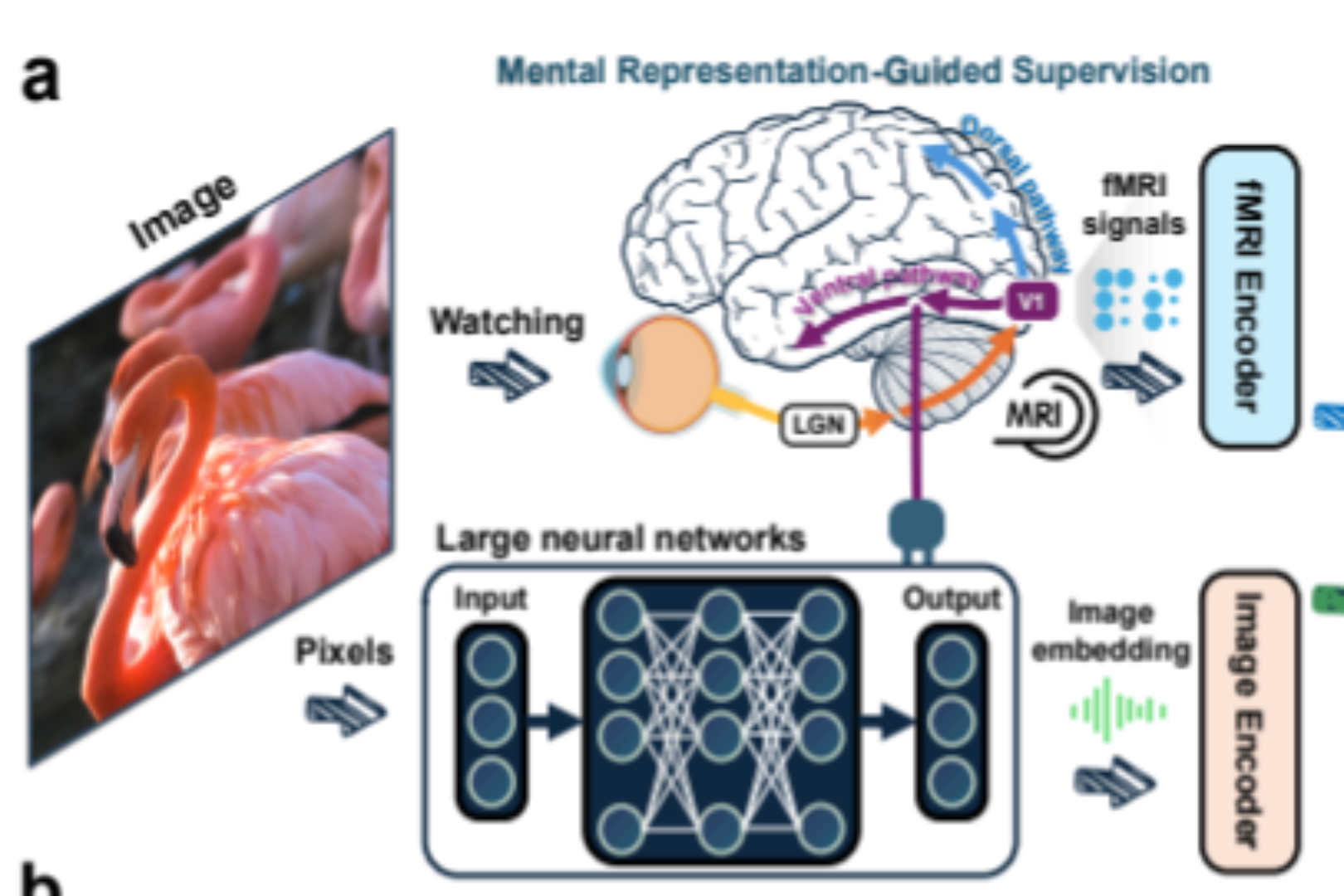
The solution offered by the team was also unique, not to continue stacking parameters, but to monitor a small number of brain signals. Here's the brain signal, the brain activity records when people look at pictures. The paper was originally written by giving human conceptuals transport to DNNs. It means how the human brain is classified, how it is summed up, how it comes together, how to teach models as much as possible。
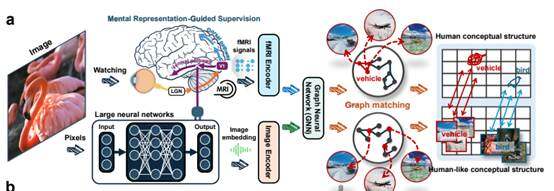
The team experimented with 150 known training categories and 50 unrecognized test categories. The results show that the distance between models and brain signs continues to decrease as the training package advances. This change appears in both categories, which suggests that the model does not learn from a single sample, but actually begins to learn a conceptual organization closer to the human brain。
As a result of this training, the model is more capable of learning when the sample is scarce and is better exposed to new circumstances. In a task that gives only very few examples but requires models to distinguish between living and non-living abstract concepts, the model has increased by an average of 20.5 per cent and exceeds a much larger comparison model. The team also conducted an additional 31 sets of specialized tests, and several types of models showed near-ten percent improvement。
In the past few years, the path familiar to the modelling industry has been the larger size of the model. The big team chose the other direction, from Bigger is better to Starred is Smarter. While it is true that the expansion has been useful, it has been mainly improved by familiarity with the performance of the mission. The ability of human beings to understand and migrate in abstract terms is also crucial for AI, which needs to bring its thinking structures closer to the human brain in the future. The value of this direction lies in the fact that it shifts the attention of the industry from mere scale to the cognitive structure itself。
Neosoul and the future
This leads to a greater possibility that the evolution of AI may not take place only at the model training stage. Modelling can determine how AI organizes its concept and how to form a higher-quality judgement structure. After entering the real world, the other level of evolution of AI is just beginning: how it was recorded, how it was tested, how it evolved in real competition, and how it evolved in self-learning as human beings. That's exactly what Neosoul is doing. Neosoul does not just allow AI to produce answers, but puts AI anent into a system of continuous forecasting, continuous validation, ongoing settlement, continuous screening, allowing it to optimize itself in predictions and outcomes, allowing better structures to be retained and worse structures to be eliminated. The Zhejig team is working with Neosoul to achieve the same goal: to make AI no longer an issue, but to be fully thinkable and evolving。
