
Polymarket V2 online. Is the ghost order fixed
The market can be expected to trade in the future, but the trading system cannot allow a “off-and-off” to become a prediction。
Original Odaily Daily@OdailyChinaI'm not sure
Author Asher@Asher 0210I'm not sure
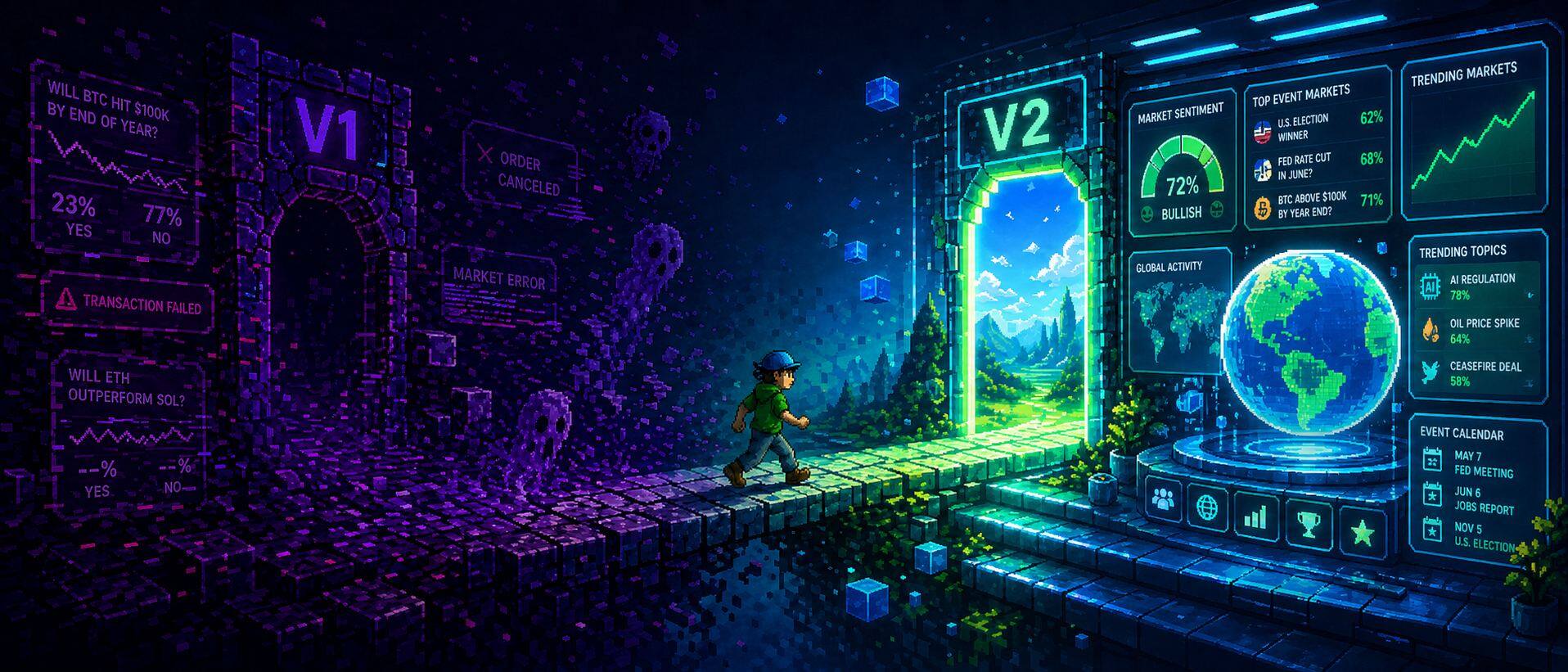
Last night, Polymarket entered the maintenance window, suspended the transaction and emptied the order book, then officially went online on the CLOB V2。
According to official disclosuresThis upgrade includes new contracts, new order books, new collateral tokens Polymark USD, and a new version of CLOB-Clit SDKI DON'T KNOW. FOR USERS, CHANGES IN PUSD, SDK AND ORDER STRUCTURE ARE NOT NECESSARILY IMMEDIATELY APPARENT。The first thing that really deserves attention is the ghost bills that have long plagued Polymarket, the "ghost order" that the community often calls。
V2 did indeed address this issue. The nonce mechanism, which had previously been the most accessible, was removed and changes were made in the order structure and the way orders were withdrawn. But that doesn't mean that ghost orders have disappeared, because..Polymarket's core trading model is still chained and chained, and as long as there is a time gap between the two, it is difficult to completely erase similar problems。
The order shows a deal. Why failed
A ghost order, simplyAn order appears to have been set up under the chain, but it didn't end up closing itI don't know。
Polymarket uses the chain-based order book set-up and then goes back to the chain and finishes the settlement. The advantages of such design are evident in the faster and lower cost of trading, and are better suited to such short-term, high-frequency projection markets as the five-minute market。
The problem is also with this time lag. The chained order book has been shown to be closed, which does not mean that the chained settlement will be successful. In some short-cycle markets, users may have seen the order show a deal and think they have bought it in the right direction; but when the transaction is actually submitted to the chain, the settlement fails。The first second, which appeared to have been completed, was withdrawn by the system。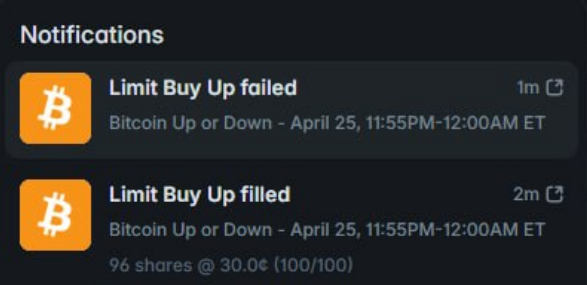
The hardest part for users is not simply failure, but uncertainty. It was assumed that the purchase or sale had been completed and that the deal had not been concluded; when the order was reordered, prices might have changed and trading opportunities might have been missed。
The problem with the old version is it's too low
In V1, a phantom order is the most accessible path from incrementNonce。nonce can be understood as the state mark in the order. It was originally intended to help the system manage the order, but in the old version, the assailant could call incrementNonce to invalidate an order with an old nonce at an address when closing the chain。
this gives the attackers a time difference operating space. the attackers could first have the orders brokered under the chain, so that the system would show that the “offer has taken place”; and then update the nonce before the real chain of settlement, so that the final execution of the orders failed. as a result, a transaction that appears to have been completed did not end up on the chain。
The problem is that such operations are extremely low-cost and can affect orders。the attackers only need to pay low gas costs to make the order that should have been made fail at the settlement stageI don't know. At the front end, the purchase orders were closed and then failed, resulting in an unstable outcome of the transaction and even in the failure of the user to meet the original transaction prices and trading opportunities。
The question of ghost orders is not simply a front-end error or an occasional failure in the chain, but directly affects the trust of users in the outcome of the transaction。
V2 FIXED, BUT NOT COMPLETELY ERADICATED
The most critical change of this V2 is to remove the original global nonce design. In other words, the past has been blocked through the one-time influence of an old order. At the same time, V2 simplified the order structure and the withdrawal orders shifted to a single order Hash with a more finer particle size。Compared to the old version, the scope of the impact of the withdrawal order was significantly reduced, making it difficult for the attackers to destroy large numbers of billings with another low-cost operation。
The problem with phantom orders is a substantial repair. The problem in the past was that the cost of the attack was low, the scope of the impact was high and the threshold for recurrence was low. After V2, one of the most accessible paths was removed. If the attackers are to continue to create similar problems, they will have to incur higher costs and rely more on specific system responses. In addition, the delay in the inclusion of mechanisms such as puseUser is a possibility of reducing the instantaneous abuse of certain state changes in the blending and clearing windows。
OVERALL, THE DIRECTION OF V2 IS CLEARER: IT FIRST ADDRESSES THE LINKS THAT ARE MOST EASILY USED BY THE ATTACKER, AND THEN REDUCES THE REVENUE SPACE FOR SIMILAR ATTACKS。
But it can't be equated with a complete solution to a ghost orderI don't know. The reason for this is that Polymarket still does not change the basic pattern of chaining and chain settlement. As long as the orders are not brokered and settled in the same environment, there must be a difference between the chain and the chain. Changes in balances, delegation of authority issues, change in the order status, withdrawal of orders or failure of contract execution may result in a chain-set order that ultimately fails to land on the chain。
IN OTHER WORDS, V2 ADDRESSES THE MOST VISIBLE AND EASY-TO-USE ATTACK PATH IN THE OLD VERSION, RATHER THAN THE UNDERLYING CONDITIONS CREATED BY GHOST ORDERS。
Other updates, more for trading systems
IN ADDITION TO GHOST ORDERS, V2 BROUGHT UPDATES SUCH AS PUSD, SDK AND 1271 SIGNATURES:
- PUSD for the new collateral stabilizer currency, Polymark moved from USDC.e to Polymarket USD, supported by USDC 1:1, which is largely unsettled by ordinary users, but which is treated more uniformly at the bottom
- The new version of the CLOB-Clit SDK is aimed primarily at marketers, robots and systems integration. After V2, the relevant users need to upgrade the client and re-sign the order using the new order structure
- Signing support means smart contract wallets, multiple signature accounts, institutional accounts, and more complex bot wallets can be accessed more easily。
In generalPolymarket is not simply fixing a loophole, but is turning itself from a forecast market application to a bottom-up system closer to an exchange。WHEN THERE IS AN INCREASING NUMBER OF MARKETERS, API USERS AND AUTOMATED TRADERS, IT IS MORE IMPORTANT THAT THE ORDER BE STABILIZED, SETTLED AND CASHED THAN IF THE MARKET IS FUN ENOUGH。
V2, NOT THE END, BUT THE BEGINNING OF CONTINUOUS REPAIR
When V2 went online, Polymarket blocked at least one of the most obvious attack paths in the ghost order. In the past, low-cost withdrawal orders and bulk influence orders have become difficult to replicate. This is a step that must be completed for a rapidly expanding trading platform。
The source behind the ghost order, however, does not simply disappear as a result of an upgrade. As long as Polymarket continues to use a chain-based, chain-based settlement model, the system needs to continuously address the differences between the bottom state and the chain-based results. V2 more like the first step..First, the most visible and easy to use issues are addressed, and through follow-up updates the consolidation, settlement, monitoring and wind control capabilities continue to be completed。
It is uncertainty that predicts that the market would otherwise be traded, and if even the order itself is full of uncertainty, the user will no longer be faced with market risk, but systemic risk。
