
Peter Schiff and CZ: Bitcoin has no intrinsic value and is convinced that it will eventually be zero
What kind of asset, bitcoin and gold, would be better able to satisfy the medium of exchange, unit of account and value storage at the same time
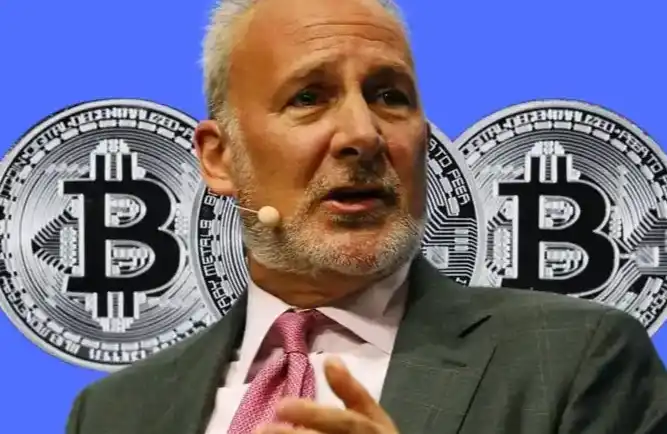
Original title: The Peter Schiff interview
Original source: CourtParty TV
Original: Ethan, Daily Planet
Editor: Remember that live broadcast three hours before the 1011s? The same studio, the same host, but the CZ that sits in front of the camera talks about Meme, BNB ecology, decentrizing the future. (For details:THREE HOURS BEFORE THE "10.11 BIG PURGE," WHAT DID CZ SAYI'm not sure
Just two weeks later, the moderator handed over the microphone to the other end — Peter Schiff, an economist, a gold believer, the most stubborn critic of the encryption ring。
One is the "generator of the encrypted world" and the other is the "gravekeeper of traditional finance" ; the other is the code and white paper, and the other is the gold standard and hard currency. If CZ represents "encrypted idealism", Schiff is the embodiment of "monetary realism". He laughed at the opening of the show, saying he was wearing a Polo shirt, shorts, and then using a series of sharp allegations to keep the encrypted community silent:
"You can split a thousand, but it's still nothing. I don't know
• “bitcoin has no intrinsic value and its full value comes from speculation. I don't know
• “It is the dollar that stabilizes the moor, and the dollar itself is not. I don't know
Now, this old-fashioned economist, known as the Golden Father, is preparing a formal engagement with the CZ-- – The argument is "bitcoin vs monetized gold" (CZ responded upon invitation, and the debate between the two was held at the beginning of December on the Binance block chain week). He revealed that the heart of the debate would revolve around the three functions of the currency: "What kind of asset is more capable of satisfying the medium of exchange, the unit of account and the means of storage of value? I am not sure. In the eyes of Schiff, bitcoin is an illusion for speculators, and "given gold" is a return to monetization; and for CZ, bitcoin is the bottom consensus of decentrized faith, a "human self-correction of power."。
So the interview was more than just a conversation, it was more like a "preface" between two times, two faiths, and two monetary views. The following is the original interview, compiled by the Daily Odaily Planet, which has been deleted in order to facilitate reading。
The text reads as follows:
Moderator: I've seen a lot of interviews with you, for example, in 2007 when you warned about the crisis, and you insisted on seeing $5,000 more and arguing with the moderator at the price of $1,200. These projections were eventually confirmed. I'd like to cut in from here: What do you think is the greatest error in the encryption circle in understanding gold
Peter Schiff:Many have misunderstood gold because they want to defend Bitcoin. Bitcoin has no intrinsic value - it is not a raw material that can be used to make things, nor is it a consumer. It's just a numerical symbol that you can transfer to someone else, and that's just as nothing can be done when someone else gets it, but to someone else。
And they thought, of course, that gold was one of those categories, and that gold was just a "no use stone" and that it was only valuable because people believed it was worth it. On this basis, they conclude that, since gold can be priced "on faith", bitcoin can be。
But they ignore the most critical point: gold is indeed intrinsically valuable and extremely valuable. That is the underlying reason why it can become a currency — a scarce and precious physical commodity. Gold is superior to other commodities and can be used as a currency for a long time because it has a unique set of attributes: severability, supplantability, durability and portability. Bitcoin did imitate gold on these attributes, but missing the central point — the real value。
Without that, everything else is empty. You can cut nothing into millions of pieces, but it's still nothing. Gold can be divided because it is itself a valuable material。
From an elemental point of view, gold is one of the most useful metals on Earth. It is not used more widely in industry because it is too expensive and too scarce — and that precisely constitutes its value. Gold is used in many areas: the most visible is jewellery, and although you can use other metals as accessories, people prefer gold. In addition to this, it is applied to various industries such as electronic equipment, space, medical, dental etc。
Another important use is the currency. Gold can be a means of value storage because it does not corrupt or wear. You buried a gold coin for 500 years, and when you dug it out, it was still bright and worth nothing. This means that gold can store wealth over time and can still be used in the future。
Bitcoin is not. No one needs bitcoin today, no one will. It cannot store value because it does not itself have a value that can be stored. It does have some technological-level innovations, but that is just technical features. There are thousands of encrypted currencies, each claiming to be “unique”, but none has real use or intrinsic value. And the new currency can be issued on a continuous basis, and even the so-called "scarceness" no longer exists。
The whole encrypted money market is essentially a huge bubble. The first people to enter made money — they held currency early in the day and offered high prices when the bubble swelled. Those profits ultimately come from the losses of the late. That's how it works:Those who enter early are rich, and those who come later。
Moderator: You seem to understand the idea of bitcoin. But on the other hand, will you reflect that in 2017 it was a miscalculation of its zero
Peter Schiff: I still think that bitcoin will end up zero, so I don't feel like I'm wrong。But I admit that I underestimated the public ' s trust and the marketing talent of the Bitcoin promoters。
THE EARLY PARTICIPANTS IN BITCOIN HAVE BEEN EXTREMELY SUCCESSFUL IN MARKETING — THEY HAVE BUILT AN ATTRACTIVE NARRATIVE THAT MAKES PEOPLE WANT TO BUY WHAT THEY WANT TO SELL. IT'S A HUGE "DRIVE-OUT" GAME. THE EARLIEST HOLDERS — THE SO-CALLED “OG” OR “WHAL” — HELD LARGE AMOUNTS OF BITCOIN, AND THEY CREATED A MARKET FROM SCRATCH TO CONVINCE THE PUBLIC THAT IT WAS WORTH SOMETHING, THEREBY PUSHING UP PRICES AND LEAVING THEMSELVES IN HIGH PLACES。
IT SEEMS TO ME THAT THE TREND OF THE PAST FEW YEARS HAS IN FACT BEEN THE CONTINUATION OF THIS PROCESS OF DELIVERY. I BELIEVE THAT ONE OF THE PURPOSES BEHIND THIS WAS TO CONTINUE TO "RAISE" AND CREATE MORE EXIT SPACE FOR EARLY FUNDING。
Indeed, many people made money in that wave. But that's why bitcoin prices are stagnating today. It runs into more than $100,000, with no new heights。
In gold, bitcoin has actually fallen by about 30 percent -- the ratio of bitcoin to gold has dropped from 1:26 to 1:8. From the gold point of view, it has already entered Bear City。
Moderator:I note that you have always been used to "gold" to measure the market, and this consistency is indeed commendable. So instead of talking about bitcoin today, let's explain to the young audience why gold has been the best performance since 1979. What the hell happened
Peter Schiff:If most of your audience comes from the encryption ring, my advice is simple:Buy some gold and silver。
I own a company called Schiff Gold, and we even support the payment of bitcoin, which is simply converted into United States dollars through BitPay, which is used to buy gold or silver. As to why gold was so strong this year, I think we're at a stage similar to the 1970s -- not just stagnating, but a "replacement" of the global monetary system。
In the early 1970s, before Nixon announced that the dollar was out of the gold standard, the dollar was in fact the representative of gold — not only “supported by gold”, but also “directly converted to gold”. The dollar in the hands of central banks was essentially a gold bill of lading. In 1971, however, the United States unilaterally “breached” and told other countries that “you can no longer exchange dollars for gold.” This means that the dollar is no longer tied to gold, but only printed paper. As a result, the United States dollar depreciated sharply — to about two thirds. The devaluation of gold is even sharper: from $35 to $850 in 1980。
THE SAME PHENOMENON OCCURS IN OIL. OIL PRICES ROSE FROM $3 PER BARREL TO $40. IT'S NOT THE PRICE OF OIL THAT WENT UP, IT'S THE DOLLAR THAT WENT DOWN. AT THE TIME, THE US ALSO ACCUSED THE OPEC COUNTRY OF "BLOWING UP OIL PRICES," BUT THE REAL REASON IS THAT WE USE "PAPER" INSTEAD OF "GOLD". IF THEY PAY FOR PAPER, THEY'LL WANT MORE PAPER。
I think the situation is like the second phase of that change. This time, the world is not out of gold, but out of dollars. For decades, the global economy has remained dependent on the dollar system. But now central banks are quietly de-dollarizing, replacing the dollar with gold as a reserve asset. This means that the world is returning to a gold-centred reserve system. While not necessarily a strict “gold standard”, countries will hold more gold and less dependence on the United States dollar, the euro or the pound sterling。
It would be a historic turn for the United States. This means that the United States can no longer “overspend” as it did in the past – no longer buy what it does not produce by printing money and no longer maintain consumption by borrowing. Next, the cost of living will rise significantly for Americans and the cost of borrowing will rise sharply. The real value of asset prices — particularly equities and real estate — in gold terms will continue to decline. In fact, since 1999, the Dow Jones Index appears to have increased fourfold in dollar terms, but in gold, it actually falls by over 70 per cent. This is how real purchasing power is measured。
I believe that this trend will not stop, but will continue and accelerate. The world is officially returning from the “dollar standard” to the “gold standard”。
Moderator:Your core prediction is that the upcoming crisis will "depress the year 2008" or even like the Sunday school picnic. What exactly does that mean at the practical level? How does it go and what does it look like? What are the first signs we should focus on
Peter Schiff:The 2008 crisis was essentially a "debt crisis" — from the outbreak of sub-prime mortgage markets to the institutions that hold or underwrite them. At that time, the United States Government temporarily suppressed the shock through rescue and stimulus measures. That did not immediately turn the crisis into a systemic collapse. Strictly speaking, in the longer term, the economy of the United States may be healthier today if the market is allowed to undergo a more thorough cleaning without intervention. But they chose another wayKick the can a little further。
And this is different — it is a crisis in which Governments can no longer save。
I'm not prejudicing the collapse of the mortgage or credit market. I'm prejudicingThe crisis at the US Treasury LevelA real sovereign debt crisis. This is no longer a question of the market wondering whether a highly leveraged homeowner can repay floating interest rate loans, but it is a global question — can the United States Government pay off its debt? My concern is not just “nominal breaches” (although that is not impossible, in a sense, direct breaches are even better than I expected). The real risk is:How much money did you get back when the debt fell due
If the only means of paying off the debt was to print money — and that was true now — the creditors would panic. Look at what Trump is saying: in times of high inflation, pro-rate cuts. What does that mean? It means that we will create more inflation. When interest rates are chronically lower than inflation and lenders are not compensated, there is a systematic sale of United States debt. Once global investors are no longer willing to buy or hold United States Treasury bonds, this is not just a sovereign debt crisis, but a monetary crisis — a higher-level crisis in the financial system。
Because this timeThe explosion will be the so-called "risk-free assets" themselves。ITS COLLAPSE COULD TRIGGER AN OVERALL SHOCK IN THE CREDIT MARKET. THE US GOVERNMENT WILL THEN BE UNABLE TO HELP ANYONE; NOR WILL THE FED BE ABLE TO "REPLACE" PRIVATE-SECTOR BAD DEBTS IN DOLLARS OR DOLLARS, AS IT WAS IN 2008. THE LOGIC OF TARP IS THAT THE DEBT OF THE UNITED STATES GOVERNMENT SHOULD BE USED TO OFFSET THE DEBT OF THE PRIVATE SECTOR — PROVIDED THAT THE MARKET STILL BELIEVES IN THE UNITED STATES TREASURY DEBT. AND NOW THAT CONFIDENCE IS DISAPPEARING。
What else could the Government do in a scenario of a collapse of the dollar and a surge in inflation? They can no longer print "Big satsa", which only fuels the US dollar, making it fall faster and at higher long-term interest rates. The prescriptions of the past are now completely dead. We are trapped in a situation of retreat. The only way out is the road that the Government has been rejecting for decades — because it hurts too much. But it's also because it's been too long, and now the pain will get worse。
Moderator: If a crisis cannot be saved, please describe in detail: Assuming that one year later today (22 October 2025), how does the crisis break out? What's the first flashpoint
Peter Schiff:Look at the gold first. Last week's gold price was almost $4,400, and then it went back fast to nearly 4000, but in any case, the price of $4,000 was twice as high as it was two years ago. Back in history, in 1980, when the world abandoned the dollar and lost faith in America, how did Paul Volcker rebuild confidence? He lets short-end interest rates up to 20%. "You don't want to take the dollar?" We pay you 20% interest. At the time, inflation peaked at between 10 and 12 per cent, with a return of 20 per cent sufficient to attract financial inflows。
At the same time, Reagan’s rise to power with market reforms and tax cuts reversed the policy path of the previous Nixon-Fort-Johnson-Kennedy “big government, inefficiency, and strong intervention” and restored confidence in the dollar. But today, these tools are all gone. First, Trump is not Reagan; and the current Powell is not Volcker — even if Volcker is still here, he can't do what he did. It’s the size of the debt todayIt has made it impossible for the United States to afford that level of interest。
In 1980, the United States had less than $1 trillion in national debt, and most of it was long-term fixed-interest debt. Even if short-term interest rates rise to 20 per cent, there will be limited direct fiscal impact. Today, however, it is quite different: about one third of the national debt is due within one year, with total debt exceeding $38 trillion, and the average duration of the total debt is about four to five years (I cannot remember the exact number, but very short). If the interest rate rises to 10 per cent, soon the interest we pay each year will reach $4 trillion, which is almost impossible to afford. We now receive $5 trillion in taxes a year, and if short interest rates reach 10 per cent, the economy will fall into deep recession, large-scale corporate bankruptcy, soaring unemployment, massive deficits, and a collapse in taxes。
The conclusion is:We can't fight inflation with interest rate hikes anymore, because the effect of the drug is to cure the patient directly. If the "cure" cannot be increased, it can only be delayed by inflation, and there is a risk that it will evolve into a vicious inflation/currency crisis。
Is there any way to avoid the worst? That is default (or debt restructuring)。The United States Government can say, “We have borrowed $40 trillion and cannot afford it, so we will not pay it all. Maybe every dollar gives you 25 cents, and maybe we can take it. I don't know
At the same time, we..We need higher interest ratesThat is why debt restructuring is necessary: interest rates have been too low over the past few decades. Now, the Fed and Trump are trying to lower the interest rate, but we..What is needed is higher interest rates。
Trump complained about the hollowness of manufacturing and the huge trade deficit. Only higher interest rates — allowing consumption to fall, savings to rise, and savings to build plants — would be needed to address this. There is no way to build a plant without saving; there is no way to build a factory or to import what others produce. This was possible in the past because people wanted our dollar (reserve currency). Once the dollar loses its status, the world will not trade our paper for their goods. We have to build it ourselves, but we are nowNo capacity, no infrastructure, no supply chain, no skilled workersNo more — none of the advantages that the United States had decades ago。
So that's what it looks like in reality。
Moderator:To be fair, so far the "bitcoin will fail" has not proved to be wrong; but the "nobitcoin" has been a little off in the last decade。
Peter Schiff, "Look at bitcoin" and "making money from bitcoin" are two different things。I admit that prices have indeed risen a lot, and that is true. But if it turns to zero — that's exactly why I'm right about its essence: it's a huge Ponzi scheme. Yes, I could have bought them early, sold them in high places, and made considerable profits. Many do. They're bitcoinReal valueandLong-term perspectiveIt is not clear that more and more people are making money by making the same mistakes and willing to switch to higher prices。
The problem is, most people..Didn't leave at the right timeI don't know. Someone who buys $5,000 and goes up 20 times, thinks he's right. But when the price falls back to $1,000, the profits evaporate 80%, are you right or wrong? If that gain was never realized, it would end up being non-existent. In that sense, I still think I'm the judge of the nature of the coinIt can't deliver on its promises- Right。
Of course, I admit that I was wrong not to use this fanaticism to make money. I could have bought it at a very early and low price, and then sold it at multiple nodes, making a lot of money. Over the past three or four years, and even this year, my return on other investments has not been so bad; but if I had bought bitcoin, the returns would have been even more alarming. I just didn't do that。
From a posterior perspective, I should have done that. Even so, I believe:Those who lose money on bitcoin will be far more than those who make moneyI don't know. Especially those investors who are only now in the field — they'll probably lose a lot。
Moderator:I'd be willing to bet on it if it's worth a thousand times and a hundred thousand times. But you did say, "It's hard to go back." Suppose everything goes as far as you think -- you win, gold goes up to 10,000, 15,000 or even 20,000 dollars, what happens to the world? How does an ordinary person respond? Should it be full gold or decentralized? If you can't hold the dollar, what should you hold
Peter Schiff:For people of my age who have considerable assets, I suggest..Holds part of the gold- Like 5%, 10%, 20% of the warehouse ceiling. Besides, I like itInterest-rate stocksI own a lot of it myselfGold UnitBut there are plentyNon-gold overseas stocksI think they can provide a real return on inflation and help American investors maintain their living standards in the face of the upcoming sharp depreciation of the dollar。
For a lot of young people who don't have any savings but want to be prepared, I suggestHolds some real gold and silver— Silver is more appropriate because it is easier to trade and the unit value is smaller. For example, you get $5,000 to $100,000 for some silver coins that can be stored and used in extreme circumstances。
In addition, do not hoard "just needed weeks" every week. If there's room at homeI need more of the necessities of life- Something you'll use in six months, a year, two yearsNowBuy it because it'll cost more. You're setting prices for yourself, fighting inflation. For example, if a toothpaste is now $5, $10 a year later, then you'll buy it more than a year later, and when it's used, it'll be 100% of the investment. Instead of putting the money in the bank and buying more expensive toothpaste later, we should buy it now。
There's another problemPrice controlI don't know. When the dollar really started to fall and prices really started to go up, the government might go to price controls like the Nixon era and try to "at house prices". The result is often a shortage, as businesses simply do not sell when legal prices are pressed below the cost line. You'll go to the supermarket, the pharmacy, the shelf, probably without toothpaste. The black market would then appear, with higher prices and the risk of imprisonment; the black market would not be able to draw cards and might prefer to collect money. So early hoarding can save you from the black market and less exposure. Remember when you couldn't get a toilet paper? The situation would be worse if price controls were added。
Even without price controlsDepreciation of the United States dollarIt'll keep the price up; but..In silverMany things are going to be cheaper. You can buy more in kind with less silver. A lot of people mistakenly think that bitcoin can do the same thing, but I think the result will be the opposite:Bitcoin's gonna lose value against the dollarI don't know. And then, if you want to buy something with bitcoin, you'll find it necessarySpend more bitcoinAs a result of "prices" denominated in bitcoin, prices are rising faster than in United States dollars。
Moderator:Your "Voice of Toothpaste Investment" sounds like a "god class" in the encrypted world. Seriously, I've seen a lot of your early years' interviews over the last two days, and I've paid a little more respect to you. But in the encryption circle, you're often portrayed as the "godly angry dad." I'm not "bitcoin top", but I'm a "encrypted lover." There's a picture I've always remembered: about 2006, when you predicted the financial crisis on Fox TV, when everybody was laughing -- the host, the guest, the audience, the hall. What I'd like to ask is, before 2008, how can those smart people not see the crisis collectively? So many institutions, so many experts, why is it that almost no one realizes it's happening
Peter Schiff:That's typicalGroup thinkingI don't know. When all people think in one way or another, any voice that challenges their faith is intrinsically excluded. I always say yes"Recognition disorder.": They build a wall in their heads, and I say they can't get through anything, because if they accept it, they will subvert their worldviews, career paths and patterns of interest. No one wants to admit that I was right。
And since I'm the only one who doesn't say it, it's easier for them to conclude: How could this guy from a small company be right, and Harvard economists, the Fed, Wall Street, the Presidential Economic Advisory Committee are wrong? So they'd rather believe I was wrong。
But now I'm in the Bitcoin community, and I see the samePsychological structureThe Bitcoin faith has become part of the identity, with all the bets on it and all the objections being "bounced back." So I said, "bitcoin will fall," and they laughed as they heard me say, "The bank will fall, the United States will go bankrupt." And I can only say:That's exactly what happens。
Moderator:To be fair, you started warning the crisis in 2006, and two years later it really broke out; but you've been talking about bitcoin for over a decade。
Peter Schiff:I actually started warning the financial system about risks as early as 2002 or 2003. I've seen the Fed presses interest rates too low, and I've seen problems in the real estate and mortgage markets. By 2006, I was talking more frequently, more intensely and more in the media, so the point that you generally remember is 2006 or 2007. But, yes, it is true that bitcoin bubbles last longer than real estate bubbles. I've been criticizing bitcoin longer than I was criticizing the subprime and the building market. Because his life has been lengthened, many people will think, "You must be wrong this time." It's long overdue. I don't know
I think there's actually a couple of "breaks" in the middle that are close. One of the most successful aspects of the encryption ring was to bring Wall Street in — spot/ETF, MicroStrategy’s “financial leverage plus financing collaboration” — and various structural leverages, all of which lengthened it together. In addition to their efforts to "trump" and their family, to tie up the "encrypted tsar" and the White House's influence, they have provided more fuel for this "higher pyramid"。
But these cannot last indefinitely, meeting at the top and collapse. Bitcoin has no intrinsic value, and all its value comes from speculation, and there must be a constant willingness on the part of laterers to take over at higher prices; once new buyers are depleted, the mechanism will break down. So they invented the "buy not to sell." It's actually made up by the early large holders — who want to sell themselves, who need others to sell, and who need to keep getting new people in. Eventually, the structure will collapse. In fact, perhaps the collapse is already under way。
Look at some encrypted shares: I also mentioned today that the Winklevoss Brothers exchange Gemini, which came on the market last month, has fallen by about 60 per cent since the first day, and that the Trump media company, DJT, has fallen by 70 per cent since October. And there's the bitcoin convention in Vegas, the Nakamoto project that they started -- I said it was a pyramid or Ponche. It was only $30 when it was on the market, and now it's only $0.7。
That's the picture of the bubble: everything seems to be working, but the collapse has already begun。
Moderator:Have you ever thought that you've been talking about bitcoin on TV and social media more than anyone in the last 10 years? In a way, you're "carrying it."
Peter Schiff:It's still alive, and it's called the market value of trillions of dollars. And look at the extent of financial media penetration -- you open the CNBC, almost full of encrypted content. I suggest they change their name to "Crypto News" or "Bitcoin Channel"。
Moderator:To be fair, it has been one of the best in the last decade, and the media also have a duty to inform their audiences。
Peter Schiff:When they lose their money, the audience may in turn sue the media. Look who's buying ads and who's sponsoring-the encryption project buys a lot of business time. The platform almost doesn't make people talk about bitcoin。
Moderator:BUT YOU SOUND ALMOST EVERY DAY, AND YOU OFTEN GO ON CNBC。
Peter Schiff:I can barely get on now. They stopped inviting me, to a large extent because I was negative about bitcoin. The sponsoring Chamber of Commerce said, "We pay for the ads, but don't let Peter Schiff go up to the stage."。
Moderator:The people in the Bitcoin Circle actually "welcome" you on the show — they need a rebel to stand up for themselves. Well, the last big question: You predicted the crisis in 2008, how did you operate that year? Is there a similar reference
Peter Schiff:I was beaten up in 2008 as a whole. The only thing that makes money is what I did in 2007 as a subprime loan, which I cashed before the crisis. But at that time I held a lot of gold shares and overseas shares, which in 2008 fell more sharply than the United States stock as a whole。
But in 2009, they rebounded harder, and I earned most of the losses back (not counting the profit). I did a good job. I did a good job after the financial crisisUnited States dollar crisisLayout. Looking at my first book, Crash Proof (how to profit from the impending economic collapse), the idea was clear: the financial crisis, the collapse of mortgages and real estate, the collapse of banks, and the event in the United States of America, the government would print money (later called quantitative easing). I'm sure that'll trigger itThe United States dollar and the debt market crisisThe price of gold will increase. It turns out I was in the right direction, and the wrong time. The gold price did run up to $1900, but then fell back; the dollar went down and went up. The Fed has succeeded in blowing up bubbles — stocks, real estate, bonds, and even encrypted assets — all of them foaming. I call it the Foam of Everything。
Then I wrote The Real Crash, and I stressed that 2008 wasn't "the crash I was really worried about."United States dollars and bondsI don't know. It never came, but I think it's close. It's a warning that the gold is going up again. It's like a signal in 2007 -- when everybody said "controllable" -- and the world got involved. Many people today look at the rise in gold as a "scientific or kinetic unit" without understanding what it means。
In my opinion, this is actually telling us:The world is losing faith in the dollar。The dollar crisis, which was supposed to have erupted years ago, is now approaching。
Moderator:Did you say "all kinds of bubbles"? Is that gold now in the bubble
Peter Schiff:Nope. It's been growing fast, from 3,500 to 3600 all the way up to 4400, falling back fast, falling more than 6.5 percent a day。But it's far from the bubble。
I took an example from the company SchiffGold: In the last two years, we haven't sold much. Although it's been a little better in recent weeks, between 2000 and 4000, we didn't get to the so-called "goldhouse." Our hottest year is the 2020 epidemic -- when people panic and buy money. In the last two years, however, there has been no fear, and they have become more interested in buying bitcoin and technology shares。
Now the real big buyer is..Central banksI don't know. They are not speculators and do not intend to throw up, but use gold as a long-term reserve asset, as their confidence in the United States dollar is declining. From the point of view of asset allocation, the proportion of investment in gold and related stocks (including mining units) in pension, endowment and hedge funds is about 2 per cent, well below historical averages。
If this were all bubbles, the bubbles would have been all over the street -- but reality is the opposite. I suspect that many of the photos you saw in the social media of queuing for gold are in line to sell jewelry. We've got a lot of old clients here who choose to sell at a high price in the process of rising gold prices. It is more like a rational end, not a popular exuberance。
LAST YEAR AND THIS YEAR, THE GOLD, THE GOLD, THE GOLD, THE GOLD, THE GOLDNet OutI don't know. In the gold market, fear is more than greed; in the Bitcoin market, I've seen almost all greed — vergingly shouting, “millions, millions” — the classic Sokha narrative:If you don't buy it, you'll be poorI don't know. The gold side, there is no such collective illusion。
Moderator:Do you think there's ever been any positive product in the block chain industry? Do you like stable coins? Do you like smart contracts? Like Polymarket, this predictive market, do you think it's worth it
Peter Schiff:A few years ago, my friend and I had an Ordinals NFT on bitcoin, called "Golden Triumph" -- a picture of a gold bar with a hand high, sort of a joke about the "face to bitcoin": the final victory was gold. This NFT is accompanied by a signed authentic printout. The original painting was not bought, but the printed version was sold out, and then someone turned on Magic Eden。
OVERALL, I DON'T THINK NFT'S HOT. IT ALSO ENDS AS I EXPECTED — SHORT-LIVED RED, THEN QUICKLY SHUT DOWN. I WAS TOLD MORE THAN A DECADE AGO THAT "THE CHAIN OF BLOCKS WILL CHANGE EVERYTHING," BUT IT HAS SO FAR HAD LITTLE TANGIBLE IMPACT ON MY LIFE. I DIDN'T PUT THE CARBOOK, THE HOUSEBOOK ON THE CHAIN, AND I DIDN'T TRADE THE STOCK ON THE CHAIN。
You mention examples like Polymarket, and I don't think it's gonna take a block chain. The Internet immediately changed my life — I don't buy its shares, I use its products; the block chain/bitcoin changes my daily life almost zero。
The irony isIt's best for the chain, but it's gold。Many people like to ask, "Do you have to scrape the gold bars for coffee?" But the world has passed the gold standard for thousands of years, and it is easy to trade gold without our technology today. And today we have a block chain, which is even simpler: the deposit of gold in a trust, the monetization of ownership, the transfer of ownership in your wallet with a token of gold, and the immediate, transparent, low-cost, verifiable use of block chains。
Stable coin again. It is anchored in the United States dollar, which is not stable — a long-term devaluation; and interest on the stabilizer is taken away by the issuer and not by the token holder. It's the worst way to hold the dollar: you have a non-viable, moored currency. It's better to monetize gold and anchor it for "stability". It can do what bitcoin promises but cannot do: exchange media, account units, value storage。
I guess I'll make my own gold token: We're setting up a platform for SchiffGold, where users buy gold on their phones, and we keep it in trust and in the hands of the users; users can transfer ownership of the gold in App to pay for it, they can redeem it, and they can redeem the coins on the chain in the future. At the same time, we plan to have a debit card with Kari on top of gold and silver, and when you draw $10, the system sells the same value of gold. Ideally, of course, the other party would be willing to collect gold, which would be settled directly。
Some question the "risk of the opponent". My opinion is:Capitalism is full of rivals- Insurance, custody. For example, Brinks has been working for over 160 years as a gold trustee and has never lost a gram of gold in history, which is the accumulation of brands and reputations. You can't say "Kim can't" because you have an opponent。
As for whether this is a "block chain/DeFi/RWA", it can be chained, but not necessarily. What I care more about is the value of gold itself, and tokens are only a more convenient carrier. I hope it's multi-chain, trans-chain, and the users pay the gas on the chain; but if it's just an internal transfer of the SchiffGold user, it doesn't have to be chained or extra。
There are already similar products in the market, such as Tether Gold. By the way, I kept a good domain name related to "gold," and I thought that Tether was going to buy it, and they didn't buy it, and now you're going to jump to SchiffGold。
Moderator:Do you still have any bitcoin? Including that part of the Ordinals NFT sale
Peter Schiff: I didn't leave that part of Ordinals sold。But I do have a little bit of bitcoin, about a third of it in an old wallet, but I can't get in for years, and I can't get it。In addition, I have a project called the Bitcoin Strategic Reserve. At the time, I made a deal with the wind because Trump announced the establishment of the Bitcoin Strategic Reserve。
I made public my wallet address, first using Coinbase's address, and then I bought another cold wallet to get people to see the deal. So technically, I do have a "bitcoin strategic reserve" and a "small encrypted hoarding" like the US government. But the focus is on:I've never spent a penny of my money. It's all donated。I also promised — never to use them. Last time I checked, there were about $67,000 bitcoin, and several hundred dollars other, mainly Solana, and that's all。
Anyway, I never bought a little bit of bitcoin with my own money. Even the "lost" money was sent by others. At first, Anthony Popliano (@Apompliano) said he wanted to give me $100 bitcoin, and I told him he couldn't turn without my wallet。
A little bit further, it's me and Erik Voorhees (@ErikVoorhees) who finish a bitcoin debate and then we eat together. He and another friend put a wallet on my phone for me (like a Crypto.com application) and then transferred me about $100 bitcoin for the demonstration. I turned back $50 on the spot, so when I left the restaurant, I had $50 bitcoin in my wallet。
They gave me a PIN code, but they didn't give me a note or a password. So I relied on this PIN for years. Later, at the fair, someone bought my books to pay for the tavern or bitcoin, and the money in my wallet slowly accumulated hundreds of dollars. After that, I sent that address to Popliano, and he gave him some coins, and he didn't, but the others gave me the coins, and in the end there was about a third of them. At that time, the price of bitcoin was about $10,000, and then it rose even higher。
UNTIL ONE MORNING I WOKE UP AND FOUND PIN COULDN'T GET IN. I SAID, "I DIDN'T FORGET THE PASSWORD. I FORGOT MY WALLET." PEOPLE LAUGHED AT ME. BUT THE TRUTH IS-- I DON'T EVEN KNOW THE CODE. I ONLY HAVE PIN。
I contacted Erik Voorhees and the wallet company, but they couldn't find my account information. I don't have notes, no passwords, nothing. Then the wallet company made an update and needed to re-enter the password, and my PIN has expired. So that's it. That's it。
So let's be clear: the bitcoin was all donated; it included the bitcoin that I now call the "strategic reserve" and never spent my money. I'm not going to touch them. I'm going to leave them thereI'm going to sink with this ship。
Moderator:You got the bitcoin five or six years ago, and you can't get it now, and you've had more than 30 years of gold。
Peter Schiff:Almost. That's about ten times higher since I got the bitcoin. But when I bought gold, it was less than $300, and now it's more than 4,000, more than ten times。
Of course, if I should have invested in gold and gold mining for 20 years, it would have been all for bitcoin in the early days — today I might have been a multi-billionaire. But it has to be based on a premise: I..Never sold. And the reality is, I can't do that. In my investment character, I'm sure I'll sell it in instalments on the way up。
It is true that a lot of people around me have made a lot of money in bitcoin, and now they are very rich, some even more than me. But I'm sure they'll eventually throw back a good part of the profits。
There are also people who are more rational, and who show up in high places. This is my advice to any currency holder:Even if it's not clear, that part is in the bag。You can sell a part of it for other assets. Spend some money and enjoy the fruits of the gains; buy some of them for gold, silver, real estate, or high-quality stocks that can be distributed。
Don't put everything on a fantasy - "bitcoin will go up to a million, or even 10 million." One day I wake up and it's zero, and that feels really bad. You can't go back to the past again. Young people are fine, and they have a whole life ahead of them; but for older people, most of their lives are behind themThere's not much time to start over。
