
A ceasefire without trust, just a pause
Why is the US-Iraq ceasefire doomed
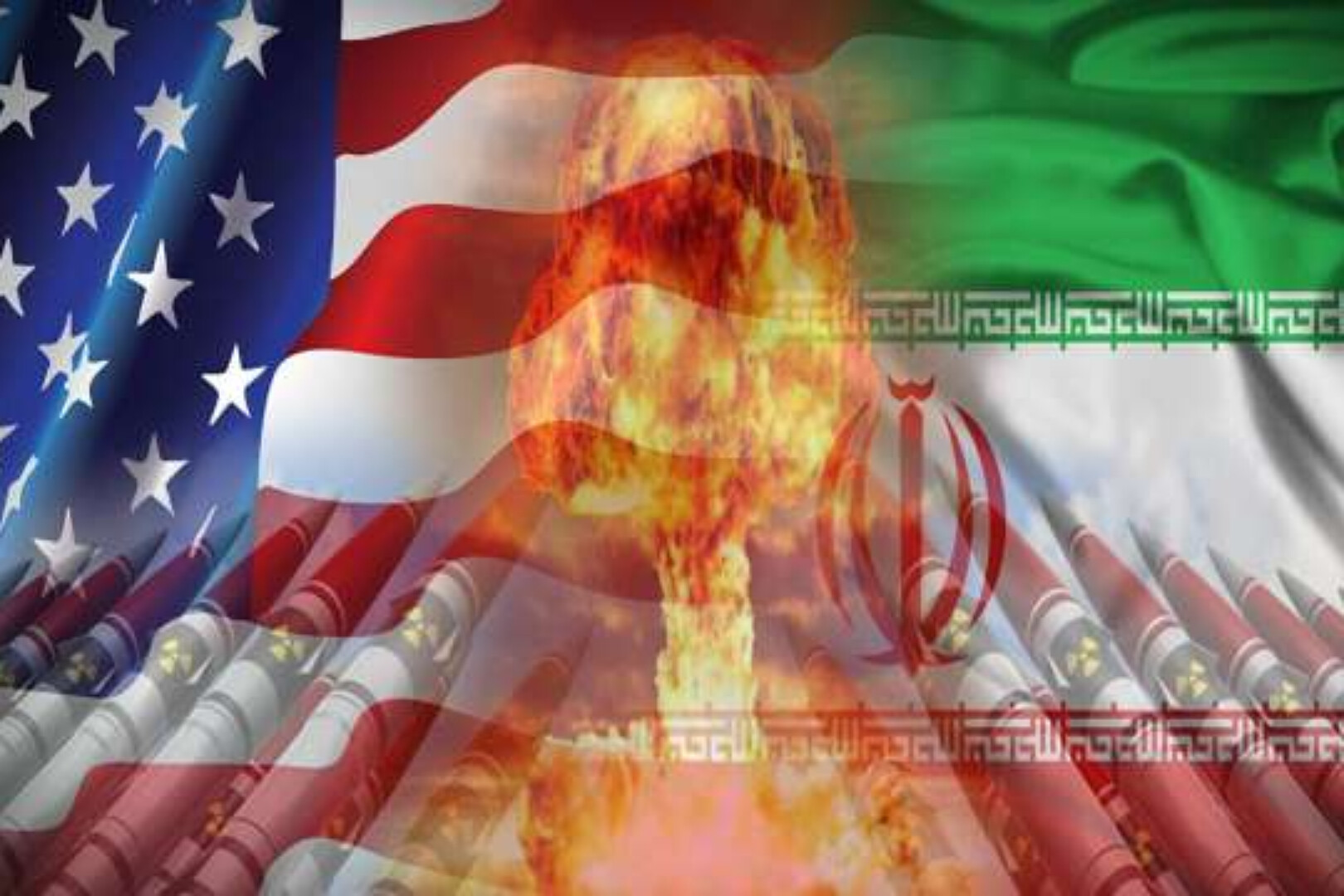
Original title: The Ceasefire Next Side Can Keep
Original by Thomas Aldren
Original by Peggy, Block Beats
The fact that the ceasefire was reached does not mean that the conflict ends。
In this confrontation between Iran and the United States, what really changed is not the battlefield posture, but the meaning of "the contract itself" is being rewritten. Using the 1988 ceasefire in Iran as a starting point, this paper goes back to how Khomeini made a critical shift between theology and reality and contrasts this logic with the 2026 ceasefire decision, pointing to a deeper structural problem: When States are placed above the rule, any agreement loses its binding force。
THE ARTICLE ARGUES THAT TODAY'S CEASEFIRE IS FRAGILE NOT ONLY BECAUSE OF A LACK OF TRUST BETWEEN THE TWO SIDES, BUT BECAUSE OF THIS “IMPLAUSIBILITY” ITSELF, WHICH HAS BEEN ENTRENCHED BY THEIR RESPECTIVE SYSTEMS AND HISTORICAL PATHS. ON THE ONE HAND, IRAN HAS RESERVED SPACE IN ITS POLITICAL THEOLOGY FOR "WITHDRAWABLE COMMITMENTS, IF NECESSARY"; ON THE OTHER HAND, THE US’S CREDIBILITY AS A CONTRACTING PARTY HAS BEEN WEAKENED BY ITS WITHDRAWAL FROM THE IRAN NUCLEAR AGREEMENT (JCPOA) AND ITS SHIFT TO MAXIMUM PRESSURE AND MILITARY STRIKES。
In this context, the ceasefire is no longer a "path to peace" but rather a form of reservation: it still exists, but it lacks the moral and institutional basis that underpins it。
Is an agreement still possible when both parties regard their power as ultimately dependent? And that is perhaps the most critical starting point for understanding the ceasefire。
The following is the original text:
How the 1988 logic is repeated today
Before accepting a ceasefire with Iraq in 1988, Ruhola Khomeini allegedly considered resigning from the post of Supreme Leader. He was the founder of the Islamic Republic of Iran。
The then Speaker of Parliament, Akbar Hashimi Rafsanjani, proposed another option: he would unilaterally put an end to the war before Khomeini would imprison him on that ground. Two people who stood at the top of the power of the divine power had to find an excuse for “evacuation” — because of the theological system that they had built, making subordination logically almost impossible. But reality has forced them to give up。
Khomeini did not accept this "political show" but himself "drinking poison." On 20 July 1988, he announced his acceptance of the United Nations ceasefire. Subsequently, the Government hastyly sought religious legitimacy. At the time, President Ali Khamenei quoted the "Treaty of Hodebiya" : This was an agreement signed by the Prophet Muhammad with his enemies in the 7th century and finally towards victory。
As Mohammad Ayatollah Tabaar documented in Religious Statecraft, Iranian commentators rejected the analogy a few days before the ceasefire; but once it became “useful”, it was quickly used to “salvage the regime”。
Within months, Khomeini sent another delegation to the Kremlin and issued a religious ruling against Salman Rushdi. This foreign action is exactly the same as that of the Prophet of Hodebia, who sent letters to the monarchs. According to Tabaar, both are essentially political actions — the restoration of previously damaged theological systems by demonstrating the “continuity” of religious positions. The war ended, but the narratives of the revolution did not end, but rather continued after a rebalancing pattern。
On 8 April 2026, the Supreme National Security Council of Iran accepted a two-week ceasefire agreement with the United States, after 40 days of fighting between the two sides. According to official statements, this was a “significant victory” and that Iran “forced the guilty United States to accept its ten-point plan”. One sentence, which is not new to those who remember 1988: "It must be stressed that this does not mean the end of the war."
The new supreme leader, Mujetaba Khamenei, the son of the man who also invoked the Treaty of Houptya, personally ordered a ceasefire. At the same time, its leading committee expressed its total distrust of the United States. A conditional acceptance, a reserved revolutionary narrative. The two Supreme Leaders, over 38 years, presented the same pattern。
This judgement is not difficult to understand for conservative observers. Operation Night Hammer dropped 14 drill bombs and 75 precision-guided weapons on three nuclear facilities. During military operations in February 2026, 26 of Iran ' s 31 provinces were covered. Iran's eventual acceptance of the ceasefire seems to confirm the conclusion that the use of force resulted in the non-achievement of five rounds of diplomatic negotiations brokered by Oman。
When the country is above the contract: all promises can be retracted
Nor is the suspicion that Iran may be in breach of its obligations unfounded. Such evidence can even be traced back to the author of the regime. On 8 January 1988, six months before the ceasefire, Khomeini made a statement. As Tabaar has said, this is “perhaps his most revealing and responsible expression”: “The State, as part of the “absolute rule” of the Prophet Muhammad, is one of the most fundamental Islamic decrees, which takes precedence over all sub-religious laws, even over worship, fasting and pilgrimage. When an existing agreement conflicts with the general interests of the State and Islam, the State has the right to unilaterally revoke any jus cogens agreement with the people.”
Here: Islamic countries are placed above prayer and fasting and are empowered to revoke all agreements. Earlier, Khomeini's writings had seen the State as an instrument for the realization of divine law, and that judgement had reversed that relationship — the State itself became an end and had the right to prevail over the law it was supposed to serve。
This can be seen as the core theological logic of the regime, which continues to this day under “absolute guardianship” (Velayat-e Faqih, the institution in which the Supreme Leader has full authority). As Amin Saikal pointed out in Iran Rising, this pattern is repeated: whenever a major decision is made, the Supreme Leader supports it with a “reserve expression” to reverse it whenever necessary。
In the tradition of the Prophet, if a limited system claims that it belongs only to the faithfulness of God, there is a clear name: idol worship. The consequences for the treaty are also very specific — the form of the commitment remains, but the real basis for compliance has disappeared, as the party committing it has already declared itself entitled to recover it。
This pattern may be seen in Tehran by supporters of Operation Hammer at midnight. But Prophetic traditions never allow people to diagnose “Image worship” only on external enemies。
Under the shell of the ceasefire, trust no longer exists
THE UNITED STATES HAD WITHDRAWN FROM THE IRAN NUCLEAR AGREEMENT (JCPOA) BEFORE OPERATION HAMMER, BEFORE THE 40-DAY WAR AND BEFORE THE CEASEFIRE. UNDER THAT AGREEMENT, IRAN HAD SIGNIFICANTLY REDUCED ITS STOCKPILES OF HIGHLY ENRICHED URANIUM AND WAS SUBJECT TO IAEA VERIFICATION UNDER THE ADDITIONAL PROTOCOL. THE AGENCY HAS CONFIRMED IRAN ' S COMPLIANCE IN ONE REPORT AFTER ANOTHER. THE AGREEMENT IS INDEED FLAWED: THERE IS A "SUNSET CLAUSE" FOR SOME OF THE RESTRICTIONS, AND THE ISSUE OF MISSILES LEAVES A GAP; FROM A PRECAUTIONARY POINT OF VIEW, WITHDRAWAL IS NOT WITHOUT REASON. BUT THE VERIFICATION SYSTEM ITSELF IS FUNCTIONING EFFECTIVELY。
However, Washington still chose to withdraw. The structural consequences of this decision, however evaluated by itself, are clear: the countries that now require Iran to comply with the new agreement are the same parties that previously destroyed the old agreement. When diplomatic efforts then failed to produce results within the framework of the “highest demand” of the United States, the answer became an escalation of the conflict。
JUNE 2025: 7 B-2 BOMBERS, 14 DRILL BOMBS, 75 PRECISION-GUIDED WEAPONS, STRIKING THREE NUCLEAR INSTALLATIONS. THE GOVERNMENT CALLS IT "A SPECTACULAR MILITARY SUCCESS". HOWEVER, ACCORDING TO THE DIA ASSESSMENT, THESE STRIKES ONLY CAUSED A "RETROGRESSION FOR MONTHS" IN IRAN'S NUCLEAR PROGRAMME. IN THE MAIN TARGET, FORDO, THE IAEA DID NOT DETECT DAMAGE. IRAN 60 PER CENT OF ITS HIGHLY ENRICHED URANIUM (HEU) RESERVES (440.9 KG) ARE UNACCOUNTED FOR: EITHER THEY ARE STILL UNDER RUBBLE OR THEY WERE TRANSFERRED TO ISFAHAN 13 DAYS BEFORE THE FIRST ROUND. THE QUESTION LEFT BY ONE OF THE MOST TECHNOLOGICALLY ADVANCED AIR STRIKES IN RECENT YEARS IS: WHAT DID WE GET
FEBRUARY 2026: FULL-SCALE WAR BROKE OUT AGAINST 26 PROVINCES AND THE SUPREME LEADER DIED. ACCORDING TO HRANA, A TOTAL OF 3597 PEOPLE DIED, OF WHOM 1665 WERE CIVILIANS. FORTY DAYS LATER, A CEASEFIRE WAS REACHED — BUT THE ISSUE OF URANIUM ENRICHMENT REMAINED UNRESOLVED AND THERE WAS NO WRITTEN AGREEMENT AT THE PUBLIC LEVEL。
AFTER THE AIR STRIKES, IRAN SUSPENDED ITS COOPERATION WITH THE IAEA. DIRECTOR GENERAL RAFAEL GROSSI STATED TO THE BOARD THAT THE AGENCY HAD LOST ITS "KNOWLEDGE CONTINUITY" OF IRANIAN URANIUM STOCKS AND THAT THIS LOSS WAS "IRREVERSIBLE". TODAY, THE IAEA “IS UNABLE TO PROVIDE ANY INFORMATION ON THE SIZE, COMPOSITION OR LOCATION OF IRAN'S HIGHLY ENRICHED URANIUM RESERVES”. IRAN HAS COMPLETELY SUSPENDED ITS COOPERATION. BUT WITHDRAWAL FROM THE AGREEMENT, THE IMPOSITION OF SANCTIONS AND A MILITARY STRIKE — THE VERY PARTY THAT NOW DEMANDS A NEW AGREEMENT — SET IN MOTION THIS CHAIN。
An imprudent leader misjudges; a structural sexual orientation repeats the same logic at every decision point: withdrawal from the agreement, imposition of maximum pressure sanctions, bombing of the facility, and then asking a country that has just proved “untrustable” to sign the agreement. In every node, force, not a contract, is chosen to destroy rather than trust structures. This unity reveals the conviction that the military might of the United States can bring about an order that would otherwise depend on ethical structures。
The Khomeini ruling placed Islamic countries above prayer and fast, while the United States model of behaviour placed military superiority over contracts. The two are essentially the same: they treat limited power as the ultimate "Idol worship"。
It is also here that the two types of "Idol worships" converge: the United States can no longer demand a trust that it has destroyed; and Iran cannot provide a commitment that its system itself retains the right of revocation。
The verification system, which had closed the gap between the two sides, had been destroyed in a succession of decisions taken by both countries. What remains today is an agreement shell that remains in its form but lacks moral support。
Both sides are talking about a text of agreement that has never been made public. The Supreme National Security Council of Iran called for the adoption of a United Nations Security Council resolution; and just hours before the ceasefire was declared, Russia and China had just vetoed a resolution on the more moderate Strait of Hormuz。
On the Iranian side, the Chief Representative of the Islamabad negotiations was the Speaker of the Parliament, Mohamed Bagher Ghalibaf, and was also a member of the Interim Leadership Committee. In late March, he also stated that he had never negotiated with the United States, but was now the leader of the negotiations — the implementer of the agreement and the author of the agreement。
In Iran's ten-point proposal, the Persian version contains the expression “recognition of uranium enrichment”, while the external English version deletes this sentence; Trump claims that “no enrichment will be allowed”. Forced subjugation has never been cured by idol worship. This has been proven repeatedly since 1988。
George Weigel, in Tranquillitas Ordinis, named this mechanism "substitute limitless" — that is, the ultimate goal of limited political arrangements, thereby destroying the foundations on which an orderly political community is based。
It was the same mistake to regard the ceasefire as a victory for American forces, or simply as an inevitable breach by Iran: to judge a limited arrangement as the ultimate judgement。
The "hawks" who believe that force can compel each other to obey, and the "doves" who believe that diplomacy can change their relationship are essentially mirrors — they refuse to recognize the fact that there is no human instrument to redeem themselves。
This certainty has never been given by tradition. What it requires is a more difficult path。
In the scriptures, the prophets always begin with Israel. For it is only the people who made the pact that have the concept of “Idol worship” that has been recognized, and when they refuse to apply it to themselves, their guilt is even greater. The announcement of Amos began in Damascus not because of its justice, but because the listeners nodded to the condemnation of the other. He then turned to Judah and then to Israel, and the nodding stopped。
The identification of a common model between the two countries means that these tools of judgement should be used sequentially: first of all, by pointing out their "Image worship" before judging others。
THIS TRADITION, KNOWN AS "REPENTANT DISCIPLINE", HAS A CLEAR FORM OF PRACTICE: WHETHER IN CHURCH, AT THE TABLE OR IN THE NEWS SCREENS, TALKING ABOUT THE CEASEFIRE SHOULD START WITH "ACKNOWLEDGED" — THE WITHDRAWAL OF JCPOA IS A REQUEST THAT THE PARTY TO THE NEW CONTRACT BE THE FIRST TO BREAK THE CONTRACT; OPERATION HAMMER AT MIDNIGHT REFLECTS THE BELIEF THAT ORDER CAN BE ESTABLISHED IF THE DESTRUCTION IS COMPLETE ENOUGH; THE 40-DAY WAR, THE 1665 CIVILIAN DEATHS, THE 170 CHILDREN KILLED IN A SINGLE SCHOOL ATTACK, AND THE CONFLICT'S STARTING POINT — URANIUM ENRICHMENT — REMAINS UNRESOLVED. BEFORE POINTING TO THE PROBLEMS IN TEHRAN, THESE FACTS ARE ACKNOWLEDGED. THE PROBLEM IN TEHRAN IS NOT SMALLER, BUT IF THE JUDGEMENT ALWAYS STARTS WITH THE WRONGS OF THE OTHER PARTY, IT CEASES TO BE HONEST。
Iran ' s unreliability has long been enshrined in its institutional theology, and a review of the ceasefire provisions remains necessary. But an honest assessment of the United States must precede it. It is only by identifying the two “Images of Worship” simultaneously that the real face of the arrangement can be understood, rather than treating it as a reaffirmation of established positions。
The ceasefire is essentially a ruin. Perhaps the only negotiating table that still exists. The tradition of just war has a real preference for peace, which means that people must participate in this emptied arrangement, not simply give up。
Augustine defined peace as "the peace of order". The current reality is a two-week moratorium with Pakistan ' s good offices: there is no common text, no effective verification, and the parties hold to the terms of the agreement. The ruins could be repaired, provided that they were not mistaken for a cathedral。
