
Talk about VanEck CEO: Storage chip units are demand-supply misalignment foams, most encryption projects disappear five years later
Bitcoin, stabilization coins and block chains will remain and many token ecology will disappear。
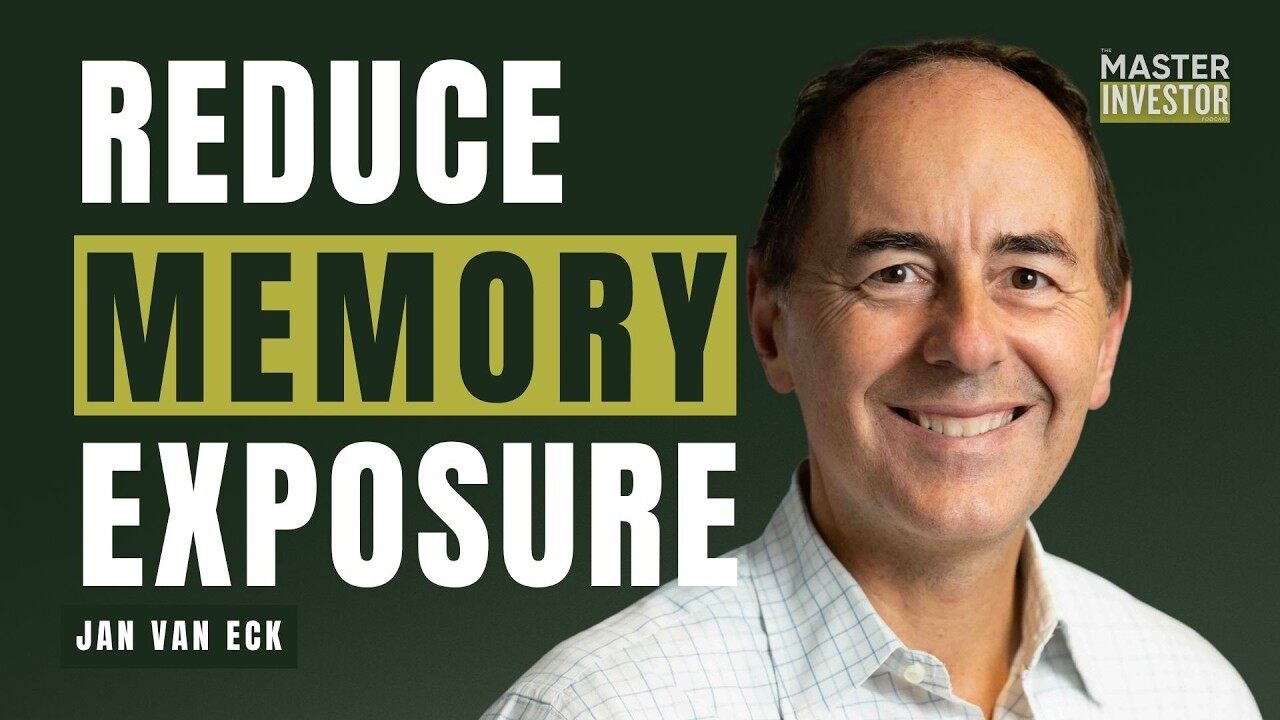
Collapse & Compiled: Deep tide TechFlow
Guest: Jan van Eck (VanEck CEO)
Moderator: Wilfred Frost
Original title: Memory Is A Bubble, but Nvidia prepared - Jan Van Eck On Semis Surge
The Master Invester Podcast with Wilfred Frost
Date of broadcast: 27 May 2026
Edit Guidance
The current podcast invited VanEck CEO Jan van Eck, whose core judgement is that Nvidia has moved from a single GPU manufacturer to an AI infrastructure “host” with software ecology, scale and power efficiency; but the surge in chip stocks is more like a phase-based supply and demand-driven foam。
The first VanEck masters, who managed approximately $22.5 billion in assets, promoted Bitcoin ETF, condensed the main lines of the next decade into three things: AI Computer Building, India’s Rise, and excessive fiscal borrowing in advanced economies like the United States, Britain, and Japan。
More strikingly, he described 2026 as the year of the “corporate chain of control”, arguing that Wall Street would absorb the advantages of block chains, stable currencies and programmable currencies, but that most encryption projects and software would lose meaning in 5 to 10 years; Bitcoin, stable currencies and block chains would remain, and many token ecology would disappear。
Expensive Notes
AI, SEMICONDUCTOR AND STORAGE CHIP UNIT
- “THE QUESTION IS SIMPLE FROM THE POINT OF VIEW OF AI. COUNTING DEMAND IS HERE, AND SUPPLY IS BELOW. THE SEMICONDUCTOR IS CLEARLY AT THE HEART OF THIS STRUCTURE.”
- "Nvidia is not just a GPU manufacturer, it's more like an AI host; the cyclical and highly competitive nature of a single chip manufacturer in the past is not what it is today."
- “Nvidia's advantage comes not only from the size of the capacity, but also from the ability of each dollar of electricity to produce more efficient chips; in a situation where the long-term multiple is only twenty times greater, I think it remains a solid asset in the combination.”
- “The profit outburst of the chip stock is not primarily due to the sale of more products, but to the increase in prices; this means that companies using the chip storage will begin to find ways to save their use.”
- "I don't like to talk about the top, but I'm very careful about the chip stock, because in the medium and long term, they don't have the same level of competition as Nvidia."
ETF, ACTIVE MANAGEMENT AND ASSET ALLOCATION
- “VanEck's investment philosophy is looking at today from a 10-year perspective: by 2036, what major themes have really changed the world and financial markets?”
- "ETF IS A GAME OF SCALE, AND THE LARGER THE ASSETS, THE LARGER THE CLIENT. MANY PROACTIVE MANAGEMENT, ESPECIALLY PRIVATE AND HEDGE FUNDS, MAY INSTEAD HAVE LESS ECONOMIES OF SCALE.”
- “EVEN IF THE ETF TOOL ITSELF IS PASSIVE, IT IS ESSENTIALLY A VERY PROACTIVE DECISION TO DETERMINE WHAT ETFS YOU HAVE, HOW YOU FIT, WHEN YOU ADD UP.”
Macro-debt, gold and hard assets
- “If the market really loses confidence in the United States Government's ability to perform, I do not know where to hide; even if gold is a medium- to long-term hedge tool, it can be sold together in the short term.”
- “I believe that gold is re-establishing itself as the first global currency, because I do not think that China or India would have become an international reserve currency if it had not been for the United States dollar.”
- “The market for government bonds is one of the strangest and most inefficient markets in the world; they are locked in a certain mindset and disconnected from reality.”
- “THE ETF HAS GROWN FROM LESS THAN $20 MILLION TO $4.7 BILLION, BEHIND WHICH THERE HAS BEEN A VERY DRAMATIC POLICY SHIFT; BOTH PARTIES IN THE UNITED STATES AND COUNTRIES LIKE JAPAN HAVE EMBRACED NUCLEAR ENERGY AGAIN.”
Encryption, stabilization of currency and company control chain
- “I call 2026 the year of the company chain of control, when banks, trading companies and financial institutions want to absorb the best part of the block chain, but still control their ecology.”
- “I think we're going through a cold, encrypted winter and it won't turn back. Many projects and software will not be interesting or alive in five or ten years."
- “The concept of a block chain will remain, the stability currency will remain, and Bitcoin will remain; but many other parts of the ecology will, in my view, disappear.”
- “For the first time, the Stabilisation Currency Act has enabled technology firms to compete with the banking system, but banks have also experienced competition from money market funds in the past, and they have survived.”
India and SpaceX IPO
- “Demographic trends cannot be countered; there is no reason why a country like India should not grow at a higher rate, as it continues to pursue pro-business reforms during Modi's tenure.”
- “SpaceX is large, and as an ETF distributor, we are happy to see it entering the open market; the next flow of liquidity into the economic system will be hundreds of billions of dollars.”
The zealous storage chip unit
Wilfred Frost:Today's guest is Jan van Eck, Van Eck and his associate CEO and CEO. VanEck, an asset management company founded by his father, is now an important player in the ETF industry, managing assets of approximately $225.0 billion. Jan's regular participation in podcasts is very straightforward, and that's why we very much welcome him. Jan, welcome to the show。
Jan van Eck:Wilfred, it's nice to do this show with you for the first time。
Wilfred Frost:I want to start directly with an ETF. To be fair, it has driven many of your performances over the past few years and is at the heart of the current market, SMH, the VanEck Semiconductor ETF (VanEck Semiconductor ETF, tracking the world's leading semiconductor company). It's been amazing lately. I understand it's about $65 billion AUM, right
Jan van Eck:Almost that size。
Wilfred Frost:It has become the main entry point for investors when they wish to gain semiconductor convertibles. This year, it has risen by 58 per cent, and in the past 12 months by 135 per cent. Even more striking is the annualized return of about 29 per cent since its inception。
Jan van Eck:This is crazy, right
Wilfred Frost:Unbelievable indeed. It is very difficult to do this in a compound manner. You can retire now。
Jan van Eck:Yes, we should stop now。
Wilfred Frost:BUT I'M SURE YOU WON'T. THAT'S WHY YOU'RE HERE. OVER THE PAST YEAR OR SO, THE SMH HAS GROWN TO $65 BILLION IN SIZE, WITH HOW MUCH COMING FROM PRICE PERFORMANCE AND HOW MUCH COMING FROM FINANCIAL INFLOWS
Jan van Eck:A large part is price performance. It's hard to imagine that in the last 12 months, the share of inflows will exceed 10 to 20 per cent。
Wilfred Frost:IT'S INTERESTING. I THOUGHT THAT THE SHARE WOULD BE HIGHER. WHAT DO YOU THINK DRIVES IT UP? MAYBE IT'S A SIMPLE QUESTION, IS IT JUST AN AI THEME
Jan van Eck:Yeah. VanEck ' s investment philosophy is to look at the problem from the macro perspective of the big picture as far as possible. I call it "10-year Macro," which is a decade macro. Meaning, by 2036, what subjects do we say affect the world most profoundly and therefore the financial markets? This perspective wants to filter out a lot of noise。
I THINK THERE ARE AT LEAST THREE THINGS LEFT: THE RISE OF AI, INDIA, AND THE OVER-INDEBTEDNESS OF THE UNITED STATES, BRITAIN AND JAPAN. FROM AI'S POINT OF VIEW, THE LOGIC IS SIMPLE, THE NEED TO CALCULATE IS HIGH AND THE SUPPLY CANNOT KEEP UP. THE SEMICONDUCTOR IS CLEARLY AT THE CORE。
If you look down, you'll come to Nvidia. One reason why our ETF ran the other semiconductor ETF is that it focused only on 25 shares and allowed maximum holding to rise to 20%. So it actually took Nvidia to a great extent。
Nvidia itself can do a single program. Are we still comfortable with semiconductors and Nvidia today? My own answer is yes. No one can guarantee that a company will not lose competition for the moat, but I think Nvidia will be one of the leaders in 10 years. Part of the reason is that it's already like an AI host, not just the former single chip or GPU manufacturer. That type of business was not only pro-cyclical but also highly competitive。
Nvidia now has software, cost advantages, production size advantages, and higher power efficiency. In other words, each dollar and every pound power can bring more efficient chips. It's only 20 times the long-term profit multiplier. So, although Nvidia has not been the hottest stock in SMH for the past nine months, I still think it's a very solid part of the mix。
Wilfred Frost:According to your recent revelations, Nvidia accounts for about 17% of SMH and TSMC about 9%. I'd like to talk more about them later. You just mentioned that it's important that you get bigger Nvidia openings, but it's also interesting that, at least this year, or as you said, for the last nine months, the performance was not driven by large companies like Nvidia alone. Over the past few years, many semiconductor companies have actually been left behind by the AI theme until recently。
Jan van Eck:EXACTLY. SMH METHODOLOGY, SOME FROM THOUGHT AND SOME FROM LUCK. WHEN YOU'RE ONLY 25 NAMES AHEAD OF YOU, IN THE LAST 15 TO 20 YEARS OF INVESTMENT, WHAT'S HAPPENING IS THAT BIG CAPITALIZATION REALLY LEADS THE MARKET. HALFCONDUCTOR COMPANIES MUST BE OVER 100, AND FILTERING OUT COMPANIES AT THE BOTTOM IN MORE COMPETITIVE SPACE IS TANTAMOUNT TO REMOVING DRAG。
Of course, this does not apply to all investment phases. But during this period it did magnify the impact of these big winners。
Wilfred Frost:In the short term, the increase has been 58 per cent since this year, and it is clear that the situation has spread dramatically. The stock of the chips was very strong. Is this going to last
Jan van Eck:I doubt that this performance is sustainable. We just saw a historic performance in May, so I don't think it'll continue at that pace. But I don't think market pricing must be irrational. Or go back to the super-macro perspective, if demand is high, supply is low, capital markets are actually telling entrepreneurs and entrepreneurs that we need your capital here, and we are willing to give you your capital valuation because we need to build an AI computer centre. It's not surprising。
I believe that this 10-year perspective is effective because of the natural tendency of humankind to look backwards. When a major trend emerges, whether a country rises or a major technology rises, we cannot just look back at the profits made by companies in previous quarters, or at the past usage of this technology, but try to understand the scale of its construction。
OF COURSE, NOT ALL TECHNOLOGICAL TRENDS WILL MATERIALIZE. THERE'S A LOT OF FAKE AIR AND TECHNOLOGY IN THE WORLD. BUT AI IS OBVIOUSLY SEIZING THE NECKS OF THE GLOBAL MARKET AND WAKING THEM UP。
Wilfred Frost:One more short-term question. KOSPI (Korea Consolidated Equity Index) is today at an all-time high. It has tripled in the last 18 months, and this is amazing for a country index, driven mainly by Samsung and SK Hynix (Helse, the world's leading storage chip manufacturer). The South Korean index went up 12% one day last week. Does that remind you of the opposite? At the end of 2021, for example, some of the memes surged, and then in 2022, there was a huge echo. I know that these chip-storage units, especially the two companies, all have amazing expectations of each share, so it's different from memes. But is there something like that that will light you red
Jan van Eck:Within AI's ecology, I'd say there was some foam. Back at the end of last year, the question was how financially sustainable OpenAI was. OpenAI is one of the leading models with ChatGPT. Will Claude go beyond it? In the company I call OpenAI Ecology, Oracle leverages OpenAI's construction algorithm, and CoreWeave is in it. Both fell by 50%。
So even within the larger AI trend, you find local foams, or company-specific foams. Returning to your question, I do think the storage of this broken pocket is a phase. People don't want to yell at the top at these times, but I personally take care of the chip storage units, because they don't have the same competitive moat as Nvidia in the medium to long term。
There will be new entrants in this field. There is a real shortfall, which gives them pricing rights. The main reason for their sharp increase in profits is not a large increase in sales, as they have capacity constraints; the real reason is that they raise prices. This also means that the use of these storage companies will begin to find ways to save volumes。
So I agree with your feelings, it's very foamy. In our initiative to manage the Fund, we are reducing our exposure to storage。
Wilfred Frost:Nvidia accounts for about 17 per cent of SMH, the second largest being TSMC, followed by major United States companies such as Intel, Broadcom, AMD, Microron, Texas Industries, Qualcomm, about 6 per cent or 7 per cent each. Does TSMC have a defensive moat like Nvidia? Despite the different types, are they of equal defensive nature
Jan van Eck:I think so. TSMC has not only manufacturing capacity but also capital capacity to build extremely expensive chip manufacturing facilities. I'm guessing one of the advantages of Nvidia and TSMC is that they all work with a wide range of players in the ecology and can see almost all customers. Thus, they can see where technology will go and how client needs will change. Most people would say that TSMC will be there in 10 years and that it will be a survivor。
Wilfred Frost:As you mentioned, Oracle or CoreWeave, from the height of the end of October last year to the low point of the Iran War in March, was almost dead, which is significant in its volume. I heard you say in another podcast that you don't have to worry about the whole AI bubble because it's been broken in a way. The question is, at these moments, how confident are you to buy back the right company? In particular, a large proportion of the companies we are discussing are not yet on the market, and investors can only participate through proxy bids。
Jan van Eck:IT'S GOING TO SOUND LIKE AN ETF ISSUER'S ANSWER, BUT AT THE CORPORATE LEVEL, IT'S CERTAINLY MORE RATIONAL TO DECENTRALIZE. FROM THE POINT OF VIEW, IF YOU'RE IN THIS TREND, IT'S BEST TO BUY IT BACK INSTEAD OF CHASING IT RIGHT NOW. WE SPOKE EARLIER ABOUT SMH'S FINANCIAL FLOWS, AND I THINK THAT MUCH OF THE FUND'S ASSETS COME FROM INVESTORS WHO BOUGHT THEM YEARS AGO AND THEN LET APPRECIATION HAPPEN. IT'S HEALTHY IN A WAY, BECAUSE THERE'S NOT MUCH FAST MONEY CHASING IT。
Of course, funds are chasing for chip storage units and for the hottest spots in the ecology. But in general, we still overcomposed semiconductors in a broad combination of models, but now there is a slight desire to end it with modest profits。
ETF AND ASSET MANAGEMENT
Wilfred Frost:Let's talk more about Van Eck this company. I was just talking about SMH. I was just preparing the show to realize that, although the company was created in the 1950s, you actually entered the ETF game in the early 2000s。
Jan van Eck:IS 2006. WE'VE BEEN IN THE ETF FIELD FOR 20 YEARS。
Wilfred Frost:I DIDN'T REALIZE BEFORE. ETF IS OBVIOUSLY ALREADY THE LARGEST PART OF YOUR BUSINESS。
Jan van Eck:YEAH, THAT'S GREAT. ETF ASSETS SHOULD BE MORE THAN 95%. WHILE WE STILL HAVE INITIATIVES FOCUSED PRIMARILY ON GOLD MINES, RESOURCES AND EMERGING MARKETS, THIS IS ALSO IMPORTANT FOR US. I'LL SIT WITH THE ACTIVE FUND MANAGER。
Wilfred Frost:We recently asked Jeremy Grantham, and the audience can go back to that period. He was one of the first people to support ETF, and he greatly appreciated the influence of Vanguard's founder, Jack Bogle, on the industry. Bogle's mission is to reward employees if they can reduce the costs to clients; this is the new thing that Vanguard promoted about 50 years ago. Is that the central theme when you develop ETF business? In other words, if value is delivered to customers and costs are reduced, will the company be rewarded in the long term
Jan van Eck:of course it's a game of scale. i think in the area of private fundraising and hedge funds, proactive management may be a game of no economies of scale. if you have too much money, you can't manage the early value fund or small capitalization fund. these strategies have capacity limitations. you can't manage too much money。
Instead, it's a scale game. The bigger the AUM, the bigger it is to serve a wider audience. We don't compete with Vanguard in the core part of the customer mix; but in the area of our competition, we try to make costs very competitive。
THE REASON I'M DOING THIS KIND OF PODCAST IS BECAUSE I WANT TO MATCH CLIENTS THROUGH RESEARCH-SHARING. IN PRIVATE OR ACTIVE BUSINESS, FUND MANAGERS CAN ALIGN THEIR INTERESTS WITH THOSE OF THEIR CLIENTS THROUGH JOINT INVESTMENTS; HOWEVER, WE HAVE MANY SUBDIVISIONS OF ETF, WHICH CANNOT BE HELD TOGETHER. SO THE WAY WE ALIGN OUR CUSTOMERS IS TO SHARE OUR RESEARCH, TO MAKE CLEAR WHAT WE LIKE AND WHAT WE DON'T LIKE AT SOME POINT. THAT IS WHY WE MAKE QUARTERLY OUTLOOKS. SOMETIMES WE ARE OPTIMISTIC ABOUT A LOT, SOMETIMES NOT。
Wilfred Frost:You have already mentioned the word “active”. A lot of people think of ETF as a passive tool, either as a passive ETF investment, or as a traditional active fund manager, and let him build a combination of stocks. How soon can you make a new ETF, like a new theme? How do you adjust the existing ETF? Do you clearly define yourself as active ETFs
Jan van Eck:There are two types of active decision-making in ETF. The first one is what you have ETF. Like VanEck's specialty ETF has a lot, and we have some broader products. Do you have a semiconductor? The issue itself is one of proactive decision-making. Even if ETF is a tool that can be passive, how weighting and when investing are very proactive。
It seems in VanEck that this is almost the most important decision-making. The way we look at the world is that asset allocation and asset class selection are extremely important for investors. Our history began with the first gold fund in the United States, and we see gold as a very powerful instrument of decentralization in the portfolio at some times. Although I do not always look at the amount of gold as much as my father, it is indeed a proactive decision。
The second question is, is there a need for proactive management of ETF? This is bigger in the United States than in Europe. We do have some proactive management of ETF. I will give two examples. One is the investment selection, which targets the areas of encrypted currency or digital assets. When we launched ETF, I started talking to clients, and I found out that a lot of people didn't even know what Etheum was or why it was performing or what the risks were。
As asset managers, our job is to describe opportunities as well as risks. So, I said, then turn to providing a proactive fund in this area. Investors do not have to follow Etheleum's fluctuations, changes in a Bitcoin mine, or in a paid finance technology company like Revolut; let's follow the whole industry and adjust the configuration. It's an active stock selection ETF。
Another example is the active management of real assets or commodities (physical assets/large commodities) configuration of ETFs. If you do not want to choose between gold and oil, or between oil and oil units, this type of active management of ETF can be used。
Wilfred Frost:What's the ticker for these two ETFs
Jan van Eck:ETF is NODE. My colleague Matthew Sigel is very active on X/twitter, and can read his daily comments on the stock pool if you want. The physical asset configuration ETF is RAX。
Wilfred Frost:To the audience, Jan clearly has an interest in these ETFs and this podcast does not constitute direct financial advice. Finally, talk about the ETF industry. I want to know how you feel about the risks to the whole market of increased concentration of ETF. This is more about large S& P500 ETF than what you just said about active or professional ETF. Do you think that this concern is justified when the viewer lists it as one of the major risks
Jan van Eck:We may not have enough time to discuss the structural implications of all markets. I say two areas of particular concern, and more in the area of fixed proceeds. The first is non-liquidity in fixed-income markets. If we had a bond ETF, the portfolio could actually trade between 5 and 10 per cent per day. This means that people behind the scenes, such as brokers, must be listed on these bonds。
In times of market crisis, people reduce risk, so that these Bond ETFs (bonds, ETFs) may be less efficient. Some would say that they more accurately reflect prices, and I might say more precisely, but in any case, their trade-price differentials would increase, transaction costs would be higher and prices could fall. The second concern is not related to the ETF industry, but rather to the financial markets, where government spending is a problem. If you only talk about ETF, I'm worried about fixed earnings。
Impact of macro-debt
Wilfred Frost:In the past week or so, except this early week, we do see a marked rise in bond yields. In the United States, the return on the 10-year bond period rose to more than 4.6 per cent, after relatively calm in the vicinity of 4.3 per cent. Seeing this change reminds you of the biggest macrophobia
Jan van Eck:as you can guess, i like charts over 10 years. i always say that any chart less than 10 years is "chart crime." of course, if you have data; if not, a longer historical analogy is needed。
Jan van Eck:The 30-year-old national debt return rate in the United Kingdom and Japan reached high levels last year and this trend continues this year. I think the reasons for each country are slightly different. You may have some political unrest in Britain, or at least higher-level uncertainty than the United States。
Government bond markets appear to me to be one of the strangest and least efficient markets in the world, because they are often locked in a certain mindset and disconnected from reality. Before the European financial crisis, for example, Spanish and Greek bond yields had been lower than German bonds, which never made sense. At some point, the price was suddenly revalued sharply。
So what is really interesting and indicative is that bond investors are asking Britain and Japan to pay higher long-term returns. I'm worried about America, too, but the point in life is most important. I'm staring at the 10-year rate of return in the United States, and I'm usually one of the most worried; but I also know that it's at a stage where others are not worried。
The United States has not achieved a real high annual rate of return for many years, and it remains in a trading zone. But that's something I've been following very closely. In the background, the US budget deficit peaked at about 6.5% two years ago. Because of, among other things, Trump's tariff revenues, the deficit had been falling, and I predicted that this year's budget deficit would fall to 5 per cent, which is still high and should not theoretically exceed 3 per cent, but in the right direction。
If the US spends $500 billion on this war in Iran, then suddenly the deficit is pushed back to 6.5% or 6.9%. I can't see the market won't worry about that。
Wilfred Frost:Interestingly, we have also seen very strong relevance over the past two weeks. Even if the triggers could be in the United Kingdom or Japan, everyone would move simultaneously as a result of the deterioration of debt dynamics. Even if the U.S. were not as dangerous as Britain or Japan, it would seem that the U.S. would be dragged away if the rate of return continued to rise in 10 or 30 years. Do you think this is directly related to assets like SMH? Even if the SMH bets are the subject of your long-held belief, will the growth plate's P/E multiplies be pushed down
Jan van Eck:100%. I haven't discussed with enough clients what would happen if the market really lost faith in the United States Government's ability to perform. But I don't think there's anywhere to hide. Wilfred, I often say gold is a medium- and long-term hedge tool, but if all people flee financial markets, gold may also be sold。
So I can't see why the semiconductor is immune. In a way, you can say that technology is not so dependent on debt, so it is less direct. But if everyone's heading for the exit, I don't think there's anyone who can run in the other direction。
Wilfred Frost:Let's talk about opportunities. If we enter a decade of more inflation, this may also be an important reason for higher rates of return. You think gold could be sold in the short term, but still attractive in the medium to long term? Please also refer to GDX (VanEck Gold Miners ETF, gold mining unit ETF). At the current level of gold prices, do these miners make a lot of money even if the gold does not rise
Jan van Eck:Yes, they have very strong cash flows. For the past 15 years, gold mining has been like purgatory. First, the price of gold is low. Authorities like the Bank of England sold gold at about $250 per ounce in the late 1990s。
Wilfred Frost:Thank you, Gordon Brown。
Jan van Eck:YES, THANK HIM. IN THOSE TIMES, GOLD WAS NOT AN IMPORTANT PART OF PEOPLE'S MIX. GOLD THEN BEGAN TO RE-INTEGRATE INTO THE PORTFOLIO, BUT THE COMPANY ITSELF HAD TOO MANY DEBTS AND DID NOT CONTROL PRODUCTION COSTS. INVESTORS ARE DISAPPOINTED WITH THESE COMPANIES YEAR AFTER YEAR, AND VALUATIONS OR P/E ARE DECLINING. I THINK THE BOTTOM IS ABOUT 2016. IN FACT, THE GOLD MINING UNIT FELL BY 90 PER CENT BETWEEN 2011 AND 2016。
In 2011, it was assumed that gold would benefit from a significant injection of government capital into markets in the aftermath of the financial crisis; it did not. As a result, the company faced many counter-winds and stock prices collapsed。
However, they have now rebuilt their balance sheets, borrowed less and paid off many debts, and now have very strong cash flows. For me, gold is a very long-term trend. Even if you weren't as worried about US government spending as I am, you might have been able to buy a little less on the margins of US Treasury debt. As a result, gold is, in my view, becoming the first global currency。
If it were not for the United States dollar, I do not think it would be China or India. They have some capital controls and do not want to become international reserve currencies. At the same time, these countries are culturally large in gold purchases. So I think gold will be the first currency again. This is a multi-year process. It may also be running around here for a while, because last year it went up too much。
Wilfred Frost:Do you think gold will be associated with S& in the short term; P500 in the long term
Jan van Eck:Gold has different characteristics over time. Sometimes it deals with dollars, sometimes it deals with inflation concerns. But if you accept my argument that gold is a global currency, then many of the recent trends actually make sense. Last year, for example, even with low inflation in the United States, the global demand for gold as an alternative currency remained strong. So what happens in the United States is not so important。
Similarly, if the Gulf States of the Middle East suddenly lose their sources of income and need cash to pay their bills, they will sell what they can sell, and gold is a deep and large market. It is therefore reasonable that the gold was sold after the beginning of the Iranian conflict. This is consistent with my view of global drivers。
Wilfred Frost:I've read your ETF list, and there's a lot of products related to hard assets, inflation exposure. For example, Nuclar and Uranium ETF, the stock code is NLR, with a size of nearly $5 billion; rare earths and strategic metals, about $3 billion; OIH (oil services, oil suits, ETF) about $2.5 billion, and Larry McDonald spoke about it many times on the show. Have you guys been building these ETFs in recent years? Or have they actually been in existence and have they only recently finally gained market attention
Jan van Eck:They've been there all along. When we entered the ETF business, we took advantage of our strengths in global resources, gold and emerging markets. That was our first ETF. The ETFs on the market at that time were not so many, so they were usually first to market。
WE THOUGHT THAT PEOPLE WOULD WANT TO TRADE IN OIL SUITS AND NUCLEAR ENERGY. THE SUBJECT OF NUCLEAR ENERGY HAS BEEN WAITING A LONG TIME. I REMEMBER THAT NLR MIGHT HAVE BEEN INTRODUCED IN THE SECOND OR THIRD YEAR OF OUR ETF, PROBABLY IN 2007 OR 2008. BUT IT'S SO UNPOPULAR THAT FIVE YEARS AGO THIS ETF WAS LESS THAN $20 MILLION。
Wilfred Frost:From $20 million to $4.7 billion, it took only five years。
Jan van Eck:Because the policy shift is too dramatic. I rarely see such things. It has not been widely discussed by politicians, but in the United States, Biden's government is largely supportive of nuclear energy, as are some important Democrat governors. As a result, nuclear energy has become a bipartisan consensus in the United States. At the international level, Japan, as well as many countries that used to be far from nuclear energy, have also regained active nuclear energy programmes, and China has certainly been pushing forward. That is why funds flow. Over the past few years, this has been largely driven by financial inflows。
Emerging markets and encrypted assets
Wilfred Frost:I didn't realize it was growing so big. Let's talk about EM. Is this a judgement for all emerging markets, or is it particularly directed at India
Jan van Eck:sometimes i say “10-year macro”, which sounds like futureism or uncertainty. but i really think that the more certain trends look, the greater certainty. population structure, for example. you can't fight the population. whatever happens now, in a decade or so, you can almost know whether there is population contraction or other trends。
India, under the leadership of Modi (Prime Minister of India), has advanced a number of pro-business reforms, which are continuing. Even though these reforms are at least less prominent in the United States, such as last year ' s bankruptcy laws, labour laws and a series of regulatory, pro-business reforms are advancing. No country has done so much pro-business reform to grow at a higher rate. Projections indicate that India ' s economic size may reach continental levels in Europe after a decade。
The more important question for investors is: can you make money from it? GDP growth does not necessarily translate into profit growth or stock market returns. It happens that India has moved to a more pro-equity culture decades ago. When Infosys (India IT Service) and some early technology companies came on the market, wealth was created. India seems to have developed a social consensus that wealth, if not wealth, is acceptable. So I combine these two points, and that is why I have a strong macro-level view of India in the long term。
Wilfred Frost:As you said, India ' s demographic structure is very attractive and the working-age population is still growing, which is not the case in countries such as China. I'm also interested in your other ETF. You mentioned earlier that Nvidia and some companies have a broad moat, which is obviously your concept. You have a wide moat ETF。
Jan van Eck:If I ask you, which company in the financial services sector owns the largest stock research analyst, you might not think of Morningstar. But that is the truth. I do not think they are very good at advocating this, but they do have such a set of research capabilities。
Their stock research method is exactly what you call a moat. If the market is competitive, it is difficult to sustain excess profits in the long term unless a company is fortunate to own some kind of competitive moat. The moat can come from technology, economies of scale or other factors. Morningstar's approach is to screen all companies to a small number of companies that they consider to have competing moats. I guess only about 5% of the companies can get into this range, and I should count again。
THEY THEN USE THE VALUATION FORMULA, AS THEY PREDICT FUTURE PROFITS AND INCLUDE THE CHEAPEST SHARES OF THESE COMPETING MOAT COMPANIES IN ETF。
Wilfred Frost:THIS ETF HAS GROWN TO $11 BILLION AUM. IS THIS A STEADY INCREASE? OR IS IT A SUDDEN RUSH
Jan van Eck:Technically, it's not fair to compare it to S& P500, but investors certainly do. Over the years, it won not only S& a single year; P, cumulatively, it won, so most AUM grew at that time. And it's a remarkable thing to do in 2023, because 2023 was a rebound year when the technology unit fell in 2022。
It's been a good year. It was somewhat backward recently because it missed some explosive increases in semiconductors. So over the past few years, it has lost a little asset。
Wilfred Frost:Tell me what you think about crypto. When did you feel the pull, or when did you think the reason for providing encrypted ETF was justified? I would also like to know how these products are used, for example, whether there are still many marginal buyers on the market who buy encryption assets for the first time。
Jan van Eck:We were the first ETF distributor to submit Bitcoin ETF applications in 2017. The reason is simple: I see Bitcoin as a competitor of gold. Bitcoin was growing much faster than he is now. Some clients look that way. So, we think that Bitcoin would be an alternative to platinum and silver. It does not necessarily replace gold, but may be complementary。
as soon as we get to this day, i think wall street has largely absorbed the best things in encryption in the past year or so: blockchain to centralize, 24/7 to be visible, and money programmability. it's kind of technical。
Wilfred Frost:We like technology。
Jan van Eck:In 2026, I called it the year of the company chain of control. Institutions such as Bank of New York, JP Morgan, Cumberland Trading (Chicago Large Trading Corporation) are trying to create what I call a corporate chain of control, absorbing the best part of the existing block chain, but still controlling the ecology。
They'll think, still if it's the Wilfred chain, or some other chain under their control, because I want to keep my customers in my network. That is where we are now. Almost all financial companies in the United States are using stablecoins or encrypted parts and are trying to capture an ecology. I don't think many of them will succeed. But this is how technology evolved in 2026。
for the rest of the encrypted currency, there will be relatively few winners. i think we're going through a crypto winter, and it won't turn back. many projects and software will not be interesting or alive in five or ten years。
The concept of a block chain will certainly exist, the stable currency will exist, Bitcoin will exist, but many other parts of the ecology will, in my opinion, disappear。
Wilfred Frost:So Bitcoin, or Etheleum, the two largest assets, are still early innings, or are they already in the middle or even the later part of the life cycle? By the way, I like your Bitcoin ETF stock code: Hodl, which makes me laugh。
Jan van Eck:Who knows. My opinion is that Bitcoin will eventually reach about half the value of the gold. With gold also rising, Bitcoin ' s target price remains several times the current price. I also remind many American investors that they seem to have forgotten that Bitcoin was at record high last year, and this is the fourth year of the cycle of halving. Every four years, Bitcoin falls sharply. So it was no surprise that it fell this year. In fact, we basically predicted it。
Wilfred Frost:YOU'RE VERY FRANK. AS CEO OF A FINANCIAL COMPANY, HOW IMPORTANT DO YOU THINK THE RELEVANT LEGISLATION IS? THE UNITED STATES ALREADY HAS TWO MAJOR LEGISLATIVE INITIATIVES IN THIS AREA. IS IT DEVASTATING FOR TRADITIONAL BANKS, A HUGE OPPORTUNITY FOR COMPANIES LIKE YOURS, OR IS IT JUST MARGINAL
Jan van Eck:I think it's marginal. Every year we design a tie theme, and this year, in addition to commemorating the signing of the Declaration of Independence, we talk about the three most important things in American financial history: Alexander Hamilton (Alexandr Hamilton, the first United States Treasury Secretary), FDR (Franklin Roosevelt, the President of the United States, promoting a new deal and reshaping the banking system), and last year's stablecoin bill。
The Stabilisation Currency Act is important because it enables technology firms to compete with the banking system for the first time. Otherwise, our financial life always begins with bank accounts. You don't have a bank account, you don't have a financial life; everything goes through a bank account. Now, the technology giant can compete with the banks。
but banks have experienced competition in the past. in the late 1970s, the money money market funds provided higher interest rates that the banks could not provide, and the banks lost a lot of money. but of course the bank survived. their customer base is viscous, and i don't think it's gonna disappear。
View of SpaceX IPO
Wilfred Frost:I have a few questions before I close. One is the short-term outlook. There'll be some big IPOs, SpaceXs in the next few months that are of the greatest interest in the short term. Some details of the process may not have been realized: how quickly it would allow insider selfling, and how quickly it would be included in the index, particularly S& P500. This leads to an automatic buyout, which is not a traditional situation. For you, are these red flags or at least amber lights? Or do you think that makes sense
Jan van Eck:I'm not religious about this. SpaceX is too big, as an ETF issuer, and we're glad it's on the open market. I think that the steps it is taking are quite reasonable. It's a very small proportion of the market, about 3 to 4 percent. Normally, a company may not qualify for inclusion in the index if it has so few circulation shares. They must therefore be released slowly over time。
As you said, the scale of funding here is absolutely amazing. You're talking about hundreds of billions of dollars. By contrast, what was our tariff revenue last year? $30 billion. So it's like a wave of liquidity in the economy. In the short term, I believe that they will have positive effects on economic growth and will be absorbed by markets。
ONE ARGUMENT ABOUT WHY MORE COMPANIES ARE NOT ON THE MARKET IS THAT ACTIVE FUND MANAGERS CAN BUY IPOS IN ACTIVE FUNDS, BUT ETFS CANNOT BUY IPOS. I DON'T TOTALLY ACCEPT THAT, BUT IT'S A REASONABLE ARGUMENT THAT COMPANIES ARE LESS IPOS BECAUSE THEY CAN'T ACCESS THE INDEX。
I think that all the assumptions are worth revisiting. When you face such a large, mature company, this is not a start-up company with no income but a trillion-dollar valuation. It is a very mature company entering these indices。
Wilfred Frost:This is gonna be great. The road show, the CNBC interview Elon and others will be of great interest. I think there might be some big AI companies on the market later. The next few months will be very interesting, and I look forward to seeing how it unfolds. Jan, finally, we ask each guest a simple question: What is your most important investment proposal for the audience
Jan van Eck:Take a big macro view. I think what VanEck has done since my father was founded in 1955 is to bring in the perspective that Dutch and British investors developed four or five hundred years ago: to look at political risks, to see whether a country is pro-business, to see whether it is possible to reward equity and financial market participation, and then to discuss asset classes。
When China rises, how do you fit it? India is rising today. What do you give India? Should you just follow the weight of the past, or maybe I want more? It is hoped that everyone will participate in the AI trade (AI transactions/AI thematic investments). What about gold? Are you in gold? Should you? Why? These are the big questions to ask in a long-term perspective。
We always say that we are not the only source of knowledge. Discussions such as this are valuable and require interaction with others in the market to test their assumptions。
Wilfred Frost:I love this answer. And you compliment the British on their initial financial wisdom, which certainly suits my appetite. Jan van Eck, thank you for joining The Master Invester Podcast。
Jan van Eck:Thank you, Wilfred。
