
The rebound is an illusion? The bond market has given the answer
The stock market is raging, bonds and crude oil are warning

Original title: The Bond Market Isn't Buying This Rally.
ORIGINAL BY: KURT S. ALTRICHTER, CRPS
Photo by Peggy Block Beats
According to the editor, a "risk clear" narrative is taking over again as the stock market quickly recovers its fall in the war and approaches historical heights. But this article reminds us that if we look only at the equity market, we can easily misjudge the real environment。
Bonds do not match the signals given by crude oil: interest rates go up, oil prices are high, pointing to the continued stickiness of inflation, the Federal Reserve ' s policy space is limited, and geo-conflicts have yet to materialize. By contrast, the stock market is simultaneously pricing low inflation, restarting interest rates and managing costs and mitigating conflict, a highly ideal set of premises。
In the author ' s view, the wheel rebounds more to automatically quantify than to base. Prices can deviate from reality in the short term, driven by trading practices that do not want to miss an increase, but ultimately they still need to return to the zones determined by macro variables。
When differences arise between different asset classes, the real risk is often not who is right and who is wrong, but how these differences are repaired. The question was not whether the market was optimistic, but whether it was ahead of the data。
The following is the original text:
"Rule two: Excessive fluctuations in a single direction tend to trigger excessive reversals in the opposite direction. — Bob Farrell
The Standard 500 index has fully recovered the full decline during the inter-American conflict. As of yesterday, the index was 1 per cent higher than on February 27 (the day before the first strike on Iran) and was only one step higher (less than 1 per cent)。
In 10 short trading days, the market completed a full round trip。
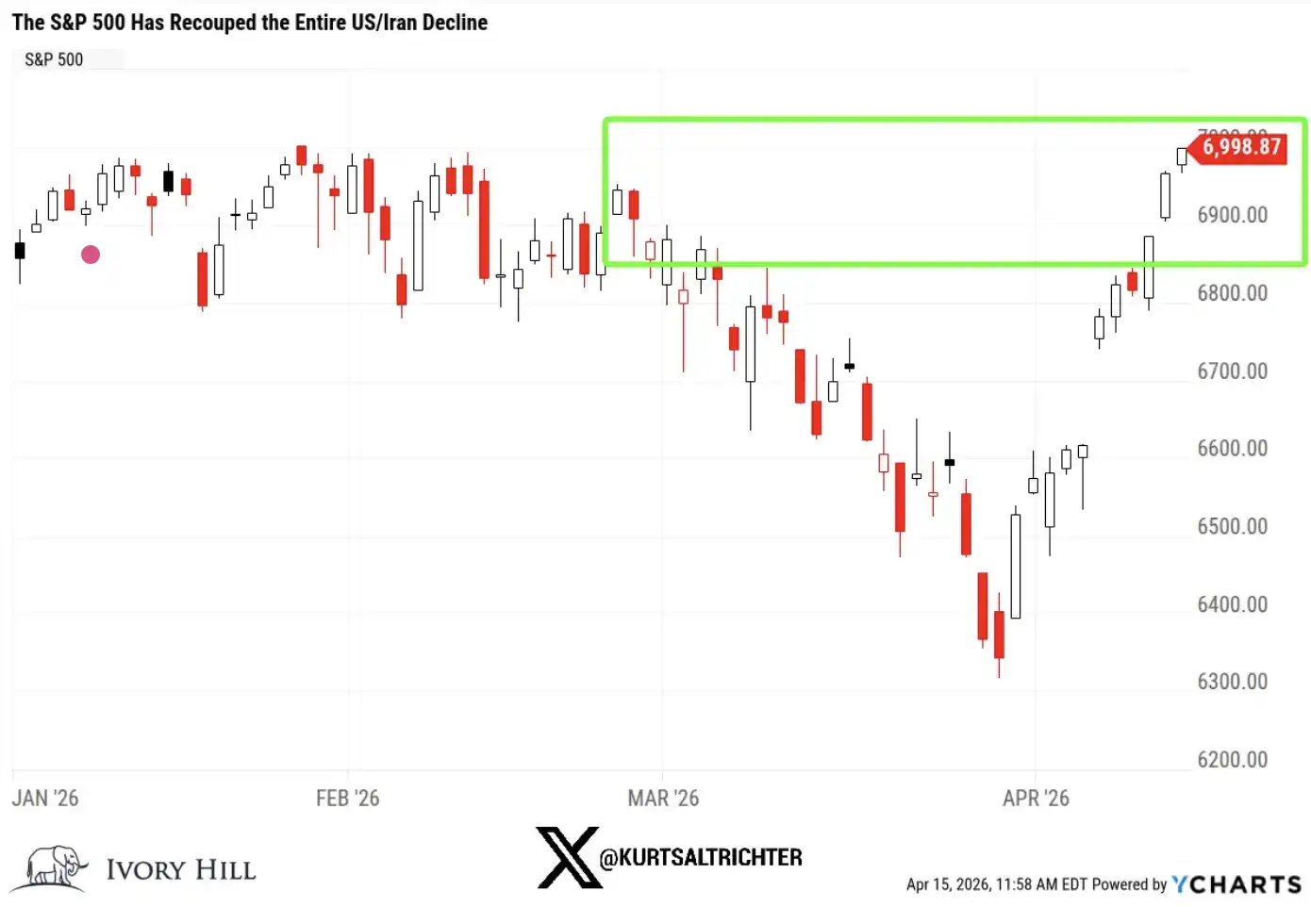
Let me get this straight. If you only look at the stock market now, everything looks like "rehabilitation." The war broke out, the market fell and then rebounded and everything returned to normal。
But if we widen our horizons, this is not what is happening。
The bond market did not confirm the increase。
Nor did the crude oil market confirm the increase。
When the two most important global markets are telling a story that is different from the stock market, this is no signal that can be ignored。
So, what is the current stock market pricing
In order to put the PTP 500 above the pre-war level, the market actually needs to believe the following:
Current oil prices are not enough to produce substantial constraints on consumption
The Fed still chooses to lower interest rates, despite the heat inflationary data
Higher raw materials and transport costs do not erode corporate profitability
The Middle East conflict is close enough in six months to be resolved and no longer poses a risk
Maybe this is how things really go. I'm not saying it's impossible. However, this is a rather radical set of premises, and the current data released from the bond and crude oil markets do not support these assumptions。
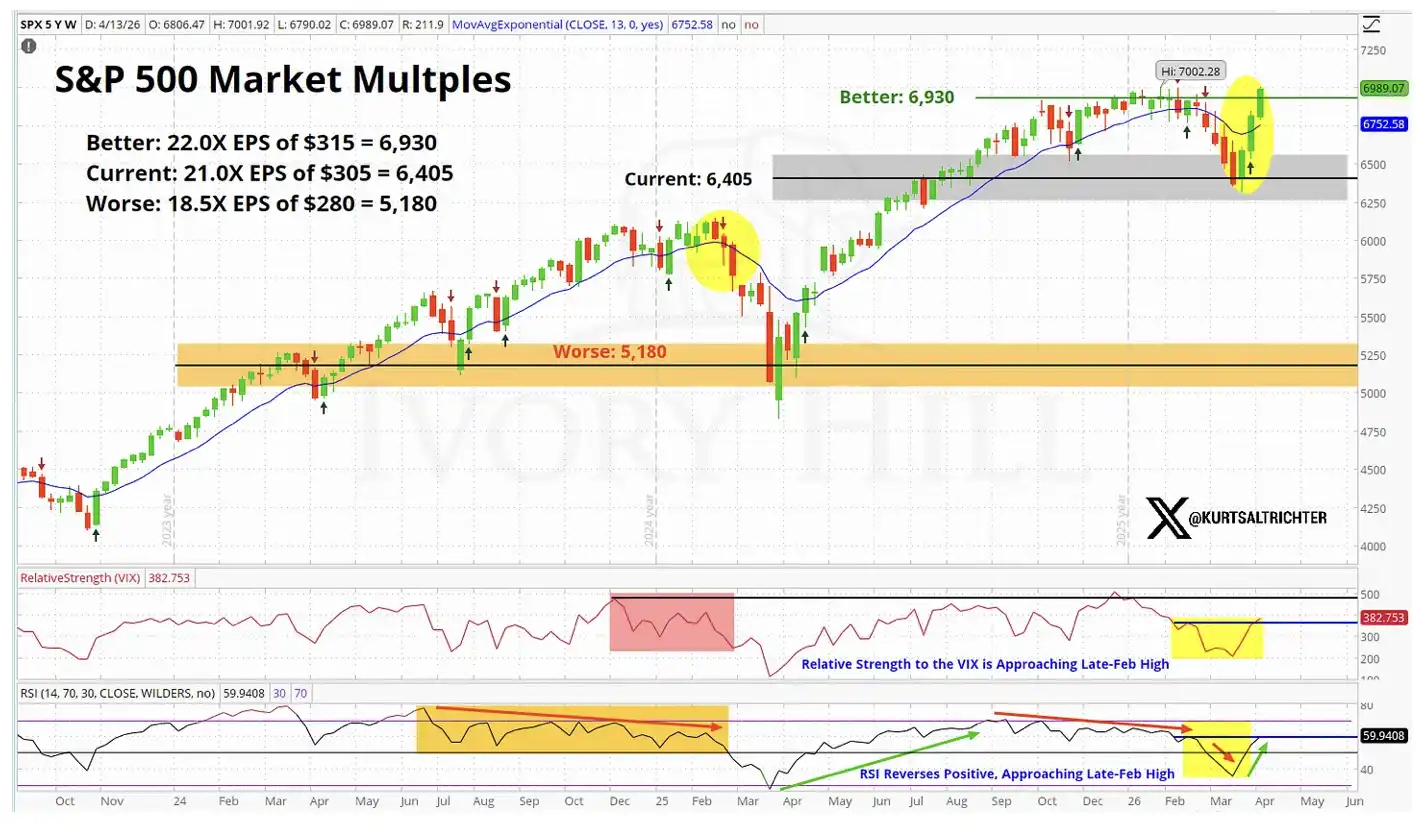
In basic terms, stock market pricing is close to "perfect expectations"。
Let's see more specific data
On 27 February, the day before the outbreak of war, key indicators were collected as follows:
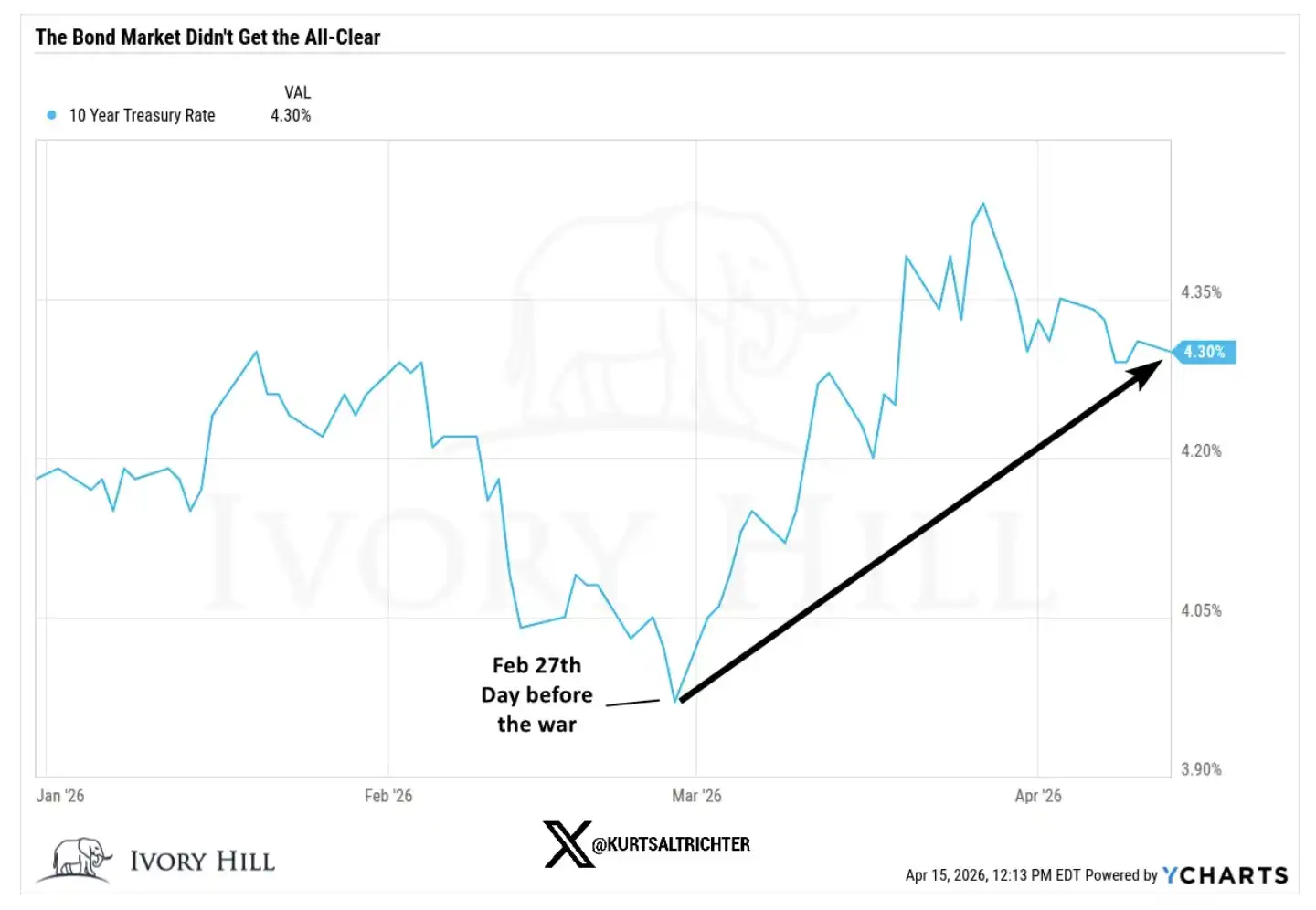
10 Annual United States debt return: 3.95 per cent, compared with 4.25 per cent received yesterday, up 30 basis points from the pre-war period
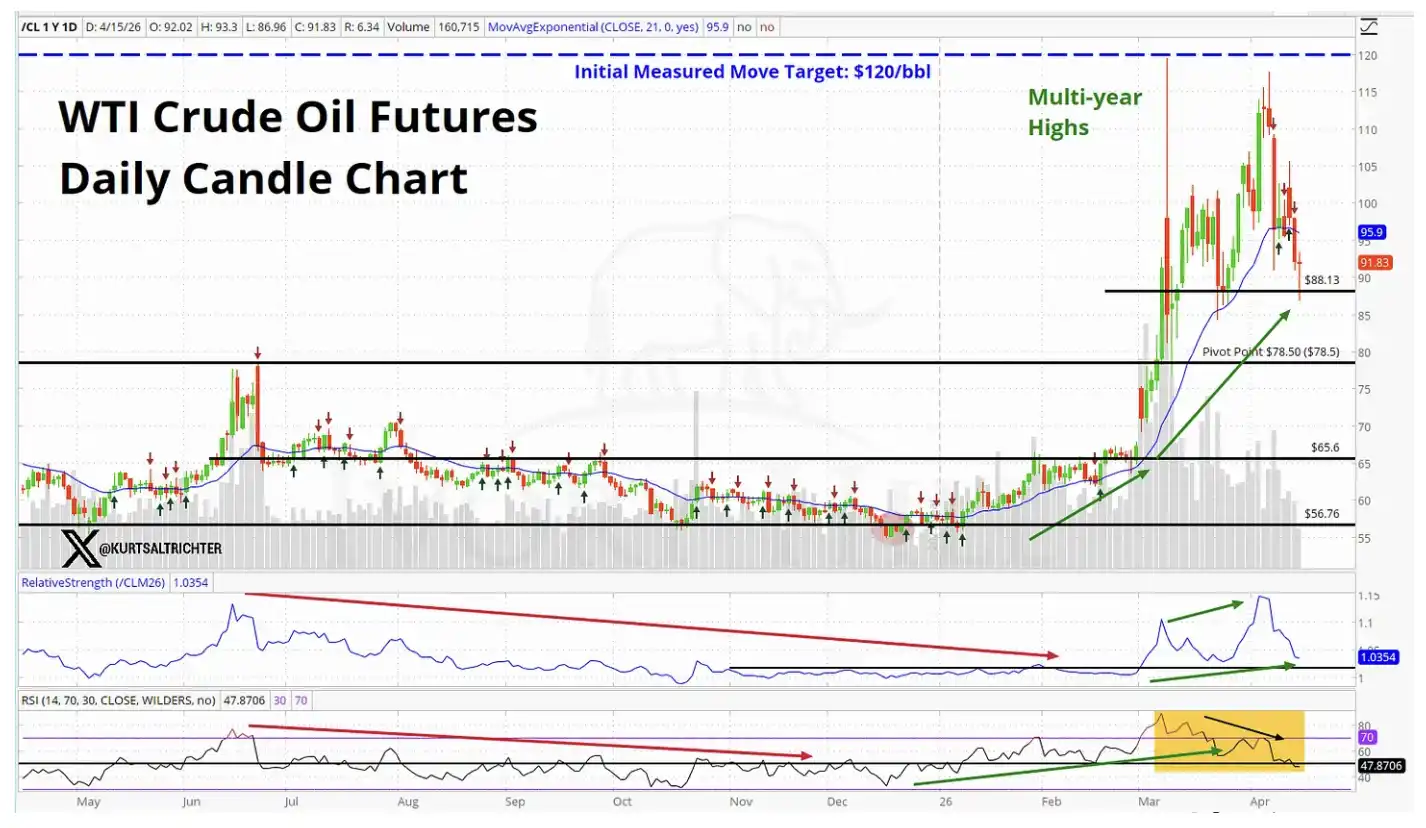
WTI CRUDE OIL: US$ 67.02, CURRENTLY PRICES ARE APPROXIMATELY 37% HIGHER
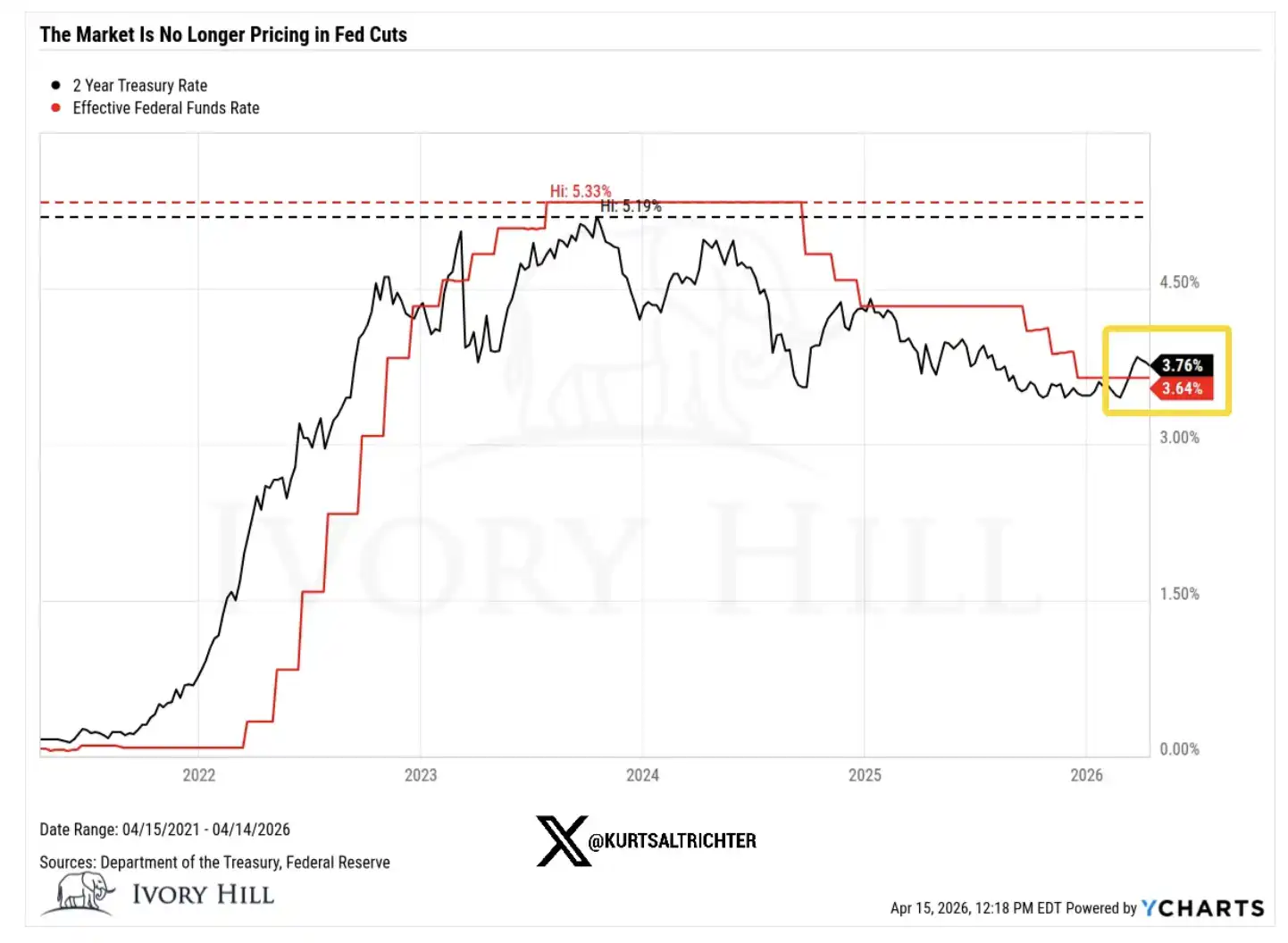
2 Annual US debt return: 3.38 per cent, collected 3.75 per cent yesterday, close to 40 basis points compared to the pre-war period
Now, we break down the meaning behind those changes one by one。
The annual rate of return rose 30 basis points after the war, not because bond markets were more optimistic about economic growth. Consumer sentiment is weakening and confidence remains weak. The interest rate rises essentially because the bond market priced inflation “in silence”。
The signal is clear: higher oil prices are channeling to the overall price system, while the future policy space of the Fed may not be as liberal as the stock market would assume。
Oil prices have risen by 37 per cent in six weeks, which is not what a market should have expected when it believed that there was a real and lasting deal between the US and Iran。
If traders were really confident in a stable ceasefire agreement, oil prices should have fallen back to $70 and continued down. But that is not the case. Oil prices remain high, which means that the crude oil market is not setting the same “conflict resolution” expectations as the stock market。
The annual rate of return on US debt is still 40 basis points higher than it was before the war, which in itself is a direct challenge to the narrative of “the Fed’s impending decline in interest rates.”。
2 The annual rate of return is the most sensitive indicator of our observation of interest rate expectations, and it reflects the policy path of the Fed more directly than any other asset. And now it's sending the signal that the Fed's operating space is smaller than the market thinks. This would affect almost all the valuation logic underlying the current stock market increase。
So, who was right
The stock market may be right, I'd like to admit that. If a substantial ceasefire agreement is in place, bond yields may quickly fall; once the supply problem is reliably resolved, oil prices may also fall significantly. This is not the first time that the stock market has gone ahead, and the other markets have subsequently “supplied” or kept pace。
But there is another explanation, which I think is being underestimated。
A large proportion of this round rise is not driven by fundamentals, but by momentum. The reluctance of traders to take advantage of the upward trend would itself push the market up. Such a buyout would indeed allow the business to last longer than it should。
But it doesn't change the bottom logic。
At the bottom, the reality is that oil prices are still high, interest rates are still on the rise, and the Fed has more limited space than many people need。
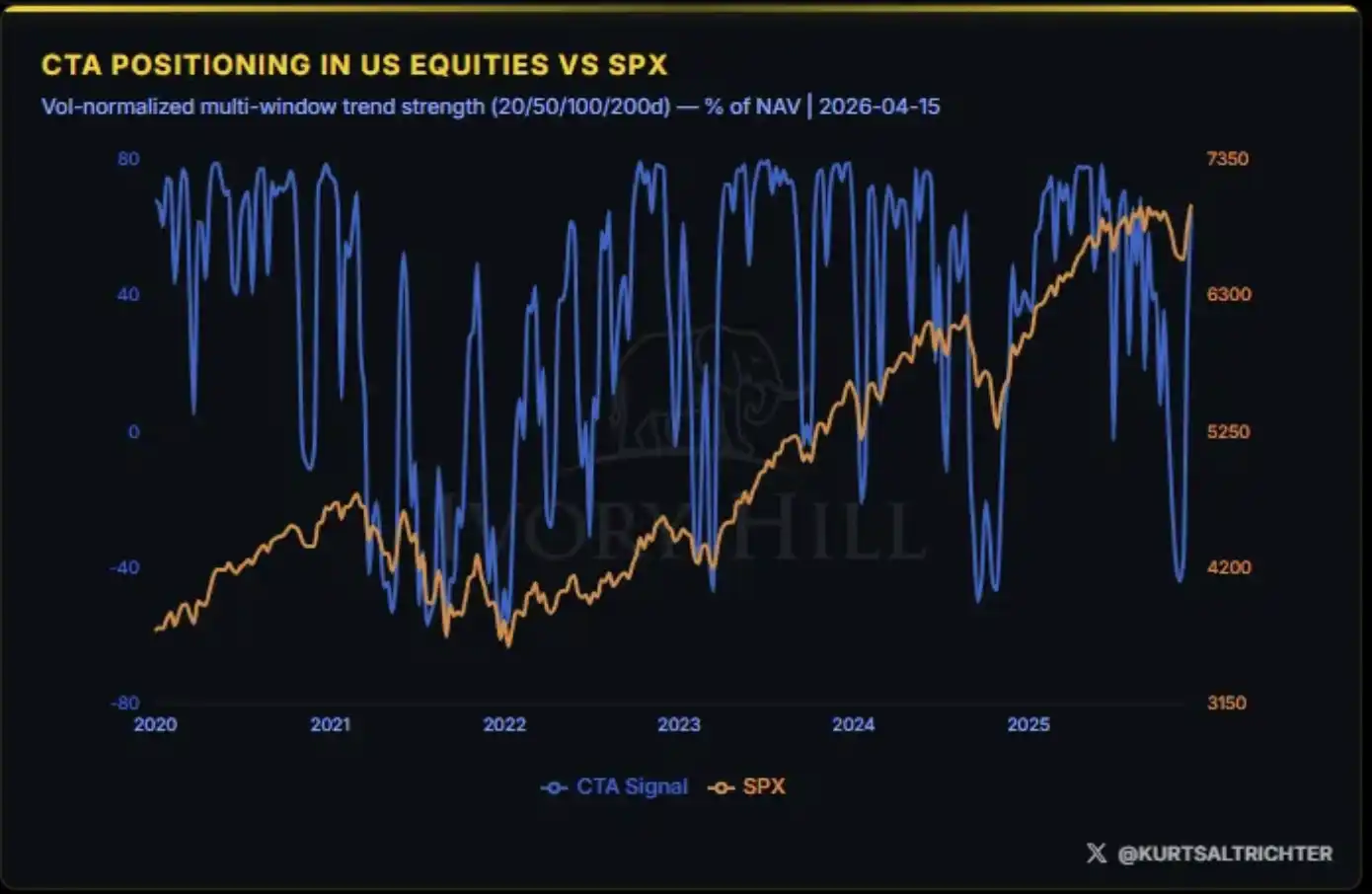
Basic-driven increases tend to be more sustainable, while motor-driven increases tend to be more fragile and shorter. This difference is particularly critical when you consider scalding near historical heights. As shown in the above market valuation, the stock market is now pricing a “perfect scenario”。
My actual judgment
I would not deny that the situation has indeed improved over the past 10 days. I'm not the kind of person who sings for no reason。
However, there remains a clear gap between stock market pricing and the realities reflected in bonds and crude oil, which has not narrowed. I'm watching this very closely。
At present, the stock market is at the most optimistic end of the spectrum; and bonds and crude oil are closer to the middle, reflecting a world in which inflation still exists, where the Federal Reserve has limited policy space and where conflicts have not yet really been resolved。
This disagreement will eventually be restored, and there are only two paths:
Either, a real ceasefire agreement is reached, oil prices fall around $70, and the Fed is given clear space for interest rate reductions that ultimately prove the stock market to be right
Either this does not happen and the stock market will fall and converge to the levels currently reflected in bonds and crude oil。
For the time being, bonds and crude oil do not show signs of convergence with the stock market, much more like the stock market needs to go down to "match" them。
THE NEXT INFLATION DATA WILL BE RELEASED ON MAY 12. IF I'M RIGHT, THE CPI IS ABOVE 3.5%, THEN THE 2026 INTEREST RATE REDUCTION NARRATIVE WILL BASICALLY END。
If you continue to hold back in this position, it is essentially the best course of action: a successful end to war without "trumpic" interference; inflation being manageable; the Fed’s planned interest rate cuts; and business profits holding steady. These four things have to happen simultaneously. In either case, there is a clear bias, and the process of downward adjustment in the market is likely to be rapid and drastic。
In contrast, I prefer to be patient rather than pursuing an increase that has been "silently denied" by two key asset classes. If long-term signals point to buy-in, we will naturally gradually increase the number of slots by strategy。
And don't forget — the only sure thing is that everything will change。
[ Chuckles ]Original Link]
