
From Chatbot to Executable Stream: how X-Agent constructs Agent
X-Agent provides an application layer for the construction, deployment and implementation of the Agent Native System - I don't know. These systems are not only smart enough, but also manageable and auditable, and are ready to move to a real-world value network with which to shake hands。
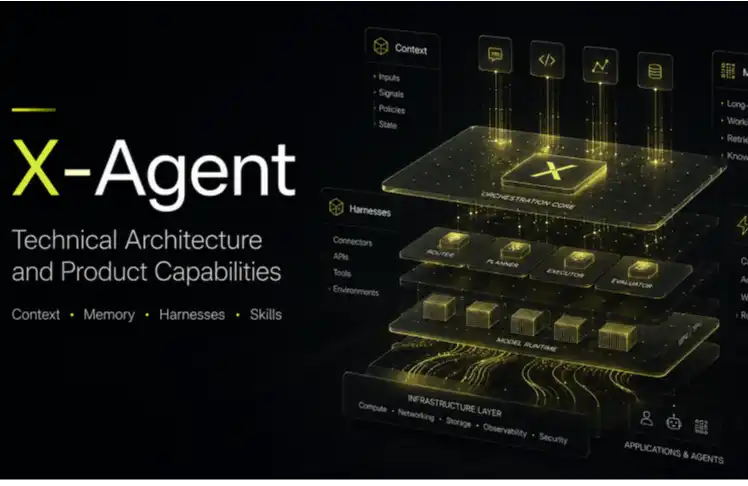
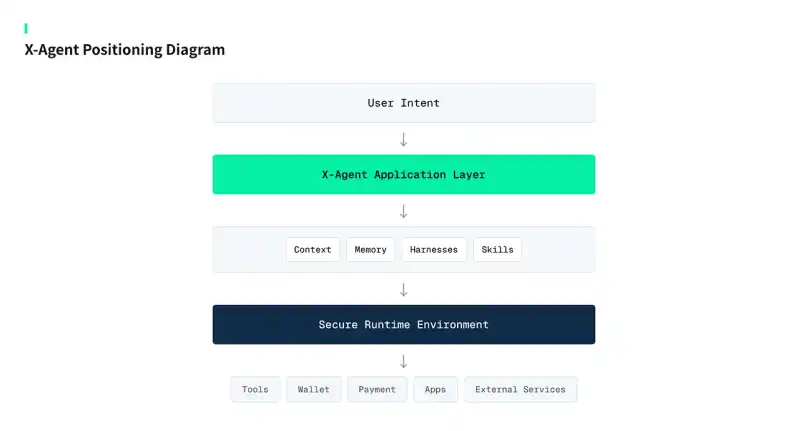
And when you say "I want to do this" to one of the Agents, X-Agent is the entrance to the intention to actually land it -- it's at the front end of the entire Agent application。
It is underpinned by four solid structural pillars: context, memory, implementation framework, and skills. X-Agent put these four pillars together in the Safe Operating Time (SRE) environment, thus creating a rigorous implementation infrastructure dedicated to turning the ambitious goal in your mind into a series of complex work streams that can be done autonomously。
It's because of this structured design, from an abstract idea to a system that can really run, that the entire transformation process becomes reliable, verifiable, and remains in your hands. And that's what makes X-Agent the key bridge between the bottom technology infrastructure and the user application layer。
And it's really well-designed: like iOS and Android, which provide the bottom of the system for mobile phone applications, X-Agent provides the same basic application layer for "self-execution." It abstracted and packed the four core pillars above and eventually condensed into a unified Agent unit。
1.1 Context
In the context, it is defined as the real implementation environment in which Agent is now in。
It's more than a record of your dialogue with Agent. It also includes: who are you, your social relations, the current state of application, the state of the session, where the mission is going, where the boundaries of the permission are, whether the wallet is connected, what tools are available at hand, and the state of external service at this time。
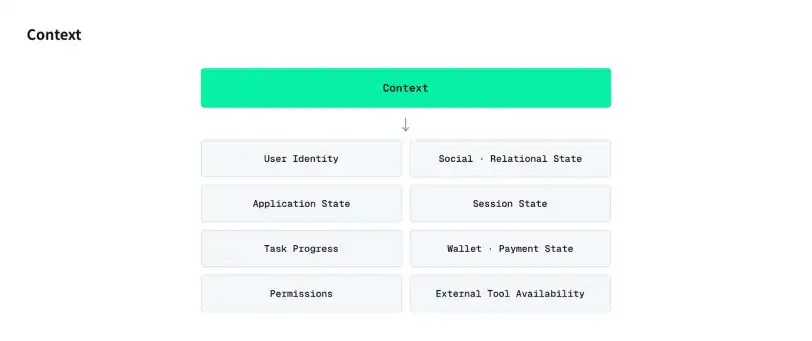
For an autonomous Agent, the context is not a bunch of static information. It's a state of constant movement, real-time renewal, and it's what makes Agent truly count -- it knows very well:
• Who is it serving at this time
• Which application it operates at this time
• Which task it is carrying out at this time
• What capacity is available at this time
• What are the constraints it must hold。
By continuously loading and refreshing the context, X-Agent ensures that each implementation step is firmly rooted in the real operating environment, rather than in a suspense that relies on an isolated hint。
1.2 Memory
If the context is about the moment, then the memory is about the long term. It provides Agent with long-term sustainability for cross-conferences, cross-applications, multi-Agent workflows。
With it, Agent will be able to find the tasks of the past, remember your preferences, replicate the results of the previous implementation, and remain consistent in those long-run work streams, and not "do what you do and forget."。
Unlike the transient short-term context, memory allows Agent to grow over time. It can accommodate: the history of dialogue, mission records, implementation trajectories, application snapshots, user preferences, quantitative knowledge, and the long-term status of each Agent。
It's from memory that X-Agent has supported a conversation that is no longer one-off. It makes it possible for a brand-new Agent application — they can continue to operate, they can accumulate knowledge and, over time, they can become better。
1.3 Implementation framework (Harnesses)
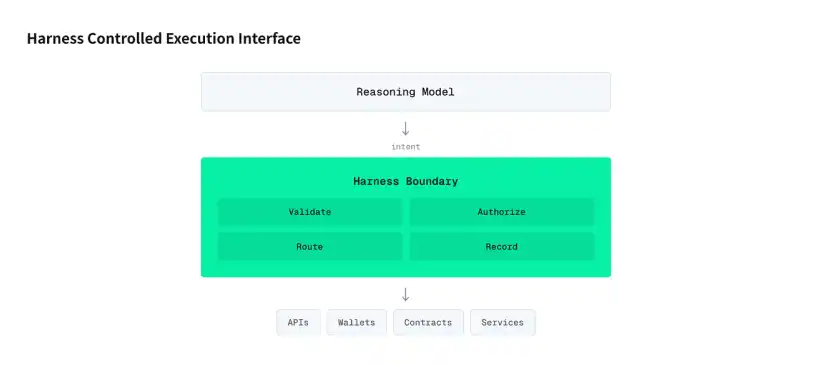
The implementation framework is the controlled interface between the reasoning model and the real world system。
Its role is to translate the model ' s generation intent into validated, authorized and fully documented execution actions。
BUT IT'S NOT JUST A SIMPLE ENVELOPE FOR THE API -- IT'S A REAL "EXECUTION BORDER"。
Before any action touches the external system, the implementation framework closes your layers: check parameters, check permissions, execute strategies, route calls, and log every execution。
IT CAN BE CONNECTED TO A WIDE RANGE OF AUDIENCES: EXTERNAL API, BLOCK CHAIN PROGNOSTICS, SMART CONTRACT BINDING, WALLET ADAPTERS, PAYMENT INTERFACES, DEPLOYMENT ENVIRONMENTS, AND EVEN BUSINESS SERVICES。
In the framework of X-Agent, the division of labour is very clear: the model is responsible for "showing what to do," while the implementation framework is responsible for answering "this intention, how can it be safely translated into real implementation"。
1.4 Skills (Skills)
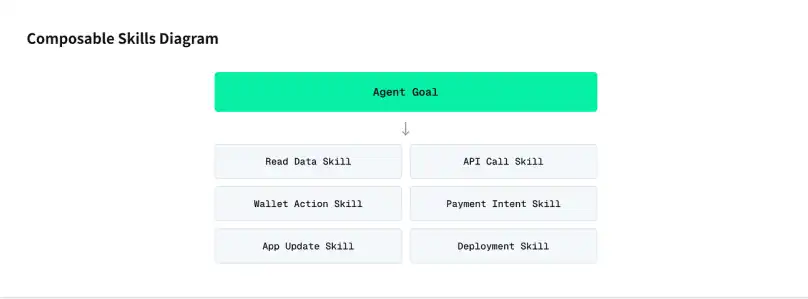
Skills are a professional, reusable and freely integrated implementation capacity module。
It packs a specific action into a unit that can be called directly, so Agent can run a complex set of jobs from the ground floor without having to take control of the complex infrastructure。
THERE ARE MANY THINGS A SKILL CAN DO: READ DATA, MODIFY THE APPLICATION STATUS, CALL EXTERNAL API, INTERACT WITH WALLETS, GENERATE PAYMENT INTENT, UPDATE WORKFLOWS, DEPLOY APPLICATIONS, OR PERFORM OPERATIONAL TASKS IN A VERTICAL INDUSTRY。
It is through the translation of the implementation capacity module into one skill that X-Agent will be able to disassembly an autonomous stream of work that is already faulty and break down into a verifiable, reusable and auditable implementation module。
This also means that Agent ' s capabilities can be assembled freely and assembled in a flexible manner, like building blocks, between different applications and in a multiAgent collaboration environment。
2 & nbsp; Safe Operating Environment (SRE)
An ordinary LLM application is exposed to a series of serious implementation risks when an autonomous Agent begins to really touch the external API, private files, encrypted wallets, payment systems or applications。
These risks include: the injection of tips, state leaks, unauthorized data modification, disclosure of documents, and operations that cannot be traced afterwards。
In the face of these challenges, X-Agent gives the answer to the safe running environment。
THE CORE IDEA OF SRE IS ONE WORD, BUT IT IS ESSENTIAL: TO COMPLETELY SEPARATE "DEBATE" FROM "EXECUTION"。
The reasoning model, which is only responsible for understanding your objectives, generating plans, output intentions, operates in an environment that filters, validates, authorizes, executes and records those intentions within the controlled boundaries of one channel。
This structure brings a reassuring result: Agent will never have direct access to original documents, private keys, wallet privileges, private data or production systems。
On the contrary, any sensitive action must pass through the controlled running-time interface and is only allowed to be implemented once all the levels of strategy, authority, context and audit have been met。
So, by SRE, X-Agent, the idea of "self-execution," which would have sounded a bit disturbing, turned into a process with boundaries, verifiable, visible。
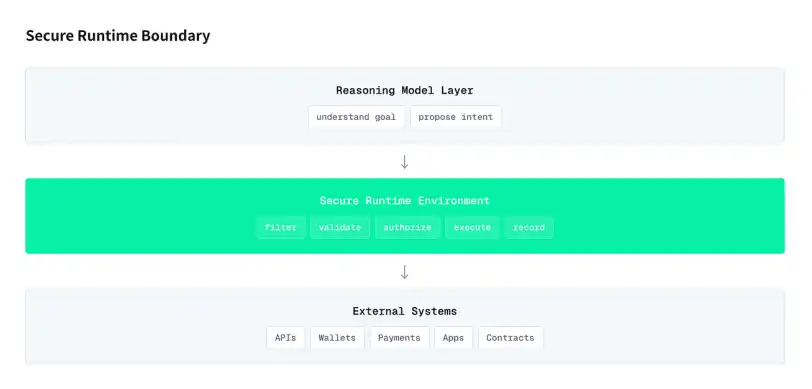
Whether it is a tool call, a state update, a wallet-related operation, a payment-related intent, or an interaction with an external system - each step is clearly traced back to its corresponding user objectives, workflow steps, running-time decision-making and execution records。
2.1 From intent to verifiable workflow
X-Agent's entire execution path begins with a user's intent and ends with a verifiable workflow record。
The process is broadly this: you say a high-level target, and X-Agent then loads the context, retrieves the sedimentary memory, generates an implementation plan, closes each step through an implementation framework, re-assessssssssssss the skills to do a specific task, and records the results in a safe operating environment。
And for those jobs involving wallets or payments, X-Agent can become a structured payment-related intent before real payments are made downstream。
As a result, financial operations are no longer an isolated, unknown transaction. They form part of a complete, traceable stream of work that everyone understands and sees。
3 & nbsp; product structure
X-Agent puts the above technical architecture on the ground as three core product capabilities:
Builder (builder), Agent Runme (Agent while running) and Tools/ Wallet/ PayIntegration。
3.1 Builders (Builder)
The builder is the "application generation" door open to creators and developers。
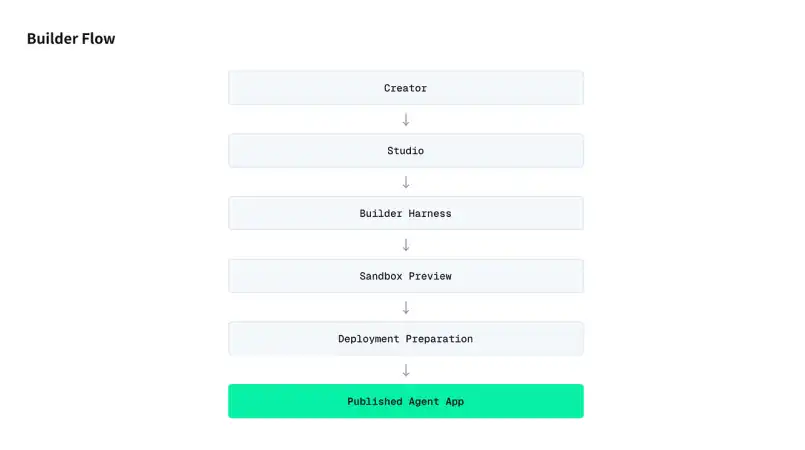
All you have to do is describe what's in your mind about Agent's application in natural languages, and X-Agent will turn this goal into application structure, workflow logic, interface status, tool configuration, and even pre-deployment readiness。
So, there's a path from the idea to the application。
You're going to describe what you're trying to build, X-Agent, to create, to preview, to grind, and to be prepared to run as it moves。
3.2 Argentina Runtime
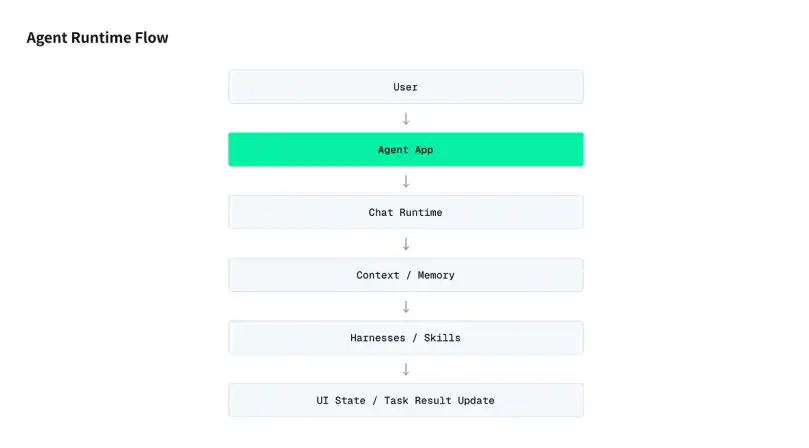
Agent's running is the stage where those Agent applications that have been deployed on line actually work。
Once the application is created, you can talk directly to the embedded Agent, trigger the workflow, update the application, call memory, call tools, and perform controlled actions within the running borders。
It is this step that will transform applications from an ice-cooled interface into a proactive, target-led, forward-looking Agent system。
3.3 Tools, wallets and payment layers
X-Agent provides a steady link to external tools, wallets and payment-related infrastructure through implementation frameworks and skills。
At the tool level, Agent can reach external API, enterprise systems, data services and applications
On the wallet floor, Agent can generate wallet-related intentions and route them through controlled adapters
On the payment level, Agent is keenly able to identify those parts of the work stream that involve the transfer of value and generate structured payment-related intent-- I don't know. This intention will then be handed over to downstream systems responsible for payment implementation, governance, compliance, liquidation and liquidity management。
That is why X-Agent has become the hub: it connects user intentions, Agent intelligence, tools for the real world, wallets, and the value networks behind them — both for generating applications and for implementing them。
4 & nbsp; technology differentiation
X-Agent is not another shelled chat robot。
It's not a simple tool router。
It's not just a wallet access。
It is truly unique: it embeds applications generation, Agent workflow execution, context perception, long-term memory, controlled implementation interfaces, combustible skills, wallet connections, payment-related intent generation, and a safe running environment — a long chain of capabilities, all embedded in the same unified, Agent application layer。
With this architecture, X-Agent can turn your high-level intentions into a verifiable workflow of context, memory, tools, wallets, payments and safe running environments。
In one sentence: X-Agent provides an application layer for the construction, deployment and implementation of the Agent primary system - These systems are not only smart enough, but also manageable and auditable, and are ready to move to a real-world value network with which to shake hands。
Original Link
