
Ten billion-dollar start, Moand
Monad's dApp after the main line。

Monad's dApp after the main line。
written by: @100y_eth
Photo by AididiaoJP, Foresight News
Key points
The expected Monad main line is coming. Monad has received considerable attention from investors and community users because of his high performance-based EVM technology warehouse. Although fully compatible with EVM, Monad is expected to provide a more fluid and scalable user experience。
With its cutting edge technology, Monad makes possible new decentrization applications that cannot be built on other EVM networks. There are already a lot of dApps in Monad ecosystems, but this paper focuses on those that really belong to Monad。
Long-awaited Monad on line
The secret behind Monad's popularity
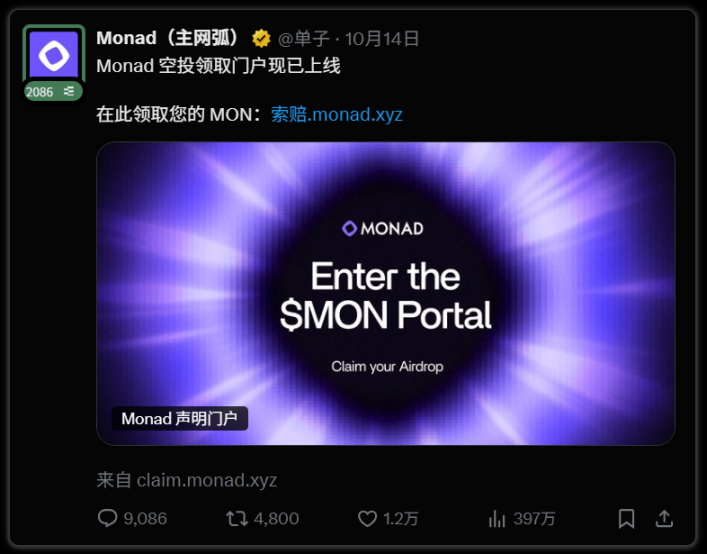
The long-awaited moment is approaching. On October 14, Monad officially announced its air drop application portal, with an unprecedented increase in user excitement. Because Monad had received great attention as early as the first quarter of 2023, when he announced his seeder financing, but the main network had been offline for more than two and a half years since then。
There are several reasons behind the popularity of Monad, such as investments by well-known venture capital companies and their unique community culture, but its core is Monad technology. Achieving parallel EVM is an extremely ambitious goal that alone is sufficient to attract the attention of investors, communities and users。
Monad is a high-performance, EVM-compatible L1 network with the following technical features:
- MonadBFT: An optimised BFT consensus algorithm that achieves the finality of 10,000 tps and subseconds even in an environment with hundreds of consensus nodes. Unlike the traditional BFT system, MonadBFT can only reach the "near final" state by a round of consensus。
- RaptorCast: A way to enable leaders to efficiently transfer large blocks to other certifyers. The leader divides the block proposals into multiple parts using erase codes, first sending each part to the non-lead nodes, which then spread them further. This reduces the leader ' s load while maintaining security, as the erase code allows for recovery of data even from part of the data segment。
- Step execution: Consensus and enforcement are tied together in most block chains, which is the main reason for inefficiency. Monad separated the two, so the nodes agreed on the order of transactions before implementation, allowing sufficient time for processing。
- Parallel implementation: Monad uses optimism to first process parallel transactions and re-executes only those in conflict。
- MonadDb: Unlike the structure of the Ether Workshop, MonadDb is built on Merkle Patricia Trie (comprising three types of nodes, including extended nodes, branch nodes, leaf nodes) which allow direct access to nodes. It handles requests for reading and writing in a step-by-step manner, making them well suited for parallel execution. It has also been optimized through bypass and co-production controls of document systems。
Thanks to the optimization of the core technology of these block chains, Monad has achieved remarkable scalability, making it possible to build a dApp that cannot be built at all on other EVM networks. Because Monad is fully compatible with EVM, its developers are also first-class. These advantages make it easy for developers to build anything they want on Monad without fear of scalability。
An ecosystem of Monad, built by Monad, serving Monad
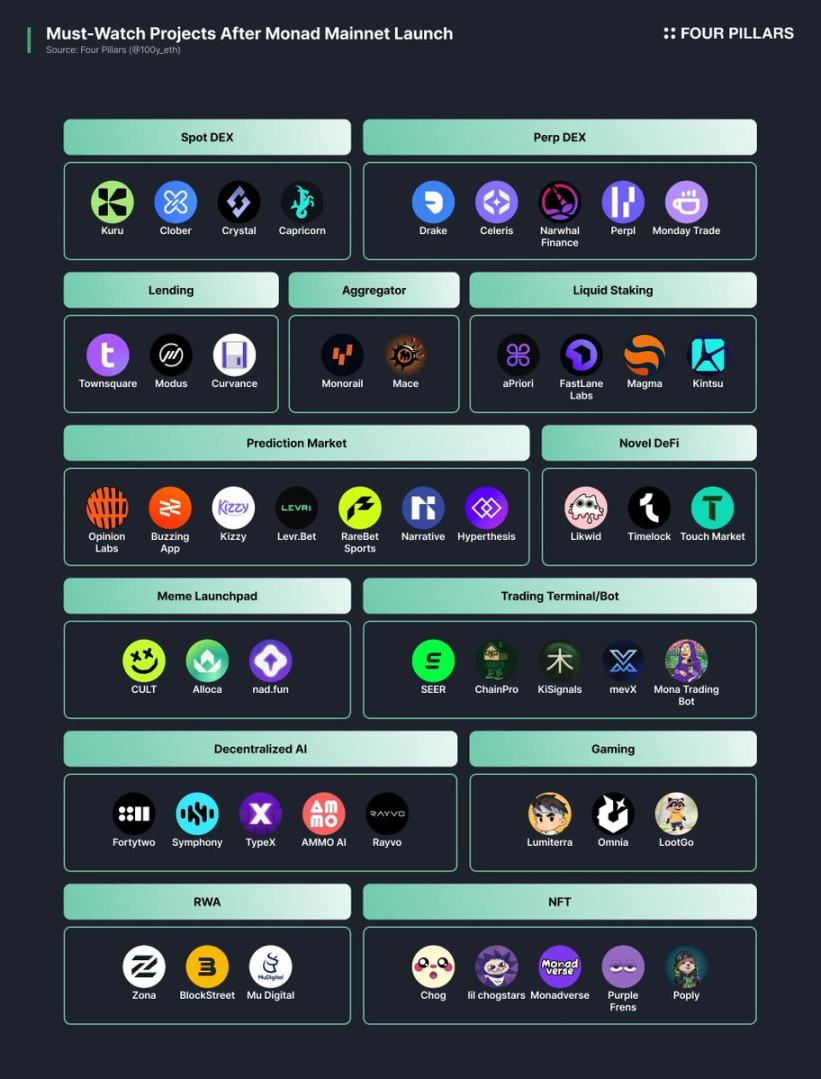
What kind of service does users expect to see on Monad's main online line as it becomes available? As of 11 October 2025, the Monad Ecosystem Catalogue contained 293 dApps. These include well-known projects such as 0x, Balancer, Euler, Farcaster, Lombard, Magic Eden, OpenSea, Pancake Swap, Stargate, StarkStone, Uniswap and Wormale。
However, Monad is quite different from the existing block chain network. This means we can expect more unique and innovative services on the Monad network. This section will therefore focus on some of the most interesting dApps in the Monad ecosystem, as well as on the Monad accelerator scheme and the Hacksson award。
- Pledges: aPriori, FastLane Labs, Magma, Kintsu
- Current DEX: Kuru, Clober, Crystal, Capricorn
- DEX: Drake, Celeris, Narwhal Finance, Perpl, Monday Trade
- Aggregators: Monorail, Mace
- Loans: Townsquare, Modus, Curvance
- Innovation DeFi: Likwid, Timelock, Touch Market
- Projected markets: Opinion Labs, Buzzing App, Kizzy, Levr. Bet, RareBetSports, Narrative, Hyperthesis
- Trading terminal/ robot: SEER, ChainPro, KiSignals, mevX, Mona Trading Bot
- Meme Starter Board: CULT, Alloca, nad.fun
- Games: Lumiterra, Omnia, LootGo
- AI: Fortytwo, Symphony, TypeX, AMMO AI, Rayvo
- NFT: Chog, lil chogstars, Monadverse, Purple Frens, Poply
- RWA: Zona, Block Street, Mu Digital
Monad Ecosystem of Concern dApp
a Priori
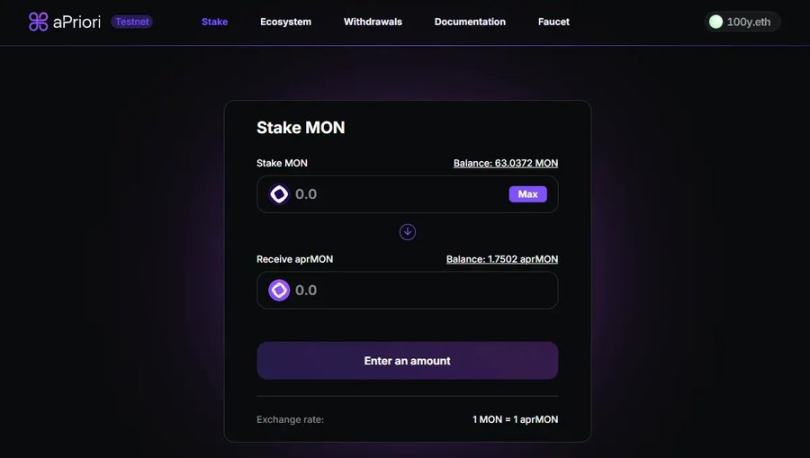
Source: aPriori
a Priori is the most famous mobile pledge agreement in the Monad ecosystem. The user can pledge MON and receive aprMON, a moving token. AprMON not only captures conventional POS pledge incentives, but also captures and distributes to users the MEV revenues generated from the network。
Because of the highly scalable nature of Monad, the network will handle a large number of transactions, which naturally creates many MEV opportunities. However, unlike the traditional EVM, which handles transactions on a case-by-case basis, Monad EVM handles them in parallel, so the way to capture MEV will be very different. a Priori understands this deeply and introduces the concept of probability MEVA。
a Priori received $2 million in pre-seed wheel finance from Hashed and Arrington Capital in 2023, $8 million in seed wheel finance from Pantera, Connsys and Flow Traders in July 2024 and $20 million in additional funding from Pantera, Hashkey and IMC Trading in August 2025. This makes it one of the most funded dApps in Monad ecosystems. The user can test the online MON pledge to get aprMON and use it in various DeFi protocols。
FastLane Labs
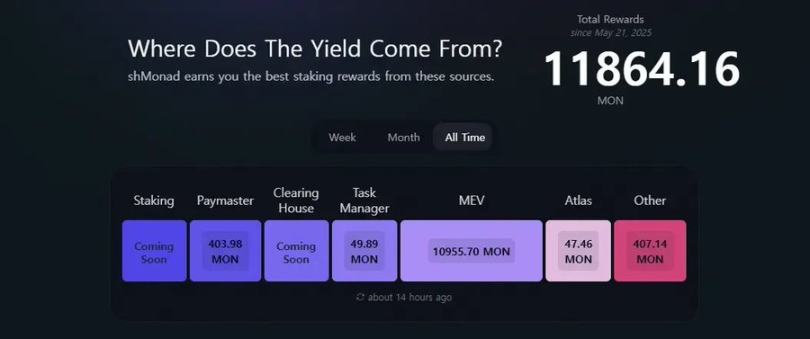
Source: FastLane Labs
FastLane Labs provides pledge and MEV-related infrastructure within the Monad ecosystem and provides the following services:
- sMONAD: A mobile pledge agreement based on Monad built on FastLane MFL and Atlas technology. It goes beyond a simple MEV extraction, which is designed to make the MEV income flow back to ecosystem participants。
- sshBundler: an abstract bundler for the ERC-4337 account that integrates the role of the bundler directly into the certifier node。
- shMonad RPC: A high-performance RPC infrastructure for Monad, distributed network bandwidth based on pledge amounts. Users with higher shmon balances receive more bandwidth and lower delays, helping to prevent overloading and witch attacks。
FastLane Labs not only runs a mobile pledge agreement, but also helps users interact more efficiently and equitably with the network by building core infrastructure. It received $6 million in strategic investments from Coinbase Ventures, Capital, DBA, Robot Ventures, Hashkey, Chorus One and Kiln. Users can test the online pledge MON to get sshmon and use it in various DeFi applications。
Kuru
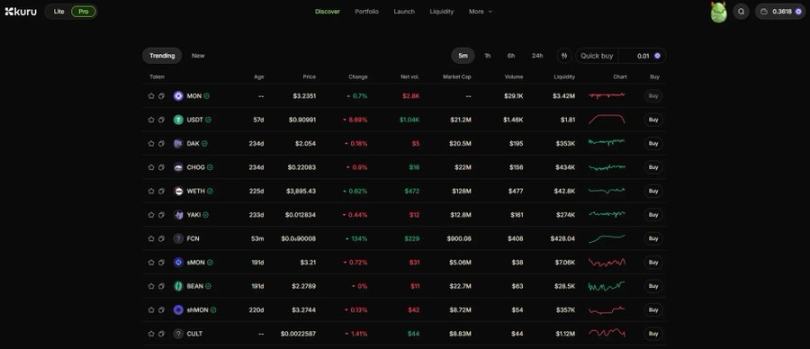
Source: Kuru
Kuru is a completely chained order book exchange built on Monad to become a trading centre. The main reason why it was able to achieve chain-based order book transactions was because of the high scalability of Monad EVM. Kuru uses not only CLOB but also AMM liquidity to ensure smooth transactions even when the liquidity of a given market is low。
Kuru offers both Lite and Pro modes. In Pro mode, users can trade different tokens through order book and can also provide liquidity. In Lite mode, users can easily trade tokens using a simple conversion interface, which uses order book liquidity。
In July 2025, Kuru successfully raised $11.6 million from Paradigm, Electric Capital and Credibly Neutral. Users can now try simple conversions by testing online Lite models, explore transaction interfaces in Pro mode, and even experience liquidity for order books。
Other
Other noteworthy projects in the Monad ecosystem include:
Pledge
- Kintsu: A mobile pledge protocol whereby users can pledge Mon and get smon in return。
- Magma: a mobile pledge agreement. It provides the proceeds of the MEV upgrade and uses distributed certification techniques so that multiple participants can share certificationer duties。
CASH DEX
- Crystal: One chain, CLOB DEX, all transactions are processed directly through smart contracts。
- Capricorn: Capricorn operates both a private pool based on a prophesy machine and a CPM/CLMM mobility pool, designed to combine the efficiency of the CLOB with the portfolio of AMM。
- Monday Trade: A DEX that uses a hybrid CLOB/AMM structure to enable users to experience transactions of all types of tokens at CEX level。
EXTENSION CONTRACT DEX
- Narwhal Finance: A permanent order book on Monad DEX. It allows the use of aprmon as collateral and supports the trading of synthetic assets such as stocks, indices and foreign exchange。
- Perpl: Using Monad 's outstanding scalability to build a CLOB-based, renewable futures DEX. In May 2025, it raised $9.25 million from Dragonfly, Ergonia and Brevan Howard。
A polymer
- Mace: An original Monad DEX polymer that crosses multiple DEX route transactions to find the best course of dealing。
Loans
- Townsquare: Loan agreements in the Monad ecosystem are finalists of Monad Madness。
- Modus: an agreement to position itself as a chain broker and as a primary lending agreement within the Monad ecosystem. Modus provides more than simple lending services; it provides modular functions such as treasury and delta neutral strategies. The project has received Yzi Labs investment。
- Curvance: Users can use various assets within the Monad ecosystem as collateral to obtain loans on Curvance。
New DeFi:
- Timelock: An agreement built on Uniswap V3 liquidity, which provides convertibility and trading functions, and an unliquidated leverage trading experience. In the future, it plans to introduce additional services such as futures, options and meme coins。
- Touch Market: An agreement that provides a new trading experience allows users to set prices and time frames on a graph and to earn profits if the price “reaches” that level. It provides an intuitive investment interface and emerges by providing up to 1,000 times the leverage。
Projected market
- Opinion Labs: One of the most popular projected markets in the Monad ecosystem has raised $5 million in seed money from YZi Labs, Animoca and Amber。
- Narrative: a forecast market designed to allow users to trade or invest assets based on narratives and emerging trends。
- Hyperthesis: Although there is not much public information, it appears to be developing a forecast market within the Monad ecosystem。
Trading terminal / robot
- MevX: A multi-chain trading terminal focused on Meme and Alpha tokens. It provides sniper and documentary skills and plans to support the Monad main network。
- Mona Trading Bot: a trading robot dedicated to the Monad ecosystem。
Meme Dollar Starter
- Nad.fun: a Meme-currency start-up board and trading platform with a simple interface similar to the pump.fun that can be easily used by anyone。
Game
- Lumiterra: A multi-person online World Survival Production Game where players explore the world through collection, production, combat and cultivation。
- Omnia: An original Monad game that combines adventure and pet-based fighting。
- LootGo: A mobile application that moves and earns money by playing games like Pokémon GO。
NFT
- Poply: a NFT market focused on the Monad community。
RWA
- Zona: Supporting the monetization of real-world assets or the issuance and trading of synthetic assets, which can also be used as collateral for borrowing。
- Block Street: A project for the implementation and lending infrastructure of the monetization stock chain, providing RFQ systems and risk engines. It raised $11.5 million in October 2025 from agencies such as HackVC and DWF。
Other
- Accountable: A real-time financial certification agreement that allows companies, agreements and stable currencies to share transparent asset and liability information while maintaining privacy。
Monad officially recommended projects
Several projects were presented by Monad through five articles in his official blog. Since these projects were recommended on Monad ' s own platform, they are of absolute concern。
Fortytwo
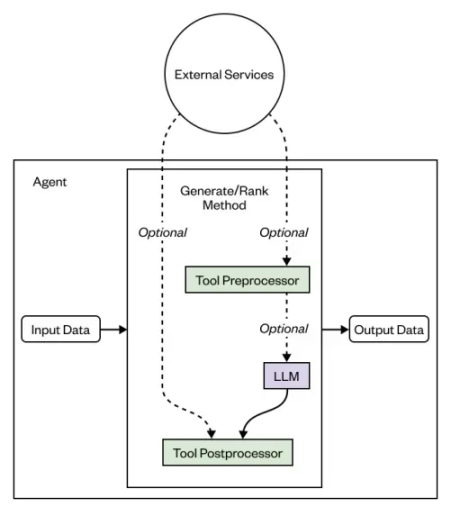
Fortytwo is a decentralised AI network built on Monad. It runs many small language models simultaneously on consumer-grade hardware and produces a final reasoning by combining their output through a consensus process. In short, Fortytwo aims to create a stronger AI system by connecting several smaller models。
THE USE OF SEVERAL SMALLER SLMS INSTEAD OF INDIVIDUAL LARGE LLMS IS NOT NEW AND HAS BEEN WIDELY USED IN AI STUDIES. FOR EXAMPLE, AUTOPILOT SYSTEMS ARE USUALLY NOT BUILT WITH A SINGLE LARGE AI MODEL, BUT WITH MANY SPECIALIZED SUBMODULES, EACH OF WHICH HANDLES A SPECIFIC TASK TO CREATE A MORE COMPLETE SYSTEM。
Source: Fortytwo White Paper
Fortytwo works pretty straight. When users send queries to the network, the participating nodes independently generate answers, assessing each other ' s responses, and the most weighted answers become the final consensus result. To ensure fairness, all answers are encrypted before submission. To prevent a witch attack, the node must pledge a certain amount of currency to participate, and Monad is used as a coordination layer for settlement and distribution of rewards。
In March 2025, Fortytwo successfully raised $2.3 million in pre-seed wheel funds from Big Brain Holdings, CMT Digital, EV3, Chorus One and Mentat Group. Anyone can run a node with a good home desktop setup, and there are 739 active nodes in the network as of the testing stage. For users interested in the Monad-based AI ecosystem, running a Fortytwo node behind the Monad and Fortytwo main line would be a good experience。
Multisynq
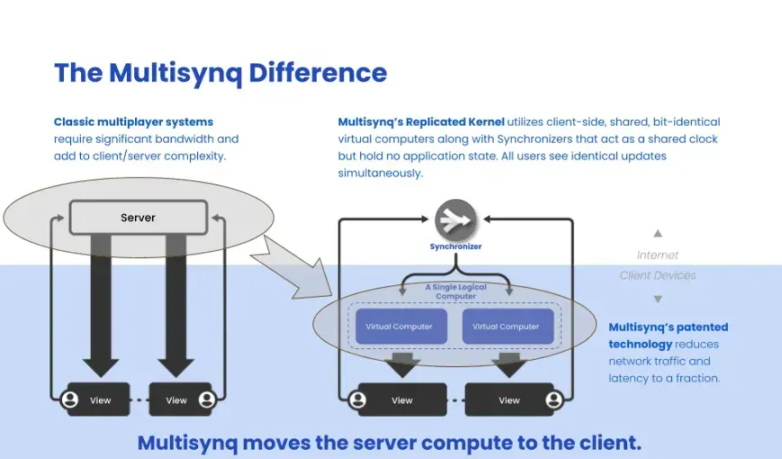
Multisynq aims to create a new Internet protocol for real-time synchronization. Now that there are no standardized protocols for real-time synchronization, applications such as game servers and videoconferencing tools must build their own solutions from scratch. In the centralized client-server settings, the server handles all calculations, which causes single point failure。
Source: Multisynq
Multisynq solves this problem by removing the server-centric structure. Instead, each user ' s device executes the application logic locally, while the syncor nodes on the Multisynq network are coordinated. Synchronizer does not store data, cannot read encrypted message content, only manages synchronization。
The real-time synchronization protocol developed by Multisynq fills the main gap in the modern Internet, helping to create a truly decentrized network when integrated with a block chain. This may one day make it possible to run large multi-person online role-playing games with hundreds of thousands of players or map services based on real-time traffic data from millions of users. Multisynq acts as a synchronous layer in this decentrized Internet and plans to integrate the Monad block chain to process synchronization and registration forms。
In April 2024, Multisynq raised $2.2 million from Manifold Trading and Republic Capital and $350,000 in February 2025 through Echo. The user can now run the syncor node and earn points。
Likwid
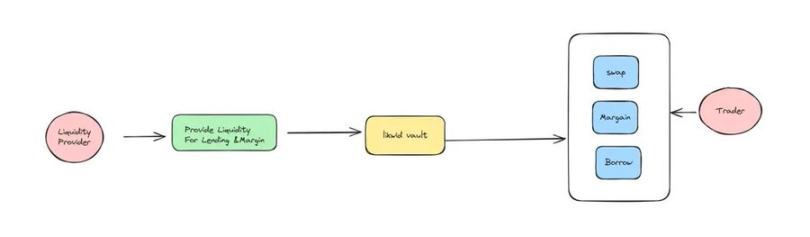
Likwid is a Monad-based DeFi protocol that combines AMM and borrowing in a system that allows users to provide liquidity, borrow other assets or open multiple and empty positions on a single platform. The most notable feature of Likwid is its ability to perform these functions without relying on a centralized exchange, a predictor or a counterparty trader。
Traditionally, the use of the DeFi agreement has been difficult to create an empty position for the new token. The user needs to deposit the collateral in the loan agreement, borrow the token and sell it. However, new tokens often lack predictive data or are not supported by loan agreements. Even when supported, mobility is usually low。
Source: Likwid
In Likwid, the liquidity pool itself serves both as a market and as a lending platform and as an adversary. Liquidity providers not only provide liquidity and earn costs as in AMM DEX, but also act as lenders and derivatives liquidity providers。
FOR EXAMPLE, IN THE MON/LIKWID MOBILE POOL, THE USER CAN PLACE THE MON AS COLLATERAL AND OPEN THE EMPTY HEAD POSITION OF LIKWID. THIS PROCESS INVOLVES BORROWING AND SELLING LIKWID COINS IN THE SAME POOL。
Once Monad's main online line is in place, users will be able to carry out basic operations such as currency exchange, liquidity provision and borrowing on Likwid, as well as opening up multiple or empty positions for new currencies to capture early ecosystem trading opportunities。
Clober
Source: Clober
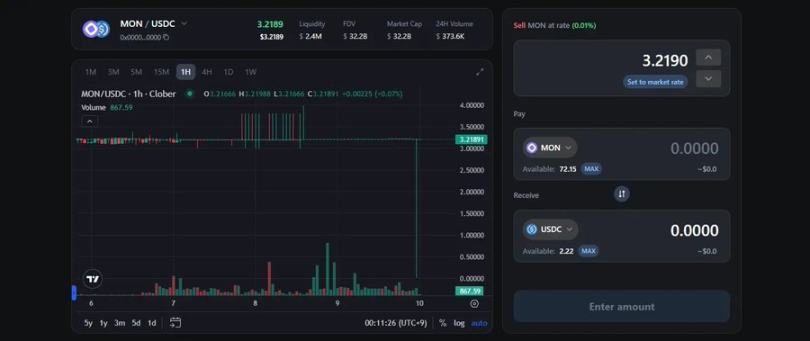
Clober is a complete order book DEX built on Monad. In addition to Monad 's s scalability, it introduced its own LOBSER mechanism (the price-limited order book for efficient order matching trees) to allow for efficient and fast order matching by gas。
Building the order book on the EVM chain faces some technical challenges. For example, when a user pays, it is necessary to match multiple sales orders in order. The use of for cycling or similar structures can consume large amounts of gas. LOBSTER addresses this problem by delaying implementation: each purchase order covers a specific range of prices and the system determines whether it will be sold, depending on the size of the purchase price. The seller then settled their transaction。
When large market lists must scan many price levels, chained order books also face inefficiencies. LOBSTER uses a tree-based data structure to search only for the actual order price levels, thereby improving performance and gas efficiency。
Thanks to these innovations, Clober achieved AMM-level efficiency and CEX-level precision within chain limits. Using the scalability of Monad, it has built an advanced structure that matches the performance of the centralized exchange. Users can trade tokens, floor lists and provide liquidity directly on the Clober platform through order books。
Drake
Source: Drake
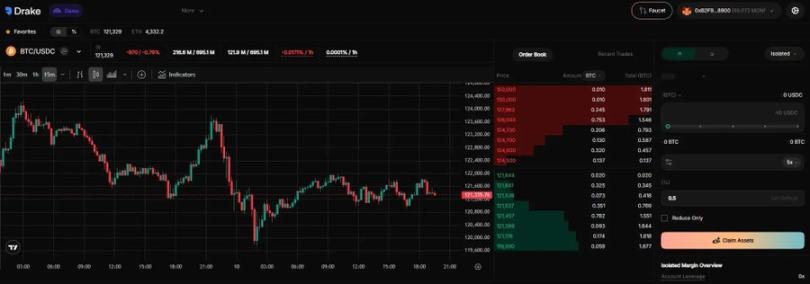
Drake is a complete chain built on Monad to provide CEX-level performance, combined with transparency and groupability of DeFi. Drake's order book, matching engine, risk engine and vault are all on the chain。
Unlike other sustainable DEXs, Drake can run every component of its order book entirely on the chain, which benefits from the scalability of Monad. Its parallel implementation and low transaction costs allow for efficient matching of many orders and state of renewal, thus achieving a genuine chain dEx perpetuity。
Drake also emerged from his hybrid book model. It mainly uses chain liquidity, but can be drawn back from AMM liquidity when order book liquidity is low, thus ensuring greater overall liquidity。
Drake did not raise venture capital funds and followed a community-driven approach, which is becoming a popular trend in the renewed DEX. Monad users can already test Drake online。
Celeris
Source: Celeris
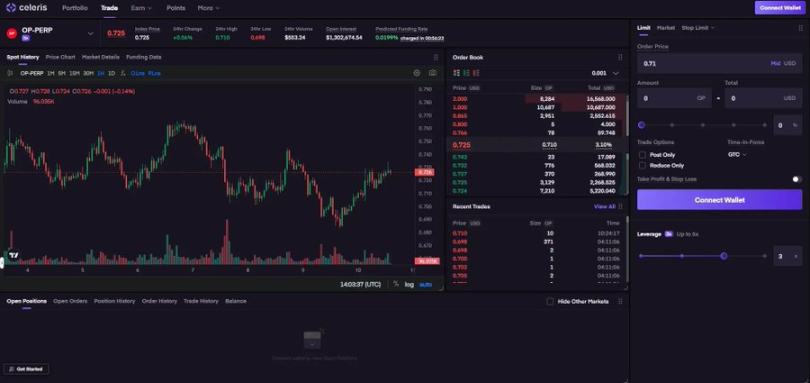
Celeris is a trading platform based on a new type of order book, PLOB. In the CLOB system, liquidity is dispersed in separate markets, but in the PLOB, a shared pool of liquidity supports all markets while significantly increasing capital efficiency。
BECAUSE PLOB PROVIDES DEEPER MOBILITY THAN CLOB, TRADERS EXPERIENCE FEWER SLIDE POINTS. IT WOULD ALSO BE BETTER FOR LIQUIDITY PROVIDERS, AS THE SAME TOTAL LOCKED VALUE COULD BE DISTRIBUTED IN MORE MARKETS, RESULTING IN HIGHER OVERALL COSTS。
Achieving PLOB requires real-time management and synchronization of the state of many markets, which is extremely complex in the chain. However, Monad's parallel EVM and MonadDB enable parallel transactions and efficient handling of many markets, providing a perfect environment for PLOB operations。
Users can deposit Monad test web tokens in Celeris to trade in permanent contracts in various markets, and try to provide liquidity and lending functions。
Hacksson Award Project
Monad is known not only for his strong community but also for his active support for early projects in his ecosystem. Through a variety of accelerators and hackers, Monad has provided resources and exposure to many new teams。
While most of the teams involved in these plans are still at an early stage, the award-winning projects in official Monad activities are absolutely noteworthy. Let's quickly browse through some of these items。
Monad Founder's Staying Program
Source: Monad
The Monad Founder ' s Stay is a three-week sprinting programme for an early encryption team built on the Monad block chain ecosystem. After three weeks of sprinting, the team had the opportunity to present to the global venture capital company on the demonstration day. The programme provides growth activities, retention strategies, mentoring and network support to help start-ups expand in a variety of ways。
So far, the Monad Founder ' s Stay Scheme has been in place for two periods, each with a maximum of 10 projects selected. Below is a brief description of the entries:
First
- Symphony: Allowing users to use Symphony AI agents to optimize trade strategies and explore investment opportunities for different networks。
- Chog NFT: a NFT project based on the Monad mascot role of Chog, strongly supported by the community。
- Meow Finance: A Monad-based treasury agreement that converts locked treasury assets into NFTs so that they can be used elsewhere。
- Zona Finance: A platform that introduces RWA into the chain, focuses on real estate investments and allows users to borrow these assets as collateral into stable currency。
- Monorail: an original Monad converter that allows users to trade assets through optimal routes。
- The Vape Labs: A DePIN project built around smart electronic smoke devices with a "Vape to Earth" model。
- Rayvo: A Web3 Smart Glass project with a "Earning with eyes" model, where users can earn replacement money by wearing glasses and providing POV data that can be used for AI or chain systems。
- Fans3 AI: a platform for creators to build and run emotional AI roles and interact with fans and generate income。
Second
- TypeX Keyboard: A project to create AI and Web3 friendly smart keyboards that connects the typing interface directly to AI and Web3 services。
- Sonzai Labs: A studio that combines Web3, AI and games to create immersion experience, developing mini-application games on Telegram。
- Buzzing App: A view-based predictive market where users can just say "ETH will exceed $10,000 by December?" I don't know。
- Agra: an agreement that allows users to use their assets on multiple networks as collateral for trading, borrowing and investing。
- SEER: A TRADING PLATFORM THAT BRINGS TOGETHER MARKET INSIGHTS, SOCIAL TRENDS AND TRADING TOOLS。
- Yap.market: A market linking content creators (yappers) to projects。
- Kizzy: A social media forecasting platform based on Monad, where users can place a bet on indicators such as YouTube video views or influence fan growth。
- Rug Rumble: A GameFi project based on Monad, two players bet and fight Meme in a card game。
- CULT: A Meme currency trading platform that can easily initiate and trade new Meme coins on Monad with reputational systems for selective pre-sale。
- Mu Digital: A platform for investing in tokenization RWA across Asia, supported by UOB, Signum Capital and CMS。
- Levr.Bet: A Monad-based web-based sports gaming platform. The market is projected to warm up, and LEVR.BET has emerged by providing up to five times the leverage。
Monad Madness
Source: Monad
Monad Madness is a competition for global developers and starters to identify and support innovative projects in the Monad ecosystem. The award pool amounts to $1 million and offers potential risk investment opportunities of up to $6 million through collaboration with several venture capital companies。
Monad Madness has so far been held in New York, Bangkok and Hong Kong. Let's look at the first three items of each event。
EarnOS (first, New York): EarnOS is the first application built on OpenSystem, a payment arrangement based on block chains. It is an incentive and advertising platform aimed at repairing the inefficiencies of the traditional advertising market, where the number of hits and displays is high, but the actual effects are unclear and consumers are seen as targets. On EarnOS, brands can send missions directly to users, who receive awards such as USDC as soon as they complete them. Users can register on the EarthOS platform and participate in different activities to earn points。
ChainPro (second place, New York): ChainPro is a chain trading terminal, renamed by SauceGG. It allows users to trade assets across multiple networks on one platform. ChainPro made it easier to trade Meme currency through excellent UI/UX and zero costs. It plans to support the Monad main network, which will make it easier to trade assets in the Monad ecosystem, including Meme coins。
LEVR.BET (third, New York): See Monad Founder ' s Presence Plan II。
RareBetSports (first place, Bangkok): RareBetSports is a sports lottery forecast market based on Web3 as well as a primitive Monad dApp. It is unique in that users can form a group of two to seven players and project the performance of each player, adding strong strategic elements。
Kizzy (second place, Bangkok): See the second phase of the Monad Founder's Presence Plan。
Sparkball (third, Bangkok): Sparkball is a 4v4 sports and combat mix game based on PC, where players fight their opponents while they score。
AMMO AI (first place, Hong Kong): AMMO AI is a project to build a large multi-smart system on Web3. It creates an enhanced learning environment in which multiple intelligent bodies can interact and learn autonomously. It's got AMBER and Samsung Next investments。
GM Network (second place, Hong Kong): GM Network is building a mobile-based AI super application to provide smart-driven chat services。
TypeX (third, Hong Kong): See Monad Founder ' s Stay in Phase II。
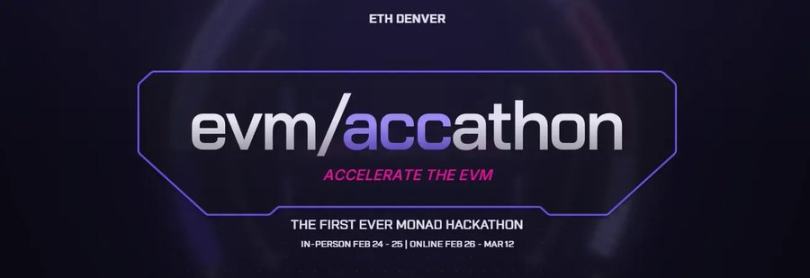
Monad evm/accathon
Source: Monad
Monad evm/accathon was a hybrid hacker pine organized during ETH Denver with an underground and online track. The event focused on creative solutions using the Monad High Performance EVM architecture. Five projects were awarded awards。
- KiSignals (first place): KiSignals, built by the KiFi team, is a Telegram alpha call polymer that allows users to trade tokens based on social data. KiFi is a Monad-based mobile trading and socialFi platform, and users can now register a test-list。
- StageFun (second place): StageFun, built by the BlockLive team, is a popular platform。
- OwnPay (third): OwnPay is a payment service to support immediate chain transactions between equipment。
Monad Mach 2: NFT
Source: Monad
Monad Mach 2 is an accelerator plan designed for NFT builders in the Monad ecosystem, providing one-on-one guidance, seminars and master classes. A total of 80 NFT projects were selected for Monad Mach 2, a complete list can be found in the official X post in Monad Eco. Some noteworthy projects include:
- Monad Nomads NFT: one of the oldest NFTs in the early Monad ecosystem (started in February 2023). It grants access to the White List through various community activities。
- Monadverse: A series of NFTs centred on Monanimals ' role, published in different chapters. It has collaborated on activities with more than 40 other projects, making it one of the core NFT projects in the Monad ecosystem。
- scrompeys: A lovely pet theme NFT series, containing 500 Skrumpets NFTs. The team has forecast a rare DN NFT series, which is limited to 135 in the future。
- lil choggstars, Chog: PFP projects that are popular in Monad ecosystems are inspired by Chog roles。
- Breath of Estova: A 2D MMORPG built on Monad allows players to use NFTs from other items as skin inside the game。
- Purple Frens: NFT series released by Alloca (a Monad-based startup board that raised $2.5 million from CMS and Cogitent). Holders are expected to benefit from income sharing, pre-sale access rights and platform privileges。
Monad Momentum
Source: Monad
Monad Momentum is an incentive scheme to accelerate early ecosystem growth. Instead of a traditional grant system, it uses a matching incentive model. This means that when selected projects contribute their own resources, the plan is matched with additional support。
Many L1 and L2 ecosystems have operated grant schemes or ecosystem funds in the past but have failed to establish meaningful dApp ecosystems. However, Monad has learned valuable lessons through its previous plans, such as the founder ' s presence plan, vm/accathon and Monad Madness. Based on these experiences, Monad aims to reward projects that make a real contribution to ecosystems after the main online line and to foster a sustainable, high-quality dApp environment。
The selection criteria for Monad Momentum are strict:
- The project must have tested the availability of operational products online in Monad or be ready for imminent deployment on the main network。
- Security audits must have been completed or arranged。
- Operational sustainability must be demonstrated。
- Meaningful user indicators must be available。
The full list of items selected for Monad Momentum has not yet been published, but because the MON incentive will be distributed to these dApp users after the main online line, the update of Monad Momentum deserves close attention。
Last thought
From bitcoin and Ethera to the numerous subsequent L1 and L2 networks, some succeeded, some failed. What really decides to succeed? While technology and user or developer experience are important, the most critical factor is the creation of a dynamic and sustainable dApp ecosystem, including Monad。
The Ether Workshop made it possible for smart contracts, and Solana achieved high performance applications that the Ether Workshop could not handle. Monad’s greatest differential advantage lies in its “high performance EVM”, the success of which will depend on whether there are enough demanding, performance-intensive EVM applications on which to start to attract users。
Looking at the current Monad ecosystem, several key observations can be made:
- Projects that make full use of Monad performance: Many existing dApps in ecosystems, such as order book DEX and Meme currency start-up boards, make full use of Monad ' s parallel implementation and MonadDb capabilities. Interestingly, while other ecosystems are dominated by AMM-based DEX, Monad's scalability allows for more CLOB-based DEX. Beyond trade, areas such as socialization, play and streaming media can also flourish. I hope we can also see the emergence of killer-level applications in these areas after the main line。
- Lack of stabilization currency and RWA projects: the area of stabilization currency and RWA has become central to the encryption industry and is one of the few areas where product-market convergence can be achieved. While high scalability is not critical for them, they are essential for the foundations of any block chain ecosystem. At present, Monad lacks strong players in this category. Given its trade-focused advantages, Monad should also develop a strong stable currency and RWA ecosystem. The acquisition of Portal in July by the Monad Foundation was an exciting step in that direction。
- Competition between mobile pledge agreements: Even before the main online line, several major mobile pledge agreements, such as aPriori, FastLane Labs, Magma and Kintsu, were on line. While their unique differentials are interesting, having many mobile pledge options may divert mobility and affect user experience. The evolution of this pattern of competition after the main online line will be of great interest。
The long-awaited journey of Monad has just begun. For all those who are on the Monad adventure for the first time, it is hoped that the guide will help users to explore and manage the Monad ecosystem confidently。
