
Why is OpenAI chasing Claude Code
Anthropic bets earlier on AI programming, OpenAI strategic rhythm。
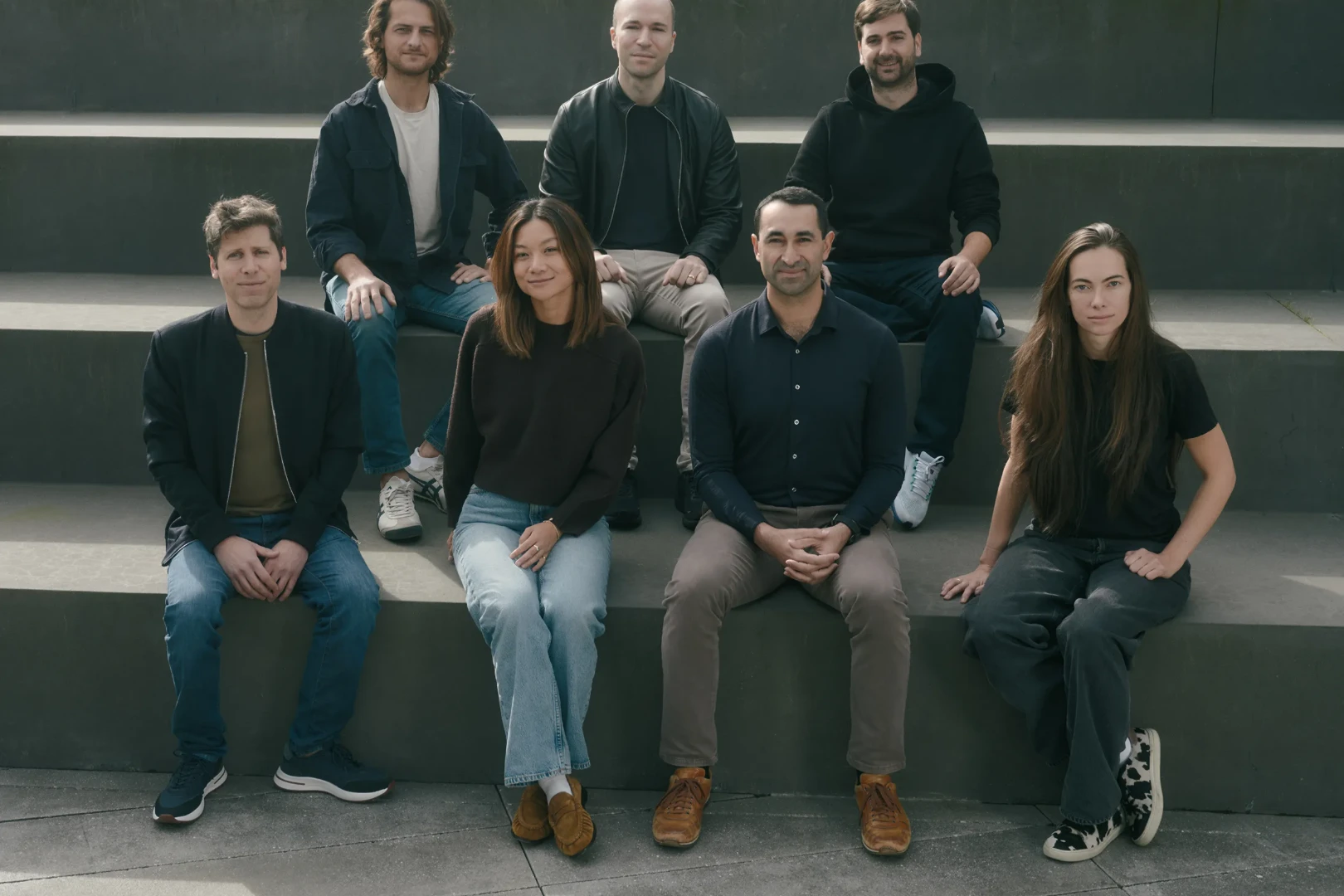
Original title: Inside OpenAI's Race to Catch Up to Claude Code
Original by Maxwell Zeff, Wired
Original by Peggy, Block Beats
The editor presses that, at the moment of the rapid rise of the AI programming agent, OpenAI, who had led the production of the AI wave by ChatGPT, unexpectedly became a "catcher" on this critical track. In contrast, the Anthropic, created by former OpenAI members, became one of the leading leaders in the field of AI programming tools, thanks to Claude Code, who quickly rose in the developing communities and business markets。
This paper reveals the true process behind the competition through interviews with OpenAI executives, engineers and multiple developers: from the early split of OpenAI Codex projects, to the diversion of resources to ChatGPT and multi-model models, to the consolidation of internal teams and the acceleration of the launch of the AI programming product, which is going through a transition from strategic neglect to full catch-up. In a sense, this is not a lag in technical capability, but a mistake in the strategic rhythm: the outbreak of ChatGPT has changed the company’s priorities, its partnership with Microsoft has limited the product’s path, and Anthropic has been betting earlier on the AI programming track。
BEHIND THE COMPETITION, DEEPER PROBLEMS ARE EMERGING: SOFTWARE DEVELOPMENT PROCESSES AND EVEN WHITE-COLLAR LABOUR THEMSELVES CAN BE REDEFINED WHEN AI AGENTS START TAKING ON MORE AND MORE COGNITIVE JOBS。
The following is the original text:
OpenAI CEO Sam Altman put his legs on the office chair, looking up at the ceiling, like thinking about an unformed answer. In a way, it is also relevant to the environment。
OpenAI's new headquarters in San Francisco Mission Bay is a modern building of glass and light-coloured wood, near the "Technology Temple". There is a brochure on the "Eras of AI" display set behind the front desk, as if it depicted a path to technology. The walls of the stairs were filled with landmark posters of artificial intelligence development, one of which recorded a moment when thousands of viewers watched live and a machine beat the top electric team in the Dota 2 contest. In the corridors, researchers come and come in with team-side shirts with slogans, one of which says, "Good research takes time. Of course, it won't take long under ideal circumstances。
We're sitting in a huge conference room. I threw the question at Altman about the AI programming revolution that is sweeping the industry and why OpenAI does not seem to be in the lead in this wave。
Today, millions of software engineers have started to turn some of their programming over to AI, which allows many people in Silicon Valley to really face a reality for the first time: automation may touch their jobs. As a result, programming agents have become one of the applications of a few companies willing to pay high prices for AI. It is logical that such a moment could be, and should even be, the next "winner moment" in the poster on the OpenAI stair wall. But now the name that occupies the headlines is not it。
This company's rival is Anthropic, an AI company founded by former OpenAI members. With its programming agent, Claude Code, Anthropic, has had an explosive growth. In February, the company disclosed that the product had contributed nearly one fifth of the size of its business, with corresponding annualized revenues exceeding $2.5 billion. By contrast, according to an insider, at the end of January, OpenAI ' s own programming product, OpenAI Codex, had just over $1 billion in annualized income。
The question is: Why did OpenAI fall behind in this AI programming competition
"The pre-emptive advantage is very valuable. Sam Altman thought after a moment, "This we've already experienced on ChatGPT."
However, in his view, the time has come for OpenAI to work fully on the AI programming. In his view, the existing modelling capacity of the company was strong enough to support highly complex programming agents. Of course, it is no coincidence that companies have invested billions of dollars in model training for this purpose。
"This will be a huge business," said Altman, "not only because of the economic value it brings, but also because of the general productivity that programming can unleash." He paused and added, "I rarely use this word, but I think it's probably one of the markets of trillions of dollars
To go further, he believes that OpenAI Codex is perhaps the most likely path to AGI. According to the OpenAI definition, AGI is an AI system capable of transcending human performance in the vast majority of economically valuable work。

Sam Altman, CEO of OpenAI. Photo by Mark Jayson Quines。
However, despite Altman's self-confidence in an uncomplicated gesture, the real situation within the company has become much more complex over the past few years. In order to get a more complete internal story, I interviewed more than 30 knowledgeable people, including current OpenAI executives and employees interviewed with company approval, as well as former employees who described the company's internal operations under conditions of anonymity. Taken together, one can see an unusual situation: OpenAI is struggling to catch up。
Time back in 2021. At that time, Altman and other OpenAI executives invited the WIRED journalist Steven Levy to their early office in San Francisco Mission to watch a new technology demonstration. This is a GPT-3-based project using large open source codes from GitHub for training。
In a live presentation, the executives showed how the OpenAI Codex tool received natural language instructions and generated simple code clips。
"It can actually operate for you in the computer world," as Greg Brockman, President and co-founder of OpenAI, explained, "What you have is a system that can really execute orders. Even at that time, OpenAI researchers were generally of the opinion that Codex would be the key technology for building super assistant。
During that time, Altman and Brockman's schedule was almost filled with Microsoft's meeting -- the software giant was the largest investor in OpenAI. Microsoft plans to use Codex to provide technical support for one of its first commercial AI products: a code completion tool called GitHub Copilot, which can be embedded directly in the day-to-day development environment used by programmers。
An early OpenAI employee recalled that, at that stage, Codex was "basically self-fulfilling". But Microsoft executives still see it as an important signal of the age of AI。
In June 2022, when GitHub Copilot was officially released, hundreds of thousands of users were attracted in just a few months。

Greg Brockman, President of OpenAI. Photo by Mark Jayson Quines。
The OpenAI team initially responsible for Codex was subsequently reassigned to other projects. An early employee recalled that the company ' s judgement at the time was that the future model itself would have programming capabilities and that there was no need to maintain an independent Cordex project team for the long term. Some engineers were transferred to DALL-E2 development, while others shifted to training GPT-4. It seemed to be the key path to getting OpenAI closer to AGI。
Then, in November 2022, ChatGPT went online and gained over 100 million users within two months. Almost all other projects within the company were thus suspended. In the years that followed, OpenAI did not actually have a team dedicated to AI programming. A former member of the Codex project said that after ChatGPT went red, AI programming seemed no longer to fall within the company's new "consumer-level product priority" strategy. At the same time, it is widely believed that this area has been "covered" by GitHub Copilot, which is essentially Microsoft's home. OpenAI is mainly providing bottom model support。
Therefore, in 2023 and 2024, OpenAI's resources were more invested in multimodular AI models and smart agents. These systems are designed to understand text, images, videos and audio simultaneously and to operate cursors and keyboards like humans. This direction seemed to be more in line with industry trends at the time: Midjourney’s image generation model was rapidly red on social networks, and industry generally believed that large language models must be able to “see” and “hear” the world in order to truly move to higher levels of intelligence。
By contrast, Anthropic chose a different path. While the company is also developing chat robots and multimodular models, it appears to be more aware of the potential for programming. In a recent podcast, Brockman also admitted that Anthropic has been "highly focused on programming capacity" from an early stage. He noted that in training models, Anthropic had not only used complex programming questions from academic competitions, but also added a large number of "disorders" from real code warehouses。
"This is a lesson we realized later," Brockman says。
Early in 2024, Anthropic began training Claude 3.5 Sonnet using these real code warehouse data. When the model was released in June, many users were impressed with its programming capabilities。
This performance was particularly validated by a start-up company called Cursor. This company, founded by a group of young people in their 20s, has developed an AI programming tool that allows developers to describe needs in their natural language and modify codes directly by AI. When Cursor accessed the new model of Anthropic, its user size grew rapidly, as revealed by a source close to the company。
A few months later, Anthropic began testing his programming agent product internally, Claude Code。
With Cursor's rising human spirit, OpenAI once attempted to acquire the original company. However, according to a number of sources close to the company, Cursor ' s founding team rejected the proposal before the negotiations were advanced. They felt that the AI programming industry had great potential and therefore wanted to continue to develop independently。

Andrey Mischenko, Head of OpenAI Codex Research. Photo by Mark Jayson Quines。
At the time, OpenAI was training its first so-called "debate model", OpenAI o1. Such models can gradually deduce issues before giving answers. Upon publication, OpenAI stated that the model was particularly prominent in "accurate generation and debugging of complex codes"。
Mishchenko explains that one important reason why the AI model has made significant progress in programming capacity is that it is a "verifiable task". Codes can or cannot be operated, which provides a very clear feedback signal to the model. Once an error has occurred, the system can quickly know where it is. OpenAI is using this feedback loop to keep o1 training on more complex programming issues。
"Without the ability to explore, modify and test its own results freely in a code library — all of which are part of the ability to `debate' — today's programming agents cannot reach their current level. He says:。
By December 2024, several small teams within OpenAI had begun to focus on AI programming agents. One of the teams was led by Mishchenko and Thibault Sottiaux. Sottiaux, who served in Google DeepMind, is now the director of OpenAI Codex。
INITIALLY, THEIR INTEREST IN PROGRAMMING AGENTS CAME MAINLY FROM INTERNAL R & D NEEDS, AND THEY WANTED TO USE AI AUTOMATION TO ACCOMPLISH A LARGE NUMBER OF REPETITIVE ENGINEERING TASKS, SUCH AS MANAGEMENT MODEL TRAINING MISSIONS, MONITORING GPU CLUSTER OPERATIONS, ETC。
Another parallel attempt is led by Alexander Embiricos. He was in charge of the OpenAI Multi-Mode Agency project and is now the product manager of Codex. Embiricos has developed a demonstration project called Jam, which was quickly disseminated within the company。
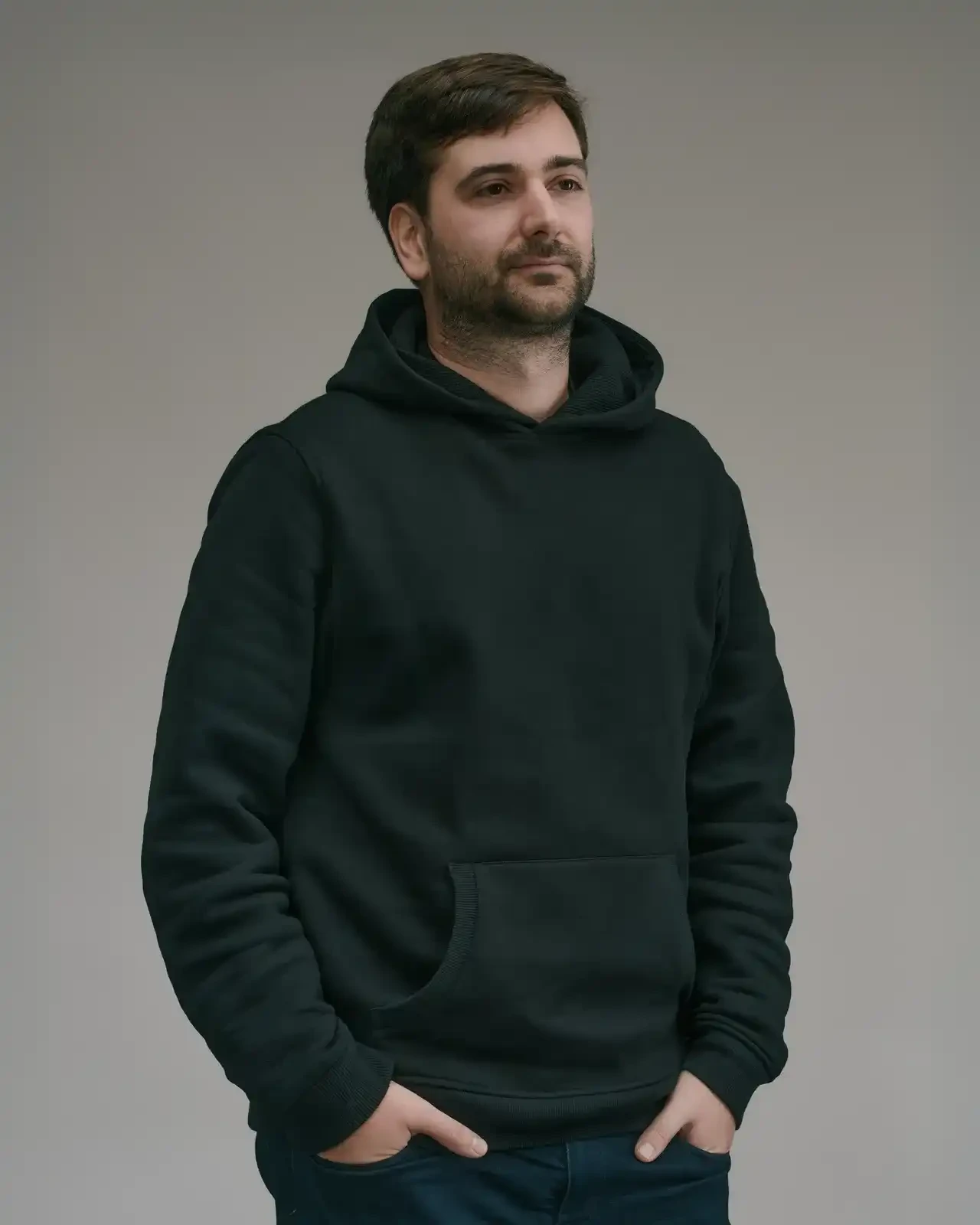
Thibault Sottiaux, Head of OpenAI Codex. Photo by Mark Jayson Quines。
Unlike controlling computers through mouse and keyboard, Jam can access the command line of the computer directly. The 2021 Codex demonstration was also a demonstration of AI creating codes for humans, which are operated manually by humans; the Embiricos version was able to execute them itself. He recalled that a page that looked at the real-time recording of Jam operations was being updated on his laptop and almost shocked。
"For some time, I've been thinking that multi-modular interaction may be the path to our mission. For example, humans share screens and work with AI all day. Embiricos says, "Then suddenly it became very clear: perhaps it would be the real way to achieve this by giving the model direct access to the computer
These scattered projects took several months to gradually integrate into a single direction. By the beginning of 2025, when OpenAI completed its training on OpenAI o3, it was a model that was more optimized in programming tasks than OpenAI o1, and the company finally had the technical basis to build a real AI programming product. But in the meantime, anthropic Claude Code is ready for public release。
Before Claude Code was released (in February 2025 in the form of a "limited research preview" and fully online in May), the mainstream model in the AI programming area was also called "vibe coding". The developers drive the project through the AI support tool, which is controlled by humans, while AI complements actual realization in the process. Such tools have attracted hundreds of millions of dollars in investment。
But the new Anthropic product changed the pattern. Like the Jam demonstration, Claude Code can run directly through computer command lines, which means it can access all the files and applications of the developers. Programming is no longer an "AI support" but a developer can hand the whole job over to the AI agent。
Faced with this change, OpenAI began to accelerate the introduction of competitive products. Sottiaux recalled that in March 2025 he formed a “sprint team” with the task of consolidating multiple teams within the company in a few weeks and launching the AI programming product as soon as possible。
At the same time, Altman also tried to achieve the "curve supercar" by buying it for $3 billion to buy the AI programming company Windsurf. OpenAI seniors believe that the deal will bring the company a mature AI programming product, an experienced team and a ready-made corporate customer base。
However, the takeover subsequently stalled. According to The Wall Street Journal, the problem is with Microsoft, the largest partner in OpenAI. Microsoft hopes to have access to Windsurf's intellectual property rights. Since 2021, Microsoft has been providing technical support to GitHub Copilot using OpenAI models, a product that has also become one of the highlights of Microsoft's teleconferences. But with Cursor, Windsurf and Claude Code introducing the new AI programming agent experience, GitHub Copilot began to appear to be in the previous generation of AI tools. If OpenAI had a new programming product, it wouldn't be good for Microsoft。
The acquisition negotiations coincided with the most tense period of OpenAI's relationship with Microsoft. Both sides were in the process of renegotiated the cooperation agreement, while OpenAI was trying to weaken Microsoft's control over its AI products and computing resources. Eventually, the Windsurf takeover became a victim of this game. By July, OpenAI had given up the deal. Subsequently, Google hired the founding team of Windsurf, while the remaining employees were acquired by another AI Program。
"I certainly hoped that the deal would be completed," Altman said, "but not every deal can be controlled." He said that, while he would have hoped that the acquisition of Windsurf would have "a certain acceleration of our progress", he was equally impressed by the development of the Cordex team. In parallel to the negotiations, Sottiaux and Embiricos continued to develop their products and launch updates。
By August, Altman had decided to accelerate the full-scale advance。
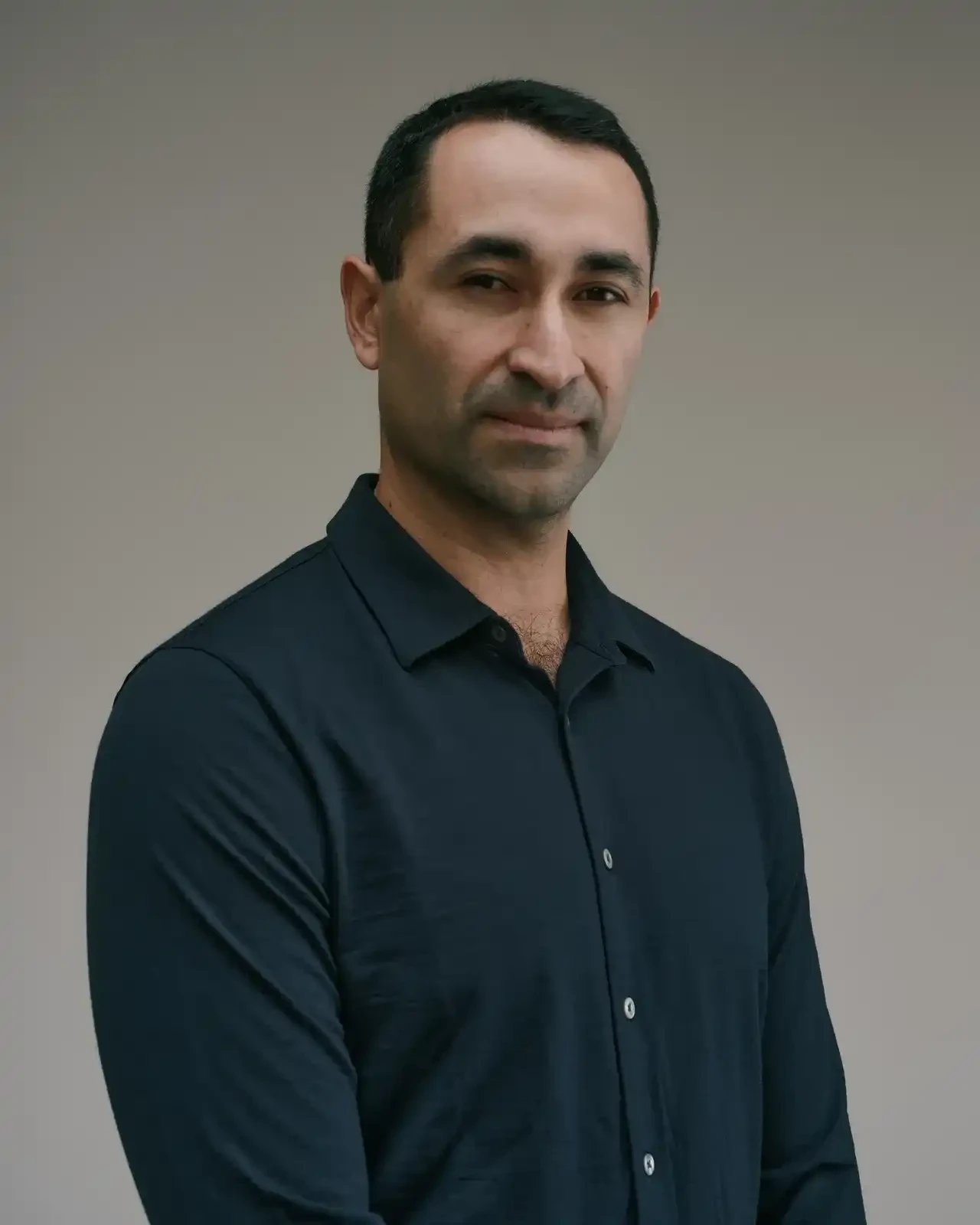
Alexander Embiricos, OpenAI Codex Product Manager. Photo by Mark Jayson Quines。
Greg Brockman's favorite way to measure AI capabilities is a small game he designed himself, Reverse Turing Test. He wrote the game code himself a few years ago, and now he's going to give it to AI agents, and it's going to start again from scratch。
THE RULES OF THE GAME ARE SIMPLE: TWO HUMAN PLAYERS SIT IN FRONT OF DIFFERENT COMPUTERS AND EACH PERSON SEES TWO CHAT WINDOWS ON THE SCREEN. ONE WINDOW CONNECTS ANOTHER HUMAN PLAYER, THE OTHER CONNECTS AI. PLAYERS NEED TO GUESS WHICH WINDOW IS AI WHILE TRYING TO GET THEIR OPPONENTS TO THINK THEY'RE AI。
Brockman says it took OpenAI's strongest model hours to build such a game for most of the past year, and that it required a lot of clear human instructions and assistance. But last December, Codex was able to produce a fully operational version directly through a carefully designed phrase (prompt), using a new GPS-5.2 model at the bottom。
This change was not only noted by Brockman. Developers around the world are also beginning to realize that the capacity of AI programming agents has suddenly risen significantly. The discussion around AI programming was initially focused on Claude Code, which quickly broke the Silicon Valley Technology Circle and became the subject of mainstream media attention。
EVEN ORDINARY USERS WITH NO PROGRAMMING EXPERIENCE STARTED TO CREATE THEIR OWN SOFTWARE PROJECTS DIRECTLY USING AI。
It is no accident that the wave has surged. During this time, both Anthropic and OpenAI invested a lot of money to obtain more AI programming proxy users. Several developers told WIRED that they actually had access to more than $1,000 worth of Cordex or Claude Code subscriptions per month. This fairly "gentle" quota is essentially a market strategy: first, to make developers accustomed to using AI programming tools in their day-to-day work, and then to charge user fees in the business scene。
According to several sources, in September 2025, Codex used only about 5% of Claude Code. But by January 2026, Codex had grown to about 40% of Claude Code。
George Pickett, a 10-year developer of technology, has recently even started organizing an underground gathering on the subject of Codex。
"I think it's obvious that we're replacing white-collar jobs with AI agents," Pickett says, "What it means to society, no one can tell. It will certainly have a huge impact, but I am generally optimistic about the future.”
At the same time, Simon Last, a co-founder of Efficiency Software, estimated at approximately $11 billion, stated that, following the publication of GPT-5.2, he and the company ' s core engineering team had shifted to use Codex, mainly because of better stability。
"I find Claude Code often lies to me," Last said, "It says the mission is running, but it's not."

Katy Shi, OpenAI Fellow. Photo by Mark Jayson Quines。
In OpenAI, Katy Shi, which is responsible for studying the behaviour of the Codex model, says that while Cordex’s default style is described as “dry bread”, more and more users are beginning to appreciate this uninvited communication. "Many engineering works are essentially capable of receiving critical feedback and do not consider it offensive. She said:。
At the same time, Codex has been introduced in a number of large enterprises. The OpenAI application CEO Fidji Simo says, "ChatGPT has become the name of AI, which gives us a huge advantage in B2B. Enterprises are more willing to deploy technology that their staff are already familiar with. She adds that the core strategy of OpenAI sales Codex is to package it with ChatGPT and other OpenAI products。
The CEO and Chief Product Officer of Cisco, Jeetu Patel, made it clear to the staff that there was no need to worry about the cost of using Codex because it was essential to become familiar with the tool as soon as possible. Patel replied, "No." But I can assure you that if you do not use them, you will lose your job because you will no longer be competitive.”
Now, the anxiety surrounding AI programming agents is far beyond Silicon Valley Technology Circle. The Wall Street Journal blamed Claude Code for the 1 trillion-dollar rollout last month for investors’ fear that software development might soon be replaced by AI. A few weeks later, after Anthropic announced that Claude Code could be used to adapt the old system that runs COBOL (which is very common on IBM machines), IBM stock prices went through the worst day in 25 years。
At the same time, OpenAI is trying to put AI programming agents in the public discussion center. The company even spent millions of dollars putting an ad on OpenAI Codex during Super Bow, rather than promoting ChatGPT。
Within Mission Bay’s OpenAI headquarters, few people need to be persuaded to use Codex. Many of the engineers I interviewed said that they were rarely able to knock on the code in person today, and that most of the time was just talking to Codex. Sometimes they even "collectively."。
At Headquarters, I watched a Cordex hacker pine. About 100 engineers were packed in a big room, each with four hours to make the best demonstration with Codex. An OpenAI executive is standing in front, looking at the laptop in his hand and announcing the name of the team with a microphone. Team representatives came to the podium intensely to introduce their AI projects with a slightly shivering voice. The final winner received a Patagonia backpack as an incentive。
Many projects were developed both with Codex and to help engineers make better use of Codex. For example, a team developed a tool to automate the Slack message into a weekly report; another group developed an internal Wikipedia-like AI guide to explain OpenAI internal services. In the past, such prototypes often took days or weeks to complete, and now, one afternoon is enough。
When I left, I met Kevin Weil, a former executive of Instagram, who is now in charge of OpenAI for Science. He told me that Codex was working on some project assignments for him all night, and he would check the results the next morning. This way of working has become daily for him and for hundreds of OpenAI employees. One of the goals of OpenAI in 2026 is to develop an "automated intern" to study AI itself。
Simo states that the future of Codex is not just for programming, but rather to be a task-implementing engine for ChatGPT and all OpenAI products, with a variety of practical tasks for users. Altman also indicated that he was keen to introduce a generic version of Codex, but remained concerned about security risks。
He said that at the end of January 2026, a friend with no technical background had asked him to help install an AI programming agent, OpenClaw. Altman rejected the request because, in his view, "it is obviously not a good idea at this time" such as OpenClaw might miss important documents。
Ironically, a few weeks later, OpenAI announced that it had hired OpenClaw developers。
Many developers told me that the competition between Codex and Claude Code has never been so intense. But as these tools grow in capacity and are increasingly introduced into the work processes by business managers, the problem society needs to face is much more than just " which AI programming tool should be used."。

Amelia Glaese, Vice-President of OpenAI Research and Head of Alignment. Photo by Mark Jayson Quines。
Some oversight bodies have expressed concern that OpenAI may lower security concerns in competition for Claude Code. One non-profit organization, Midas Project, accused OpenAI of weakening its security commitment when it published GPT-5.3-Codex, without adequately disclosing the potential risks of the model in terms of network security。
In response, Glaese argued that OpenAI did not sacrifice safety in order to advance Codex, and the company also stated that Midas Project had misinterpreted its security commitment。
Even Greg Brockman, a co-founder of OpenAI, who last year donated $25 million to a pro-AI super-political action committee (Super PAC) and a pro-Donald Trump organization in support of AI development, remains optimistic that “we are on track to move to AGI” and that this new reality is also complex。
In Silicon Valley engineering circles, Brockman has been known for his "extreme input" management style: The kind of boss who would still check in on the details one night before the product was released. In a way, this more "let go" way of working is a relief for him today. "You will realize that in the past the brain was occupied by a lot of really unnecessary details," he said。
BUT AT THE SAME TIME, WHEN ONE BECOMES THE CEO OF THE HUNDREDS OF THOUSANDS OF AI PROXY FLEETS, AND THESE SYSTEMS ARE USED TO IMPLEMENT YOUR GOALS AND VISION, IT IS VERY DIFFICULT FOR YOU TO GO INTO THE SPECIFICS OF EACH PROBLEM。
"In a sense, it can be felt that you are losing the pulse of the problem itself. "Brockman says。
