
A COUNTRY THAT SPENDS 9% OF GDP ON BITCOIN
In a relatively closed Buddhist country between China and India, the national transport was betted on bitcoin. Let's go
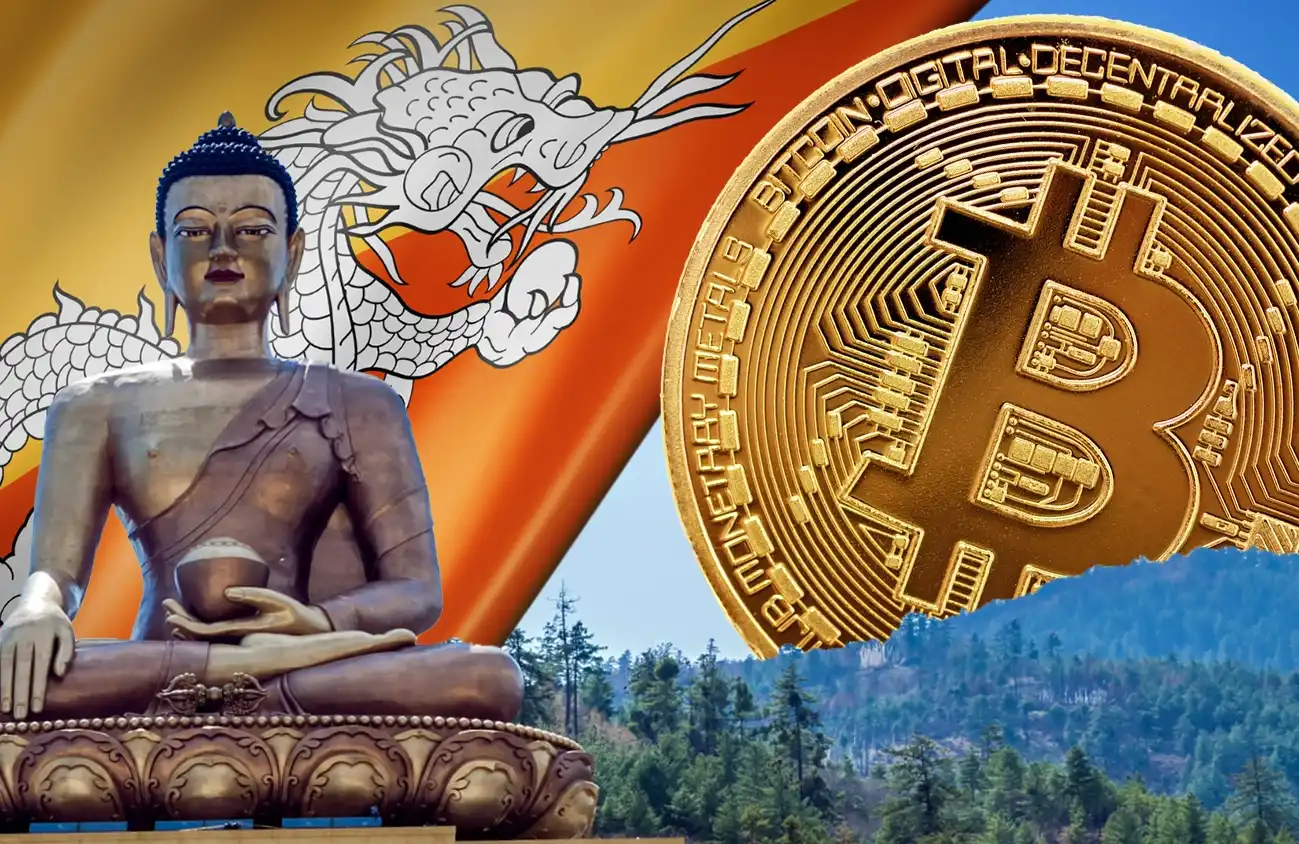
It has been almost six months since Bitcoin was set up. In the six months of this decline, the known national government-held entities almost never sold, yet we found a very interesting pair of rivalries:
EL SALVADOR VS BHUTAN
For nearly six months, the stock of bitcoin in El Salvador increased from 6376 to 7,600, while Bhutan reduced its stock from 6234 to 4000。
It's a small, but mysterious one from the Himalayas. Bhutan, a relatively closed Buddhist country located between China and India, opened for the first time to foreign tourists in 1974, introduced television and the Internet only in 1999, changed from monarchy to monarchy constitutionalism only in 2008, and the use of plastic bags is still officially banned。
In such a country, at its peak, there were 13,000 bitcoin holdings, and now 400,000 were the result of sale. I think you might have a lot of questions, but the first one to resolve is:
Amitabha, Lord of Bhutan, where did your bitcoin come from
Water and electricity, gift from heaven
As a Buddhist country, Bhutan used to be a Buddhist。
In 1972, King Jigme Singh Wangchuk of Bhutan presented the "GNH". Yes, this is the world's famous system of evaluation of "Are you happy?"。
There is Buddha in the heart, Buddha, and the fame of money is outside. Bhutan was the eighth highest on the World Happiness Map published by the University of Leicester in 2006。
But there is Buddha in the heart and there is life. Bhutan graduated from the category of “least developed countries” only in December 2023. In the World Happiness Report published by the United Nations, Bhutan was ranked 84th in 2014. By 2019, it went further down to number 95。
EACH COUNTRY ALWAYS HAS ITS ADVANTAGE, AND BHUTAN HAS ITS ADVANTAGE IN HYDROPOWER. BHUTAN IS SITUATED SOUTH OF THE HIMALAYAS, WITH NUMEROUS RIVERS, ABUNDANT ANNUAL PRECIPITATION AND HUGE TERRAIN. BHUTAN HAS AN ESTIMATED HYDROPOWER THEORETICAL POTENTIAL OF 30000 - 40000 MW, BUT ONLY ABOUT 2300 - 4000 MW HAS BEEN DEVELOPED TO MEET ONLY 5 - 10% OF ITS INSTALLED CAPACITY。
IN THE SUMMER, BHUTAN HAS INUNDATED ELECTRICITY. BHUTAN ' S SUMMER PEAK POWER GENERATION IN 2025 WAS AROUND 3,600 MW, BUT THE CORRESPONDING PEAK IN DAILY DEMAND WAS ONLY ABOUT 900 - 1,000 MW。
SEVENTY PER CENT OF THE ELECTRICITY WAS OVER-UTILIZED AND NATURALLY TARGETED FOR INCOME GENERATION, WHICH BHUTAN SOLD TO INDIA. WATER AND ELECTRICITY, TOO, HAVE BECOME THE ABSOLUTE ECONOMIC PILLAR OF BHUTAN, ACCOUNTING FOR ABOUT 17-20% OF GDP, CONTRIBUTING MORE THAN 63% OF TOTAL EXPORTS。
However, the sale between Bhutan and India was somewhat reluctant. Since 1961, India has dominated almost all of Bhutan's hydroelectric power plants and has adopted a "60% Grant + 40% Loan" funding model. In short, it was India that helped you build the power plant, but at the cost that you had to sell the electricity you produced to India first and cheaply。
This project-for-resource model locks Bhutan ' s economy to death in the rupee settlement system. Despite its energy constraints, Bhutan had been able to exchange Rupee, which had been circulated only in neighbouring countries, and it was difficult to exchange the United States dollar exchange directly on the international market。
How to break the trap
Turning hydropower into bitcoin
Bhutan found a cure for digging bitcoin。
Between 2019 and 2020 (when the price of bitcoin was about $5,000), Bhutan began to secretly test a path known as "energy digitization" - using excess hydropower to dig for bitcoin。
In 2019, King Wangchuk of Bhutan stated: "As a small country, we want to be wise — not an option, but a necessity. Technology is an indispensable tool for achieving this vision
In 2025, the Prime Minister of Bhutan, Tshering Tobgay, publicly stated: "When electricity prices are good, we sell it to India; when electricity prices are bad, we stay to dig bitcoin, which is very strategic."
IN ADDITION TO INUNDATED HYDROPOWER, BHUTAN ' S UNIQUE CLIMATIC CONDITIONS, ESPECIALLY IN THE CENTRAL HIGH-ALTITUDE REGION, WHERE THE ANNUAL AVERAGE TEMPERATURE IS ONLY 5.5°C, ALSO PROVIDE A NATURAL COOLING ADVANTAGE FOR MINING, SIGNIFICANTLY REDUCING ITS ENERGY COSTS。
In addition, the Bitcoin mining industry is perfectly aligned with the environmental and religious philosophy of Bhutan as a Buddhist country. The Constitution of Bhutan provides for the maintenance of 60 per cent of the forest cover, which limits the development of traditional heavy industries. But the mining of water and electricity is a “invisible industry” that does not emitter greenhouse gases and does not destroy the ecology, and the extraction of bitcoin is not contrary to Buddha’s teachings. In contrast to the difficulties encountered in the development of encrypted currencies in Islamic countries, financial activity is strictly prohibited in sharia law, i.e., loans and gambling. Owing to the volatility of Bitcoin prices and the lack of endorsement of physical assets, some Islamic scholars (e.g. the Syrian Islamic Council) have issued fatwa announcements declaring Bitcoin “Haram” (prohibited)。
With lots of water and water. Through Bitcoin, Bhutan has found a way to break the “rupee blockade”. However, how does a relatively closed Buddhist country find the path to encrypted currency, the path to modern finance
Bhutan's Bitcoin Player
Bhutan’s Bitcoin mining is not an impulse of the King or some fanatical politician, but a strategy of “alternative investment” designed by the professional technocrats of its sovereign wealth fund Druk Holding and Investments (DHI)。
The current Chief Executive Officer of DHI, Ujjwal Deep Dahal, is the core driver of mining in Bitcoin in Bhutan. He is an electrical engineer with a deep background in the field of electricity and water. Before taking over DHI, he had a deep understanding of the strengths and limitations of Bhutan ' s hydropower resources。
In Dahal, it appears that Bhutan faces severe geographical and demographic disadvantages ( "Geography is a challenge for us, demography is a challenge for us"). He saw technology as the only way for Bhutan to cross the border. In 2019, Dahal pushed DHI to start a secret investment in the Bitmain mine. His logic is clear: “digital gold” is exploited as a diversified complement to the country's foreign exchange reserves, using “waste power” that cannot be exported during Bhutan's summer water-rich season and cannot be absorbed。
In a relatively closed Buddhist country, it is not ordinary people, but technocrats with the best educational background in the world, who are able to capture the historic opportunities of Bitcoin. The growth trajectory of Dahal is not necessarily a bitter birth, but a typical microcosm of the Bhutanese elite. As a son of a senior government civil servant, Dahal has benefited from Bhutan's best educational resources since childhood and has been awarded the Government's "Elite Scholarship" abroad. He studied basic higher education in India early in the year, then travelled to Canada and the United States for further studies, and was a researcher at the MIT SPURS (Special and Regional Research Project)。
IT WAS IN THE CONTEXT OF THE CUTTING-EDGE SCIENCE AND TECHNOLOGY CONCEPT THAT MIT WAS EXPOSED TO, COMBINED WITH BHUTAN'S INDIGENOUS ENERGY ENDOWMENT, THAT HE INTRODUCED TO BHUTAN'S TOP EXECUTIVES THE IDEA OF "ELECTRIC ARBITRAGE" USING HYDROPOWER TO MINE BITCOIN AT A LOW PRICE IN 2019。
All human beings are equal and all human beings are unequal。
State-level gambling
Bhutan’s “free” bitcoin, which Bhutan has dug out of excess water and electricity, naturally contributes to the country’s foreign exchange reserves. “Why would Bhutan sell bitcoin” is a question that has been answered, but we can explore more。
In June 2023, in the face of a severe crisis of civil service loss, the Government of Bhutan used some $72 million in bitcoin reserves to raise the salary of all civil servants by 50 per cent。
BHUTAN NATIONAL DAY, 17 DECEMBER 2025. BHUTAN HAS ALSO TAKEN A BOLD DECISION TO HOARD UP TO 10,000 BITCOINS (ABOUT US$ 1 BILLION AT THE MARKET VALUE AT THE TIME) AS A NATIONAL SEED FUND FOR THE FUTURE OF THE COUNTRY, ALL OF WHICH WAS INJECTED INTO THE LARGE DISTRICT STILL ON THE DRAWINGS, THE "GÉLÉPÉ TOWNS DE GÉRARD."。
THE GMC FINANCIAL MODEL IS CALLED "CRAZY" IN MACROECONOMICS. ACCORDING TO TIMES AND SCMP, THE GMC ESTIMATED TOTAL INVESTMENT TO BE $100 BILLION, WHILE BHUTAN ' S GDP IN 2025 WAS ONLY ABOUT $3.4 BILLION, WITH TOTAL INVESTMENT ESTIMATED TO BE ABOUT 30 TIMES THAT OF THE COUNTRY IN 2025。
Even more exaggerating, this big project began in December 2023 with the announcement of its initial vision, in 2025 with the official start of construction, and more than two years later, it can only be said that it is in the "building phase."。
These two moves can be confusing — the fact that there were 13,000 bitcoins, the dollar that was earned, why not support other industries in the country, pay only civil servants, and then spend 10,000 bitcoins on a special zone that could not have any revenue in 5-10 years
Bhutan is also helpless。
In Bhutan, the Government is the largest single employer. Owing to the weakness of the private economy, the functioning of the State apparatus is entirely dependent on the civil service. However, Bhutan has faced inflation and brain drain in recent years. The salary increases for civil servants are essentially intended to maintain the functioning of the State apparatus and to prevent the Government from being paralysed. Bitcoin's mining revenues are considered to be the "surviving money" that keeps the core of the country's talent, starting with "stop the bleeding" and then "development"。
In addition, it is quite difficult for Bhutan to support domestic industries. Bhutan lacks an industrial soil to finance it. In the absence of infrastructure, logistics advantages and a very small domestic market (only about 800,000 people), Governments could not shift hundreds of millions of dollars out of a manufacturing or technology industry. The probability of capital will simply flow into real estate and become imported consumer goods, thus draining valuable foreign exchange reserves。
THUS, THE 10,000 BITCOIN PROMISES MADE FOR GMC ARE A KIND OF "NO CHOICE" BET. THE GMC IS NOT A TOURIST CITY, BUT A "SPECIAL DISTRICT" LOCATED ON THE PLAINS OF SOUTHERN BHUTAN ON THE BORDER WITH INDIA, AND PLANS TO ESTABLISH AN INDEPENDENT LEGAL SYSTEM (REFERENCE SINGAPORE AND ABU DHABI) TO ATTRACT GLOBAL CAPITAL。
It is like "the Cayman Islands below the Himalayas" and, in cooperation with institutions such as Matrixport, it provides offshore trusts, the legalization of digital assets and an independent jurisdiction based on common law. The Government of Bhutan is aware that the prospects for progressive reform remain clouded by existing institutional and geographical constraints. Attempts to break the single dependence on India may be the best option they can think of at this time。
ALTHOUGH THE GMC’S ESTIMATE OF TOTAL INVESTMENT AMOUNTS TO HUNDREDS OF BILLIONS OF DOLLARS, IT DOES NOT MEAN THAT THE BHUTANESE GOVERNMENT IS REALLY GOING TO BUY SO MUCH MONEY FROM A SO-CALLED NESTING FUND WHOSE STRATEGY IS TO USE THE BITCOIN REVENUE AND THE NATIONAL SOVEREIGNTY FUND (DHI) TO COMPLETE THE FIRST PHASE OF INFRASTRUCTURE DEVELOPMENT (SUCH AS THE EXPANSION OF AIRPORTS AND THE CONSTRUCTION OF BRIDGES) AND THEN TO ATTRACT THE GLOBAL RICH AND THE CONSORTIUM TO FOLLOW-UP INVESTMENTS BY GIVING THE REGION DEVELOPMENT RIGHTS。
Not only is Bhutan a “hot bet” under the chain, but their operation is far from being a mere “digger-stock-selling”. Instead of putting all of its assets in cold wallets, Bhutan has put a large amount of ETH into liquid currency deposit and deposited it as collateral on a decentralised lending platform, Aave, which lends large amounts of stable currency。
At the beginning of the year, Bhutan faced a dangerous "de-leverage" crisis. With the fall in ETH prices, Bhutan's mortgage value on Aave was reduced, and its health factor for lending was close to the Red Line of Settlement of 1.0. To save itself, DHI was forced to sell 26535 ETH (approximately $60 million) in early February 2026 to repay US$ 137 million in loans. This operation brought his health factor back above the 1.10 safety line and saved the remaining approximately 78,245 steh silos。
In fact, with regard to Bhutan's “hot bets”, we can go back a little bit earlier — because Bhutan, though it has a lot of bitcoin to dig, needs mining machines。
Bhutan procures equipment mainly from Bitmain. According to customs records and media tracking, the main imports are the Antminer S19 series (including S19 Pro, S19 XP, etc.) of the Bite continent. After 2023, with the collaboration of the Bitdeer (Bit Deer), founded by Wu Moot (former co-founder of Bitland), Bitdeer also delivered tens of thousands of advanced mining machines directly to Bhutan。
A comprehensive assessment of institutions such as Forbes showed that Bhutan ' s total capital expenditure on encrypted mining facilities from 2021 to 2023 was approximately $500 million. This directly led to a dangerous drop in Bhutan ' s foreign exchange reserves from $1.27 billion to over $500 million over the same period。
ACCORDING TO THE WORLD BANK MACROECONOMIC OUTLOOK FOR BHUTAN, PUBLISHED IN APRIL 2024, AND THE IMF ARTICLES 4 CONSULTATION REPORT 2024, BHUTAN ' S CURRENT ACCOUNT DEFICIT (CAD) SURGED TO 34.3 PER CENT OF GDP IN FISCAL YEAR 2022/23. THE WORLD BANK HAS MADE IT CLEAR THAT -
"A MAJOR NATIONAL INVESTMENT IN ENCRYPTED CURRENCY MINING LED TO A DECLINE IN INTERNATIONAL RESERVES AND EXPANDED CAD TO 34.3 PER CENT OF GDP. IN 2022 ALONE, ABOUT 9% OF GDP WAS SPENT ON IMPORTING ENCRYPTION EQUIPMENT
A COUNTRY TAKES 9% OF ITS GDP TO BET BITCOIN, WHICH IS PROBABLY ONE OF THE CRAZIEST BETS IN HUMAN HISTORY。
IT'S GOOD THAT THIS BET IN BHUTAN HAS GONE THROUGH A PAINFUL PERIOD. IN 2025, BHUTAN ' S FISCAL POSITION IMPROVED SIGNIFICANTLY WITH THE HISTORIC INCREASE IN THE PRICE OF BITCOIN. ACCORDING TO THE IMF'S LATEST CONSULTATIVE REPORT ON ARTICLE IV 2025, PUBLISHED IN JANUARY 2026, BHUTAN'S FOREIGN EXCHANGE RESERVES HAVE INCREASED SIGNIFICANTLY AS A RESULT OF THE DECREASE IN IMPORTS ASSOCIATED WITH ENCRYPTED MINING, THE INCREASE IN REMITTANCES AND THE INCREASE IN TOURISM AND ELECTRICITY REVENUES. BHUTAN’S CAD IS EXPECTED TO NARROW SIGNIFICANTLY FROM A PEAK OF 34.3% TO 8.62% IN THE FISCAL YEAR 2025/26. THIS MEANS THAT THE PAIN PERIOD OF "BUYING A MINER" HAS PASSED, ENTERING THE "OUTPUT AND LIQUIDATION PERIOD"。
As a country, Bhutan's stinging period is almost over. So, as an individual, is Bhutanese life better because of bitcoin
National and People ' s Movement
THE LABOUR FORCE SURVEY 2022 OF THE NATIONAL STATISTICAL OFFICE OF BHUTAN (NSB) CLEARLY SHOWS THAT THE YOUTH UNEMPLOYMENT RATE IN BHUTAN WAS 28.6% IN 2022. IN 2025, THIS FIGURE DROPPED TO 18 PER CENT。
Data show that the Bitcoin mining industry has indeed improved the lives of Bhutanese. But for Bhutanese, living in Bhutan is still hopeless。
It is estimated that there are currently about 66,000 Bhutanese living abroad, the vast majority of whom are in Australia. For a small country with a population of only about 800,000, this figure is equivalent to nearly 8 per cent of the population。
Correspondingly, only about 3.6 per cent of the global population lives outside their country of birth. In India, it was 2.5 per cent, in Pakistan 2.8 per cent。
You know, the proportion of unemployed in Bhutan reached 45.1 per cent in 2025. This also means that the number of Bhutanese living abroad is almost equal to the number of unemployed youth in Bhutan。
Even in the cities of Bhutan, there is no better prospect of employment because the cities are more developed. Of the unemployed youth, 57.2 per cent live in cities。
Every year, there is a steady increase in the number of Bhutanese students and professionals seeking education and employment in countries such as Australia and Canada, a trend that has attracted high levels of government attention. The Prime Minister of Bhutan Tshering Tobgay stated that many of the 66,000 Bhutanese expatriates are experienced civil servants, teachers, nurses and other professionals。
“We cannot ask civil servants not to resign or to prevent people from leaving the country. I cannot guarantee that professionals will not resign, and that they will often mention the harsh working conditions, which may be true.”
According to Chimi Dorji, President of the Bhutanese Association of Perth, Australia, more than 20,000 Bhutanese currently live in Perth alone. He moved with his wife to Australia in 2019, before which he was a forestry official in Bhutan。
He states that “many Bhutanese living in Australia are still seeking permanent residency because they plan to settle and not to return home”
Tashi Zam, leaving Bhutan with his boyfriend for Australia in 2018. When she graduated with her boyfriend in 2015-2016, she didn't even think about travelling abroad:
“Our first dream was to find a suitable job and then settle in Bhutan.”
For almost two years, they had spent all their time trying to find jobs, but they had nothing. Eventually, their families collected money to encourage them to marry formally in order to apply for work together。
"Now, remember, we made the right choice. We are well paid and can help our families."
THE MINES ARE HIGHLY AUTOMATED, THE GMC SERVES THE FOREIGN ELITE, AND BITCOIN IS NOT A PANACEA FOR THE SEVERE UNEMPLOYMENT CRISIS IN BHUTAN. BHUTAN HAS MOVED DIRECTLY FROM AN AGRICULTURAL TO A FINANCIAL SOCIETY, WITH THE MISSING MANUFACTURING/SERVICES SECTOR THAT CAN ABSORB LARGE EMPLOYMENT。
While the country has risen in the sphere of encrypted currency, the people are still in real life in exile。
