
FREEZING A SMART BITCOIN? THE BIP-361 PROPOSAL TRIGGERS THE MOST INTENSE "QUANTITATIVE THREAT" IN THE COMMUNITY
IN THE VIEW OF THE OPPONENTS, BIP-361 TOUCHED THE DEEPEST PHILOSOPHY OF BITCOIN: OWNERSHIP SHOULD NOT BE CONDITIONAL。
Original by Claude, Deepwater TechFlow
Introduction:Bitcoin Developer Jameson Lopp et al. officially submitted BIP-361 proposals on April 14, planning to phase out the ECDSA and Schnorr signatures in three stages, eventually freezing all early wallets that were not moved to the antiquator address。
The proposal involves about 1.7 million BTC P2PK addresses (including approximately 1.1 million Chinese deaf and approximately $74 billion worth of holdouts) and about 34 per cent of the total network of bitcoin is at risk of quantum attacks due to exposure to public keys. The proposal came under intense criticism from the community, who called it a "authoritarian seizure", but Lopp responded that he would rather freeze 5.6 million BTCs than let them fall into the hands of quantum hackers。
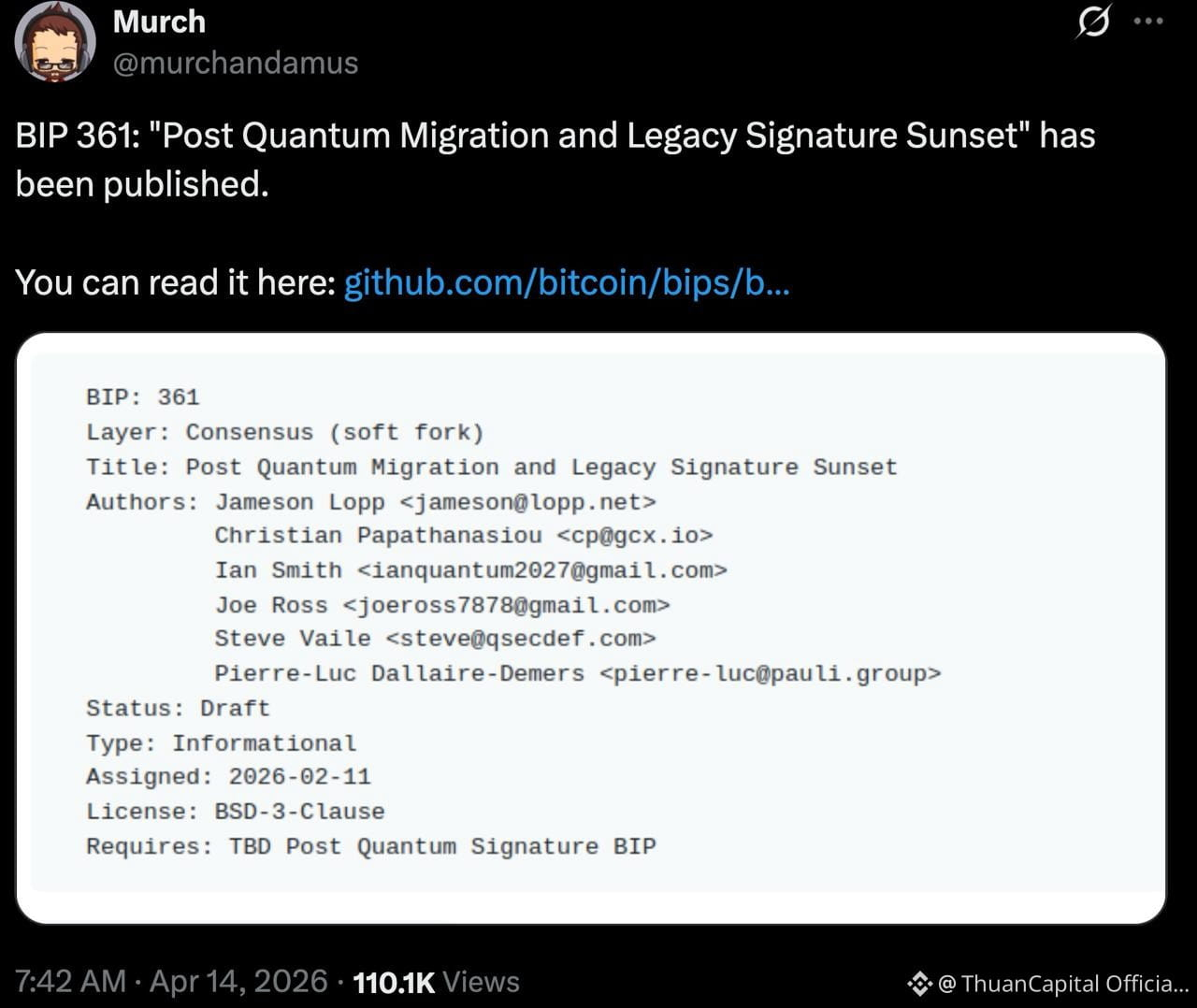
The well-known password punk, Jameson Lopp, Chief Technical Officer of Casa, and five researchers, submitted a draft BIP-361, entitled "Post Quantum Migration and Legacy Signature Sunset", to the Bitcoin/bips warehouse in GitHub on 14 April。
The core of this proposal is straightforward:Until quantum computers are able to crack existing encryption algorithms, the network should proactively freeze all bitcoin wallets that rely on old signature schemes。
According to CoinDesk, Lopp, in an interview, said that he was not the only one in the world who did thisHe doesn't think these measures are necessary for immediate implementationBUT IT IS EMPHASIZED THAT IT IS "CONFRONTATIONAL THINKING ABOUT POTENTIAL FUTURE THREATS". “I KNOW YOU DON’T LIKE THIS PROPOSAL. I DON'T LIKE IT MYSELF. BUT I WROTE IT BECAUSE I DIDN'T LIKE ANOTHER RESULT."
Phase three, Sunset: from restriction to freezing
BIP-361 was based on BIP-360 released this February. BIP-360 proposes a new address format called P2MR (pay-to-Merkle-root), similar to the existing Taproot address, but removes the key path of vulnerability to quantum attacks and provides forward protection for the new currency。
BIP-361 ADDRESSES THE STOCK ISSUE: AS OF 1 MARCH 2026, MORE THAN 34% OF THE WORLD ' S BITCOIN HAD BEEN EXPOSED TO THE PUBLIC KEY IN THE CHAIN, A DATA DIRECTLY FROM THE BIP-361 DOCUMENT ITSELF。
The proposal was designed in three progressive phases:
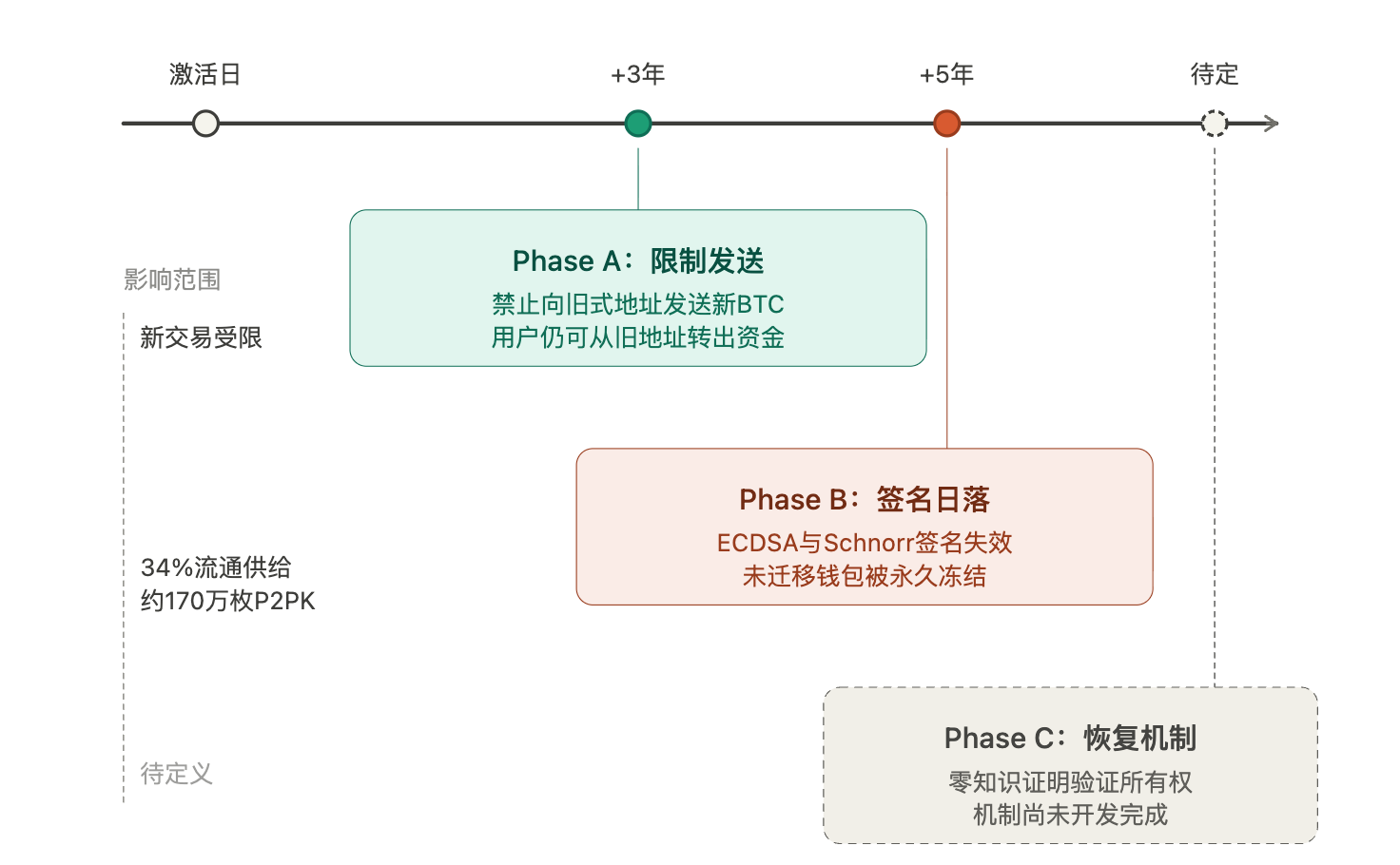
Please A AFTER ABOUT THREE YEARS OF ACTIVATION, THE NETWORK WILL PROHIBIT THE SENDING OF NEW BTCS TO AN OLD ADDRESS, AND ALL USERS SHOULD HAVE MOVED TO THE ANTIQUATOR ADDRESS TYPE。
Please B is effective five years after activation, by which time the old ECDSA and Schnorr signatures will be revoked and any bitcoin remaining in a vulnerable address will be effectively frozen。
Please C it is an unfinished relief mechanism, which envisages the restoration of frozen funds to legal owners with supporting notes through zero-knowledge certificates。
According to Live Bitcoin News, GitHub examiner Conduition argues that Phase C is "the most critical component of any proposal involving a confiscation freeze" and argues that, in the absence of such a mechanism, BIP-361 is incomplete。
The author of the proposal described the freezing mechanism as a "private incentive to upgrade": the currency lost or frozen would only add a slight appreciation to others’ currencies, while the currency recovered from quantum attacks would devalue everyone’s hold。
5.6 MILLION SLEEPING BTCS AND $7.4 BILLION SAKAMOTO
The debate was neurological because of the enormous scale involved。
Lopp estimates that some 5.6 million bitcoins (28 per cent of the total supply) have not been transferred for more than 10 years, and he and other analysts believe that the approximate rates have been lost. At current prices, the value of these sleeping tokens is approximately $42 billion。
The most symbolic of these is the presence of the wise. According to Cointelegraph, about 1.7 million BTCs were locked in early P2PK addresses, including about 1.1 million holding warehouses, with a current value of about $74 billion. The public keys of these addresses have long been publicly disclosed on the chain, and once quantum computer capability has reached a critical point, the attackers can directly control the funds through the Shor algorithm by pushing the public key against the private key。
Lopp warned in the CoinDesk interview that even if there was no need for large-scale sales, “as long as there is any credible evidence of the ability of a person to restore lost or vulnerable currency with a quantum computer, there will be immediate mass panic in the market”。
The rate of compensation on Polymarket, whether or not China will move any bitcoin in 2026, is currently around 9.3%, up from 4.5% at the beginning of the year, but the modest response to the BIP-361 announcement suggests that the market still sees it as a governance discussion rather than an urgent catalyst。
"Sequesting money to prevent it."
BIP-361 TOUCHES THE DEEPEST PHILOSOPHY OF BITCOIN: OWNERSHIP SHOULD NOT BE CONDITIONAL。When the proposal was made public, a wave of criticism quickly emerged。
Bitcoin Magazine, editor Brian Trollz, directly rejected the proposal; Marty Bent, founder of TFTC, described it as "ludicrous"; Phil Geiger, director of Metaplanet's business development, sarcasm: "We have to steal people's money to prevent them from being stolen."
The comments of the platform user Cato the Elder were widely disseminated: “This quantum proposal is highly authoritarian and confiscational ... There is no reasonable reason to enforce escalation and invalidate old expenditure paths. The promotion shall be 100 per cent voluntary.”
The founder of Cysic and former head of quantum resistance in Algorand, Leo Fan, said from a technical point of view: "ownership has become conditional. Holds the key no longer guarantees you can spend it. This weakens the commitment of Bitcoin to an unstoppable currency. However, Fan also admits that removing millions of bitcoins from circulation could tighten supplies and push currency prices higher。
The discussion at the Reddit community r/cryptocurrence was equally intense (the post received 631 approvals and 311 comments), with the highest-vote commentary stating: "If you freeze wallets for hedge investment risks, the BTC is no longer the BTC. Other users have the opposite attitude: "Let them be hacked and the price dropped for a month." We're doing the same thing as last survival crisis."
