
a16z Founder: Agent, something really important has changed
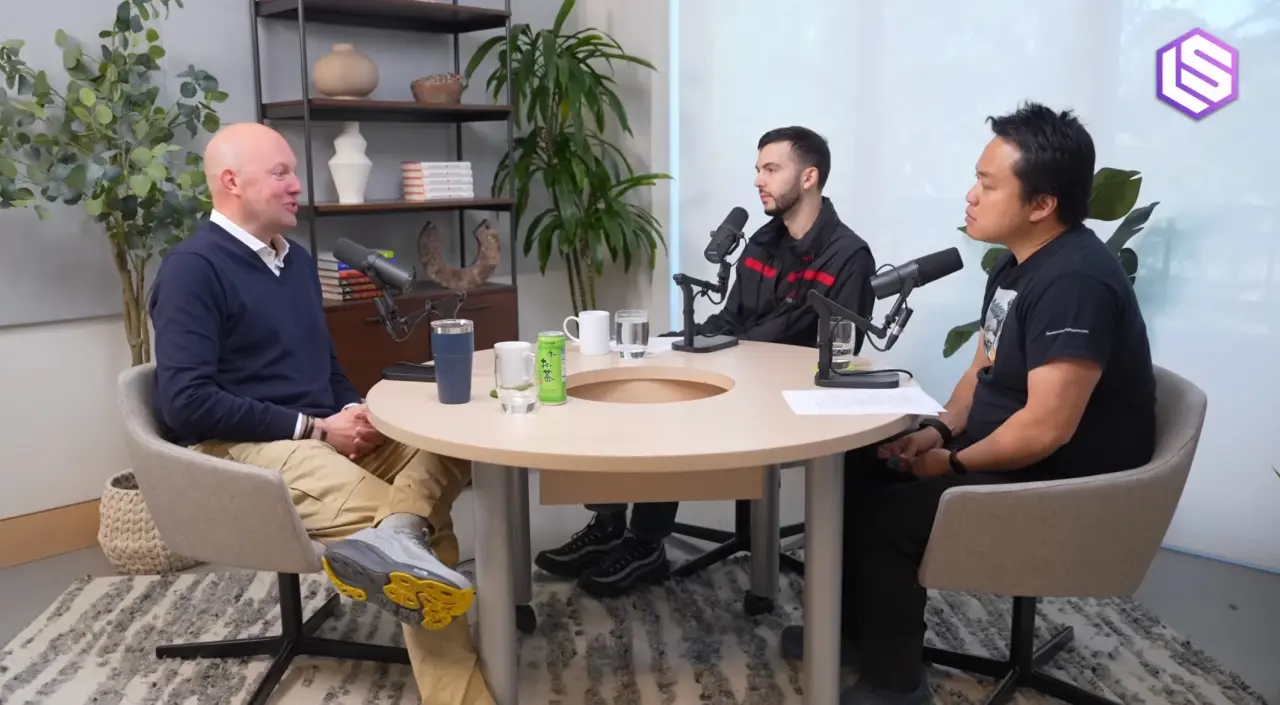
Original title:Marc Andressen introspects on Death of the Browner, Pi + OpenClaw, and why "this Time Is Different"
Photo by FuturePulse
Signal source:This is..a16z founderMarc AndressenThe latest interview with the Latin Space podcast. He's a leading Internet entrepreneur in the United States, one of the key players in the early development of the Internet; he's also startinga16zIT THEN BECAME A REPRESENTATIVE OF THE TOP INVESTORS IN SILICON VALLEY. THE ENTIRE DIALOGUE REVOLVED AROUND THE HISTORY OF AI AND THE LATEST TRENDS, AND IT WAS VERY, VERY, VERY MUCH SOWorth a first reading。
I. THIS ROUND OF AI WASN'T BORN OUT OF NOWHERE, BUT FOR THE FIRST TIME IN 80 YEARS AFTER A TECHNICAL RUN, IT'S A FULL "START TO WORK."

-
THIS ROUND OF AI WASN'T BORN OUT OF NOWHERE, BUT AFTER 80 YEARS OF TECHNOLOGY
-
Marc Andressendirectly known as "80-year overnight access" means a sudden explosion in the eyes of the public, behind which decades of technological reserves were released。
-
He traced this technology back to early neuronetwork research and emphasized that today the industry has actually accepted the judgement that “neuronet is the right structure”。
-
In his account, the key nodes were not a single moment, but a series of stacks: AlexNet, Transformer, ChatGPT, Reasing Models, then agents and self-improvement。
-
In particular, he stressed that this time, not only text generation had become stronger, but that four types of functions had emerged simultaneously: LLMs, researching, coding, and agents/recursive self-improvement。
-
he did not think that “this time is different” because narratives are becoming more lively, but because these capabilities are already working in reality。
ii. Pi and OpenClaw represent angent structure, a deeper change in software than Chatbot

-
he's making it very specific: essentially, it's likeLLM+ shell + file system + markdown + cron/ loop”. In this structure, LLM is the core of reasoning and generation, shell provides an implementation environment, file systems are kept, Markdown is made readable, cron/loop provides periodic awakening and mission advancement。
-
In his view, the importance of the mix was that, apart from the fact that the model itself was new, all the components were well-established, understandable and reusable parts of the software world。
-
the status of angent is kept in the file, so it can move across the model and runtime; the bottom model can be replaced, but the memory and state remain。
-
he repeatedly stressed that introspection: andent knows his own file, can read his own state, can even rewrite his own file and function, moving in the direction of “extend yourself”。
-
In his view, the real breakthrough is not just "model answers," but angent can use the existing Unix tool chain to connect the potential of the entire computer。
The age of browsers, traditional GUIs and hands-on software will be gradually replaced by ant-first interaction
-
Marc Andreasen clearly said that the future “you may no longer need a user interface”。
-
he further noted that the main users of future software might not be people, but “other bots”。
-
this means that many of the interfaces that are designed today for humans to click, browse, and fill out the forms will degenerate into the executive layers that are called behind angent。
-
in the world, people are more like people who propose targets: tell the system what it wants, and get angent to call services, run software, finish the process。
-
He linked this change to a larger software future: high-quality software will become more and more “rich” and no longer a rare piece of handmade engineering。
-
HE ALSO JUDGED THAT THE IMPORTANCE OF PROGRAMMING LANGUAGE WOULD DIMINISH; MODELS WOULD WRITE ACROSS LANGUAGES, TRANSLATE INTO ONE ANOTHER, AND EVEN IN THE FUTURE HUMANS WOULD BE MORE CONCERNED WITH EXPLAINING WHY AI ORGANIZED THE CODE, RATHER THAN KEEPING A LANGUAGE ITSELF。
-
He even mentioned a more radical direction: Conceptually, AI can not only output code, but also directly output lower binary or model weightsModel weightsI don't know。
IV. THIS AI INVESTMENT CYCLE IS SIMILAR TO THE 2000 INTERNET BUBBLE, BUT THE BOTTOM SUPPLY AND DEMAND STRUCTURE IS DIFFERENT
-
He recalled that in 2000 it had been emphasized that the crash was not a “no Internet” to a large extent, but rather that telecommunications and bandwidth infrastructure was over-developed, fibre optics and data centres were over-fronted and subsequently digested for long periods of time。
-
He believes that the concern of “over-building” can be seen today, but the main players are currently large cash-rich companies like Microsoft, Amazon, Google, and not highly leveraged vulnerable players。
-
IN PARTICULAR, HE POINTED OUT THAT, AS LONG AS A RUNNING GPU INVESTMENT WAS MADE, IT WAS USUALLY POSSIBLE TO CONVERT VERY QUICKLY TO INCOME, UNLIKE THE LARGE IDLE CAPACITY IN 2000。
-
He also stressed that we are now using a technical version of "sandbagged": because of the lack of supplies of GPUs, memory, data centres, etc., the potential of models has not been fully released。
-
In his judgmentThe real constraints in the coming years are not just GPU, but also CPU, memory, network-work bottlenecks to the entire chip ecology。
-
He equated AI scaling laws with the old Moore's Law, arguing that they were not just a description of the patterns, but that they were constantly stimulating capital, engineering and industry to work together。
-
He mentioned a very unusual but important phenomenon: some old-generation chips might even be of more economic value than they were when they were first purchased, as software was becoming more and more efficient。
V. OPEN SOURCES, MARGINAL REASONING AND LOCAL OPERATIONS, NOT MARGINAL, BUT AS PART OF AI COMPETITION PATTERNS
-
Marc Andreasen clearly believes that open source is very important not just because it's free, but because “let the world learn how it works”。
-
He described open-source publishing like DeepSeek as a kind of “gift to the world”, because code + paper quickly spreads knowledge and lifts the bottom line of the whole industry。
-
In his description, open sources are not just technological choices, but can also be a geopolitical and market strategy: different countries and companies will adopt different open strategies based on their own commercial constraints and influence objectives。
-
At the same time, he stressed the importance of marginal reasoning (“Edge inference”): the cost of centralized reasoning would not necessarily be sufficiently low in the coming years, and many consumer-level applications could not bear the long-term high cost of cloud reasoning。
-
HE MENTIONED A RECURRING PATTERN: A MODEL TODAY THAT LOOKS LIKE IT'S NOT POSSIBLE TO RUN ON THE PC, AND IT'S OFTEN REALLY WORKING ON LOCAL MACHINES IN A FEW MONTHS。
-
In addition to costs, local operations are motivated by trust, privacy, delay and use scenes: wearing equipment, locks, accompanying equipment, etc., are more suitable for low delays and in situ reasoning。
-
HIS JUDGMENT IS VERY STRAIGHTFORWARD: ALMOST ALL THINGS WITH CHIPS CAN CARRY AN AI MODEL IN THE FUTURE。
VI. THE REAL CHALLENGE OF AI IS NOT JUST MODELLING CAPACITY, BUT SECURITY, IDENTITY, GOLD FLOW, ORGANIZATIONAL AND INSTITUTIONAL RESISTANCE
-
in terms of security, his judgment is very sharp: almost all potential security bugs are more likely to be discovered and a “computer security catastrophe” may occur in the short term。
-
but at the same time, he believes that programming smarts would scale up the ability to fix loopholes; the way to protect software in the future might be to get bot to scan and fix it。
-
on the issue of identity, he did not think that “proof of bots” was feasible because bots would grow stronger; the true direction was to “proof of human”, i.e. a combination of bioidentification, encryption and selective disclosure。
-
he also spoke of a frequently overlooked issue: if they really want to do things in the real world, they will eventually need money, capacity to pay, and even some form of bank account, card or stable currency infrastructure. at the organizational level, he borrowed itManaging capitalism(manageral capitalism) framework, which considers AI to be likely to re-energize the foundationer-led company because bots are good at reporting, coordinating, clerical and a lot of “managerial work”。
-
HOWEVER, HE DID NOT THINK THAT SOCIETY WOULD ACCEPT AI QUICKLY AND SMOOTHLY: HE GAVE EXAMPLES OF PROFESSIONAL LICENCES, TRADE UNIONS, DOCK WORKERS STRIKES, GOVERNMENT DEPARTMENTS, K-12 EDUCATION, HEALTH CARE, ETC., INDICATING THAT THE REAL WORLD HAD A LARGE NUMBER OF INSTITUTIONAL SLOWDOWNS。
-
HIS JUDGMENT IS THAT BOTH AI UTOPIAS AND END-OF-LIFEISTS CAN EASILY IGNORE ONE THING: TECHNOLOGY, IF POSSIBLE, DOES NOT MEAN THAT 8 BILLION PEOPLE WILL CHANGE IMMEDIATELY。
