
Vitalik 2026 Hong Kong's Web3 Carnival Lecture: The ultimate vision and future of Taifung as a world computer
It has two cores: a "public billboard" and a global shared computer。
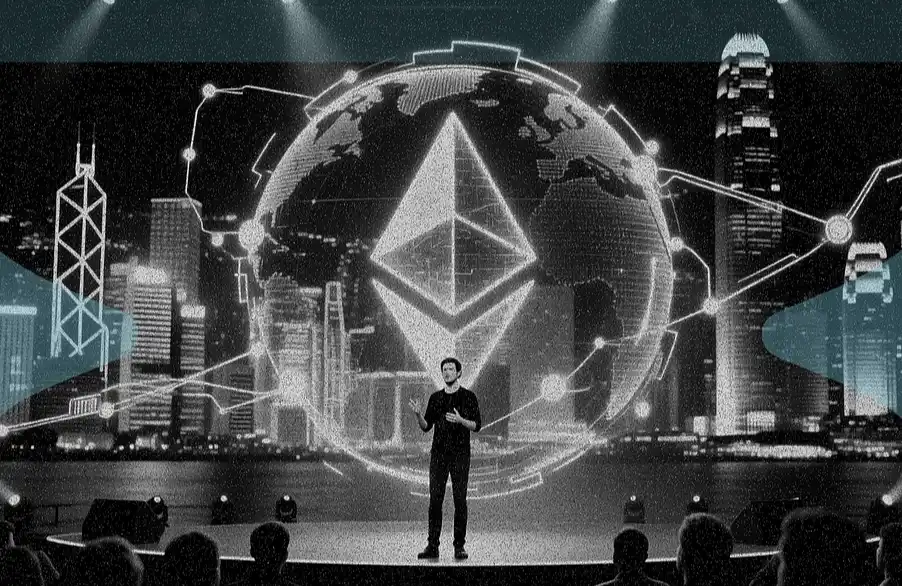
Scene: Odaily Daily Planet
20 April 2026 Hong Kong, China. Vitalik Buterin, a co-founder of the Taifeng, gave an axle keynote speech, in which he analysed the final vision of the Taifung as a world computer and the hard-core road map for the next five years。
Here is the full text:
Good morning, everyone! Where will the Ether House deal go? I believe that in the past few years we have seen many major changes in the area of theory and ecosystems. At the same time, we have witnessed a number of changes taking place outside the Taifeng ecosystem, including the infinite potential of artificial intelligence, including quantum computing, and advances in formalization, cryptography and zero-knowledge certification。
I think one of the important things that we've been doing is rethinking what really makes sense:What's the point of using the Ether Workshop? Why is it a Taifeng? What are its characteristics? What makes a decentrized network need them
For example, how can these new technologies be integrated into our previous Etherwood agreements and plans for the next five years? What is the purpose of the Ether HouseI think it has two main functions:
First, the Ether is like a public billboard。It is a place where applications can release messages and everyone can see the content and sequence of messages. These messages can be anything, they can be transactions, they can be Hash values, they can be encrypted data, they can be many other things. In fact, there are many opportunities for applications to use ETA as a place to publish data, while other types of protocols are used to interpret data (i.e. decrypt data and calculate data)。
Next is the computer。BASICALLY, THE ETHER FORMULA ALLOWS YOU TO HAVE A SHARED DIGITAL OBJECT CONTROLLED BY CODE. THESE FIGURES CAN BE A LOT OF THINGS, AND THEY CAN BE ASSETS, ERC-20 TOKENS, NFTS, WHICH ARE NOT LIMITED TO THEORETICAL ASPECTS (E.G. ENS) OR EVEN REFER TO CONTROL OF THE ORGANIZATION (E.G. DAO). YOU CAN DO A LOT, SO BOTH ARE VERY VALUABLE. FOR DECENTRIZATION APPLICATIONS, THE USE OF THE TAIFENG ENSURES AUTONOMOUS SECURITY, PROBABILITIES, EQUITABLE PARTICIPATION AND THE INTEGRATION OF ALL USERS。
Self-sovereignty basically means that as users you can participate, be certified, be secure, and be based solely on your own infrastructure. You do not need to trust any third party to run the Ether House, and if you do not want to, you do not need to trust any third party outside the Ether House。
VALIDABILITY AND THE ABILITY TO VERIFY, THEREFORE, ENSURE THAT THE CHAIN WORKS CORRECTLY AND THAT EVERYTHING THAT HAPPENS IS RIGHT, AND THAT IT IS CAPABLE OF GUARANTEEING THE RIGHTS OF ANYONE AND THE RIGHT TO ACTUALLY PUBLISH INFORMATION, CAN BE POSTED ON THE BOARD. SO THIS IS THE CORE, AND WE SHOULD LOOK AT THE ETHER WORKSHOP AS A TECHNOLOGY MODULE AND THINK ABOUT ALL THE APPLICATIONS THAT THIS TECHNOLOGY BASE CAN SUPPORT. THE MOST INTERESTING APPLICATION WILL BE THE PRODUCT OF A CHAIN-TO-CHAIN COMBINATION. THIS INCLUDES ENS, FORECAST MARKETS, ETC。
The forecast market consists of chain components (i.e. assets created for each event that can be traded) and sub-chain components (one of which is a predictor). Sometimes the design of the market or the matching of trading orders are predicted to occur in the chain, in addition to privacy-related elements。
For example, for decades, a code protocol has been being studied to simplify or achieve secure electronic voting. Many of these agreements are usually based on public bulletin boards where information can be published. In such cases, they are encrypted ballots, which ensure everyone ' s participation. Anything related to privacy must consist of a chain segment (for the publication of data) and a bottom section (for the interpretation of data)。
If it interprets the data, it must be done through a private agreement under the chain. So we talked a lot about L2 (Layer 2). It seems to me that it makes sense to determine which type of L2 is, first of all, which L2 is meaningless: It doesn't make sense if you just copy it, put it 100 times bigger, make it more central, then finish it. I think the real meaning of L2 is: you start looking at applications and asking them what sub-chain components they need. What more do they need besides L1? And then you go and build these things。
What does this mean for the Ether House? We need to expand the data, and we need the capacity to publish more data on the chain。The PeerDAS that was introduced last year in the hard cross already includes this, but we still need to move forward. The expansion of computing power is also important, as it can help to combine different applications and communicate with one another without the need for intermediate media as part of the chain。
if you visit the road map website (roadmap.org), you can find a road map designed for the next five years. the core objectives of the agreement in the short term are:One is the short-term expansion, which continues to actively raise the Gas ceiling; the second is the launch of the zkEVM。zkEVM allows for more expansion and more complex calculations in the utensils, while still easily authenticating information on the chain. There are also preparations for the early post-quanture era. We have been thinking about quantum calculations for many years, and we have long recognized that this is a danger, and we have some measures。In the near future, we will improve the quantum security of the Ether Workshop and refine the entire road map。
At the end of the day, for example, all parts of the Ether House will be completeQuantum resistance is safeAND VERY EFFICIENT. THE BLOCK CONSTRUCTION PROCESS WILL ALSO BE IMPROVED AND PRIVACY SUPPORT STRENGTHENED. SO THERE ARE A LOT OF EIP PROPOSALS FOR SHORT-TERM EXPANSION THAT WILL BE APPLIED TO THE NEXT PHASE, FOR EXAMPLEBlock Access List (Block Access List)Parallelization can be achieved; Gas re-pricing can increase efficiency and make it safer to raise the Gas ceiling。
the ePBS (separate of the proponent from the builder) has also made it safer to spend longer periods of time on validation of the area and has improved its ability to download the nodes. There is also EIP-8141, which is very simple and very powerful. Basically, one transaction is a series of calls, one of which may be validation and the other may be execution. This makes it easy to achieve original support for smart contract wallets for trade on behalf of others, antiquant signature algorithms and privacy protocols。
So, this makes it more widely used and thus supports many functions. The antiquant signature algorithm does exist, and it's been there for 20 years, and we know what they are, and we know how to build them. The problem is their inefficiency. An antiquant signature is to occupy 2000-3000 bytes, while the signature is now 64 bytes
It's gonna cost 200,000 Gas on the chain, and now it's gonna cost 3000 Gas. So there are two types of signatures that we can use: one based on Hash and the other based on Lattice-based. Our idea is to increase the amount and add it to the EVM, basically using the same logic that allows computers to operate quickly. We are actively working to make signatures more effective against quantum attacks。
State storage, account balances and the implementation of smart contracts are relatively easy, but storage expansion is relatively difficult and much remains to be done, and we must work in that direction. So that is all short- and long-term planning, and that is where we really want to go. It's not about competing with a high-frequency trading platform, it's not about being the fastest chain, it's about becoming a secure, decentrized chain, which will continue online, which you can always rely on。
So, oneOne objective is to ensure a secure consensus to the maximum extent possible。It means that if the network is secure, it can withstand 49% node failure, and can actually withstand almost all node downlines, thus having the same characteristics as bitcoin. If there's a problem with the network, you can still maintain 33% security certainty. This is the first part。
The second is the formalization of everything。And we are already actively applying artificial intelligence to generate code proof that the software version that runs the Ether Workshop does have its own characteristics. We have made progress, which was not possible two years ago. Artificial intelligence is developing rapidly, and we are therefore using it to pursue extreme simplicity, keep long-term agreements as simple as possible and prepare for the future as possible。
Therefore, a network needs to be tested off-line. If a network needs to be applied, you can rely on it, even if there is no power plug. Because it's the same thing. It's what bitcoin wants. If you want to be a long-term holder, you need to ensure the security of your digital assets for the long term, you need to rely on something that can sustain security, not on the continued existence of a team, nor on a team to work。
The agreement of the Taifing has combined the advantages of two approaches:That is, the longest chain rule in Bitcoin and the BFT method. This is finality, with optimal safety features, quantum safety and rapid final certainty。
Therefore, final certainty is completed in one to three slots (Slot), and it is expected that the chain will be finalized in about 10-20 seconds, or even shorter. The zkVM allows you to verify the chain without relying on large computers to run all the operations. Everyone should authenticate the chain, even your mobile phone, your network equipment, before you trust it. And the zero-knowledge virtual machine zkVM is fast enough to prove that real-time virtual implementation is feasible. The goal this year is to make them sufficiently safe, starting with a small percentage of the network using zkVM, and then gradually increasing it. By 2028, it will be able to scale up and deal with more transactions without losing its centrality。
What is the vision of these things? It's a world computer。It is both a global shared layer for making commitments, publishing data, recording actions; a platform for publishing data, where data can be shown to have been released, where data are not yet published and are open to all; and a global shared layer for ensuring the implementation of high-value rules. The Ether Workshop requires maximum robustness and is highly verifiable. I think that in the future, with artificial intelligence it will actually become easier, simpler than we thought, to really ensure software security。
If you want the software to be safe, but people don't want to be safe, the software leak will be 10 times more than before, and the number of attacks will be 10 times greater. Therefore, the use of the Taifaf as a block chain requires first to ensure safety and secondly to decentrize。
WHEN THESE CONDITIONS ARE SECURED, AS FAR AS POSSIBLE THIS SECURITY IS PROVIDED TO USERS. THUS, IF YOU ARE INTERESTED IN BUILDING DECENTRALIZED APPLICATIONS THAT GUARANTEE SELF-SOVEREIGNTY, SECURITY, PROBABILITY AND ENSURE USER PARTICIPATION — INCLUDING FINANCE, DECENTRIZATION SOCIALIZATION, IDENTITY, AND SOME FINANCIAL, SOME NON-FINANCIAL APPLICATIONS (INCLUDING ENS, FORECAST MARKETS, ETC.) — MANY THINGS ARE COVERED。Ethershops can make application development simple, and by default that is the core objective。
The road map for the next four years is designed precisely around this goal. Thank you
Original Link
