
WITH ONLY 50 PER CENT CHANCE OF PASSING IN THE COURSE OF THE YEAR, WOULD THE CLARITY ACT SUCCEED IN BREAKING THROUGH BEFORE THE MID-TERM ELECTION
The window period was limited and many outstanding issues urgently needed to be resolved。

Original author/galaxy
Compile / Odaily Daily Planet Golem()@web3 golemI'm not sure
As the agenda of the 119th National Assembly draws closer, legislation on encrypted money market structures is nearing completion。
THE CARITY BILL RECEIVED STRONG BIPARTISAN SUPPORT IN THE HOUSE OF REPRESENTATIVES IN JULY 2025 (294 VOTES IN FAVOUR, 134 AGAINST) AND HAS BEEN THE FOCUS OF INTENSIVE SENATE CONSULTATIONS SINCE JANUARY THIS YEAR。The Senate Committee on Banking, Housing and Urban Affairs is expected to announce a hearing this week, probably during the last week of April。
According to the Chairman of the Committee, Tim Scott (Republican), three key issues remain unresolved:Stable rate of return clause, DeFi clause and how to ensure that all Republican members of the Commission vote for itI DON'T KNOW. IN ADDITION, A NUMBER OF OTHER ISSUES REMAIN OUTSTANDING, INCLUDING THE TREATMENT OF NON-TRUSTOR SOFTWARE DEVELOPERS IN THE BLOCK CHAIN REGULATORY DETERMINATION ACT, ETHICAL PROVISIONS RELATING TO THE POSSESSION OF ENCRYPTED CURRENCY BY GOVERNMENT OFFICIALS AND ISSUES RELATED TO THE UNITED STATES SEC, WHICH MAY FURTHER COMPLICATE THE WAY FORWARD FOR LEGISLATION。
Following its consideration by the Senate Banking Commission, the bill still needs to be voted by the Senate with 60 votes and coordinated with the version of the Agricultural Commission, the bill adopted by the Chamber of Deputies, and finally signed by the President. Every step takes time, and..THE LEGISLATIVE AGENDA IS RAPIDLY SHRINKING: THE CLARITY BILL HAS TO BE DEBATED WITH IRAN ' S MILITARY MANDATE, THE UNRESOLVED IMPASSE IN THE DEPARTMENT OF HOMELAND SECURITY ALLOCATION AND THE BACKLOG OF NOMINATIONS FOR LIMITED SENATE TIMEI don't know。
Monday, Punchbowl reported that the Senate Banking Commission ' s key negotiator, Senator Tom Tillis of the Republican Party of North Carolina, had called for the Senate Banking Commission to be deferred until May. Should the review be deferred until mid-May, the possibility of passing the bill in 2026 would be significantly reduced. Republican Senator Cynthia Lummis of Wyoming warned that if it was not passed this year, market structure legislation might be delayed until 2030 or even later。
According to Galaxy, the possibility of signing the CLARITY Bill into law in 2026 is about 50%, or even lessI don't know. This uncertainty does not stem from any single issue, but rather from the numerous outstanding issues that must be resolved sequentially in time。

The Minister of Finance, Scott Becent (left), called for the CLARITY bill to be considered. The Chairman of the Senate Banking Commission, Thom Tillis, stated that three major problems remained。
REVIEW OF PROGRESS ON THE CLARITY BILL
THE DIGITAL ASSET MARKET TRANSPARENCY ACT 2025 (CLARITY ACT) WAS PASSED BY 294 VOTES IN FAVOUR AND 134 AGAINST IN THE UNITED STATES HOUSE OF REPRESENTATIVES ON 17 JULY 2025. ALL 216 REPUBLICAN MEMBERS OF PARLIAMENT VOTED IN FAVOUR, NONE AGAINST AND 4 ABSTAINED. ON THE DEMOCRATIC SIDE, 78 MEMBERS VOTED IN FAVOUR AND 134 VOTED AGAINST。
The bill was introduced by French Hill (Republican, Arkansas) Chairman of the Financial Services Committee of the House of Representatives on 29 May 2025 and adopted on 10 June at a joint review meeting of the Financial Services Commission (47 in favour, 6 against) and the Agriculture Commission (32 in favour, 19 against)。
THE OVERWHELMING VOTE IN THE HOUSE OF REPRESENTATIVES REFLECTED THE GENERAL CONSENSUS THAT THERE IS AN URGENT NEED FOR A REGULATORY FRAMEWORK FOR DIGITAL ASSETS AT THE FEDERAL LEVEL: THE ACT CLEARLY DELINEATES THE JURISDICTIONAL BOUNDARIES BETWEEN THE UNITED STATES SECURITIES AND EXCHANGE COMMISSION (SEC) AND THE COMMODITY FUTURES TRADING COMMISSION (CFTC); AND ESTABLISHES THE “LINK OF MATURE ZONES” TEST TO DETERMINE WHETHER CERTAIN ENCRYPTED CURRENCIES ARE SECURITIES. THE ACT ESTABLISHES A PATH FOR THE FULL DECENTRIZATION OF THE CURRENCY NETWORK AS A NON-SECURITIES ASSET; FOR THE FIRST TIME, DIGITAL GOODS INTERMEDIARIES HAVE BEEN INCLUDED IN THE FEDERAL REGISTRATION AND ANTI-MONEY-LAUNDERING OBLIGATIONS. THE SENATE BANKING COMMISSION ISSUED ITS DRAFT IN JULY, WHICH WAS SUBMITTED TO THE SENATE ON 18 SEPTEMBER AND FORWARDED TO THE BANKING COMMISSION。
IN THE SENATE, THE CLARITY BILL HAS BEEN UNDER CONSIDERATION IN PARALLEL. THE COMMITTEE ON AGRICULTURE PUBLISHED ITS DISCUSSION DRAFT IN NOVEMBER AND ON 29 JANUARY SUBMITTED TO THE COMMITTEE FOR CONSIDERATION THE DIGITAL COMMODITY INTERMEDIARIES BILL, WHICH FOCUSES MAINLY ON THE CONTROL OF DIGITAL COMMODITY MARKETS (INCLUDING SPOT MARKETS) IN THE UNITED STATES。
In addition, on 12 January, the Senate Banking Committee, chaired by Tim Scott and headed by Elizabeth Warren, issued an alternative amendment (ANS) of 278 pages, which served as the basis for negotiations on the work of the Committee. The text, which goes far beyond the bill passed by the Chamber of Deputies, covers nine headings, dealing with securities innovation, illegal finance, decentrization finance, banking, software development protection (the Block Chain Regulatory Determination Act, known as BRCA), customer property protection in bankruptcy and other matters。
The bill was initially expected to be submitted to the Senate for a vote in plenary in mid-January, but was postponed owing to differences in the stabilization of currency yield limitsI DON'T KNOW. A SECOND ATTEMPT TO VOTE WAS ALSO CANCELLED. THE VERSION OF THE CLARITY BILL MUST BE COORDINATED BEFORE IT IS SUBMITTED TO THE SENATE FOR A VOTE IN PLENARY, THE CONSOLIDATED VERSION OF THE BILL MUST ALSO BE COORDINATED WITH THAT OF THE CHAMBER OF DEPUTIES, ALL OF WHICH MUST ULTIMATELY BE COMPLETED BEFORE IT IS SUBMITTED TO THE PRESIDENT FOR SIGNATURE。
Since January, the main obstacle to the advancement of the bill has been the dispute between the banking sector and the encryption currency company over the incentive to stabilize the currency. (The GENIUS Act, which entered into force last year, prohibits stable currency issuers from directly sharing the proceeds with holders, but allows the exchange to pay incentives to users who hold stable currency on their platforms; banks wish to prohibit such incentives. On 20 March, Senator Thom Tillis (Republican of North Carolina) and Angela Alsobrooks (Democrat of Maryland) announced an agreement in principle between the two parties under the mediation of the White House. The agreement would prohibit proceeds derived solely from holding a stable currency, but allow well-defined incentives linked to activities such as payments, transfers or platform use。
Since David Sachs left office in March, Patrick Witt, the Executive Director of the Presidential Advisory Committee on Digital Assets, has been the lead authority in the White House for encrypted monetary legislation. He referred to the persistence of the compromise and confirmed that some of the previously difficult issues had been resolved behind the scenes. Representatives of the encrypted money industry reviewed the text on March 23, considering its wording to be too restrictive; Coinbase initially objected, but changed its position on April 10 after the Minister of Finance, Scott Besent, publicly called for amendments to the bill and the Chief Executive Officer of the exchange, Brian Armstrong, expressed his support。
On 8 April, the White House Economic Advisory Board released a 21-page analysis, noting that a total ban on the stabilization of currency yields would only increase bank loans by $2.1 billion, or 0.02 per cent of the total outstanding loans, while consumer costs would increase by $800 million. The report weakened the central argument of the banking sector that unrestricted and stable rates of return could pose a structural threat to deposits. At the time of submission of the text, the Chairman of the Committee, Scott, had not yet announced a date for consideration。
On April 14, he told Fox Business Channel that there were three outstanding issues: the currency-receiving clause, the DeFi clause and ensuring that all Republican members of the Commission voted for it. Senator Tillis, who was responsible for issuing the revised rate of return text, indicated last week that it was unlikely that the text would be released this week and that the appeal would be deferred until May. Consideration could not be scheduled before the 48-hour notice period set by the Committee, when the text was published。
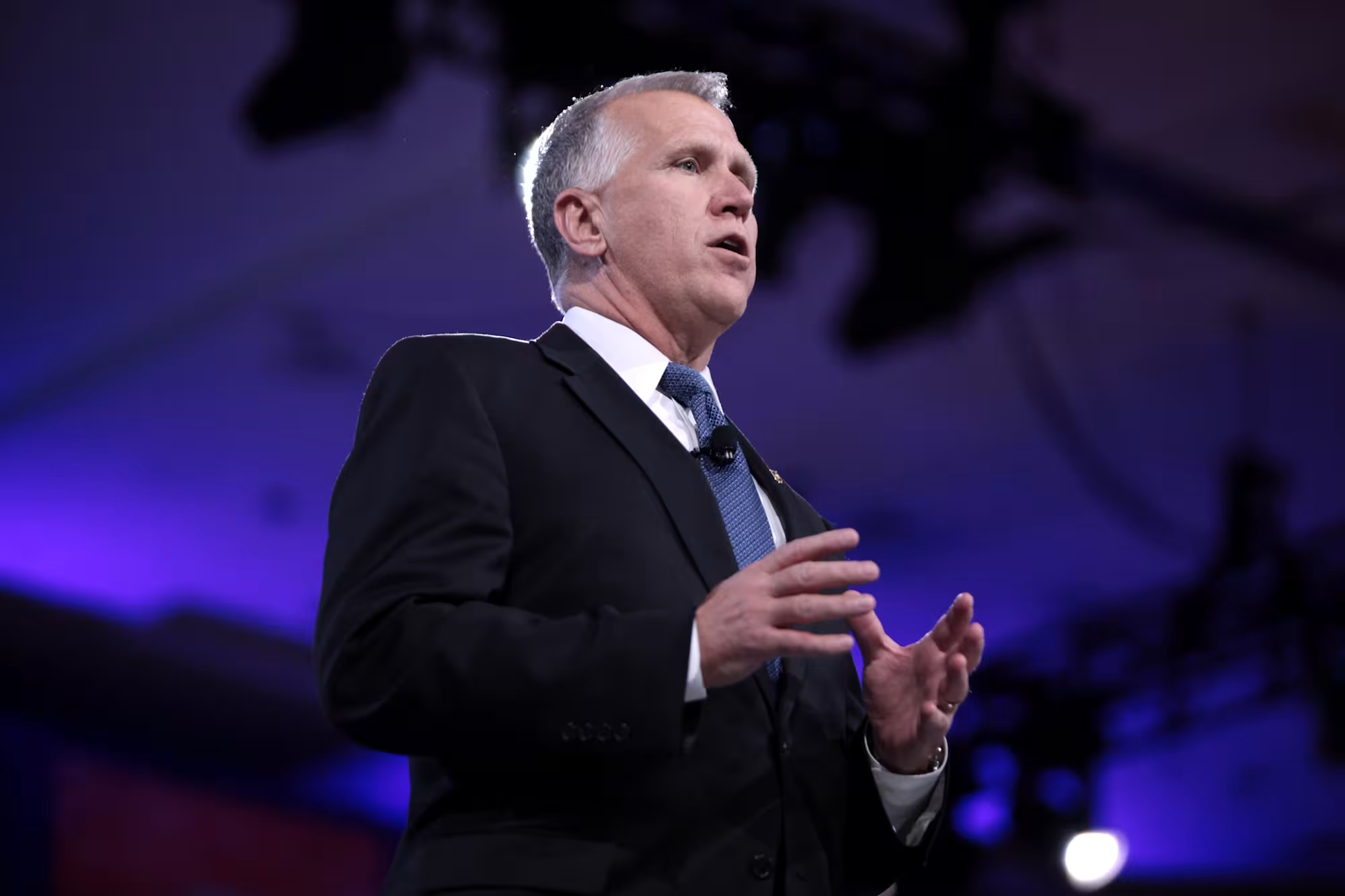
Senator Tom Tillis is a key negotiator on the Senate Banking Commission
IMPORTANCE OF PASSING THE CLARITY BILL BEFORE THE MIDTERM ELECTIONS
THE CLARITY ACT PROVIDES AN IMPORTANT AND LASTING LEGISLATIVE BASIS FOR THE DIGITAL ASSET INDUSTRY: CLASSIFICATION OF DIFFERENT TYPES OF DIGITAL ASSETS AND HOW THEY ARE REGULATED; CLARIFICATION OF THE JURISDICTION OF MARKET REGULATORS; PROTECTION OF NON-TRUST DEVELOPERS; AND GIVING THE MINISTRY OF FINANCE NEW POWERS TO COMBAT ILLEGAL FINANCIAL TRANSACTIONS。
The Act provides the necessary legal and regulatory certainty to continue the integration of encrypted money markets with traditional capital markets, creates conditions for the modernization of United States capital markets and provides for the first time clear and substantial safeguards, information disclosure and investor protection. It resolved many outstanding issues that had previously prevented institutional capital and infrastructure from entering the market or moving them abroad。
IN GENERAL, THE CLARITY BILL IS A POWERFUL BILL, BOTH AT THE TECHNICAL AND POLICY LEVELS。
In view of the power balance between the House of Representatives and the Senate (the Republican party has only a weak majority of seats), Galaxy believes that it is essential that the CLARITY Bill be passed and signed into law before the mid-November electionsI DON'T KNOW. ALTHOUGH THE BILL RECEIVED STRONG SUPPORT FROM THE DEMOCRATS (78 DEMOCRATS VOTED IN THE HOUSE OF REPRESENTATIVES IN 2025 IN FAVOUR OF THE CLARITY BILL), THE POSSIBLE CHANGE IN THE BALANCE OF POWER IN THE 120TH NATIONAL ASSEMBLY (WHICH WILL TAKE PLACE IN JANUARY 2027) WOULD GREATLY REDUCE THE LIKELIHOOD THAT THE LEGISLATION WILL BE PASSED AFTER NOVEMBER 2026。
If the Democrats occupy a majority of seats in both houses of Congress, it means that the new chairman of the Commission, the new agenda focus, and possibly a different attitude towards encrypted monetary legislation. More precisely, it is highly unlikely that the current version of the CLARITY Bill will be adopted by the Senate Banking Committee, chaired by current senior members Elizabeth Warren or Sherrod Brown。
Sherrod Brown was Chairman of the 118th Senate Banking Committee, but was defeated by Bernie Moreno in 2024. Sherrod Brown is currently participating in a special election in Ohio in November against a Republican candidate, Jon Husted. Jon Husted was appointed by Governor Mike DeWine after JD Vance resigned as Vice-President, and the fact that the winner of the election was only 2028 highlights how unstable the Senate’s power structure is about to become。
Brown's previous term of office may have given him higher priority than Warren to the position of Chairman of the Senate Banking Commission, although this is not clear, and both senators have traditionally been hostile to the priorities of the digital asset sector。
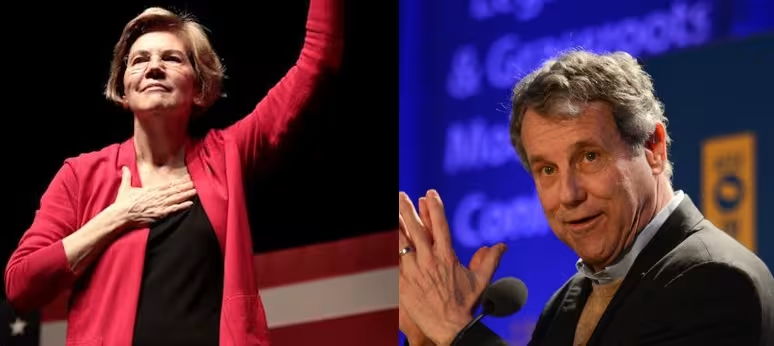
If Elizabeth Warren or Sherrod Brown were to chair the Senate Banking Commission in the future, the current version of the CLARITY Bill would be almost impossible to pass。
TODAY’S BIPARTISAN ALLIANCE IS FORMED UNDER CERTAIN CONDITIONS: THE WHITE HOUSE, WHICH SUPPORTS THE ENCRYPTED CURRENCY, THE CHAIRMAN OF THE REPUBLICAN BANKING COMMISSION, THE SUCCESSFUL PASSAGE OF THE GENIUS ACT (WHICH DEMONSTRATES THE FEASIBILITY OF BIPARTISAN COOPERATION), AND THE STRONG LOBBYING AND INVESTMENT IN THE ENCRYPTED MONEY INDUSTRY, THE ELECTION OF MEMBERS OF PARLIAMENT WHO ARE FRIENDLY TO THE ENCRYPTED CURRENCY IN 2024, AND THE TRANSFORMATION OF PREVIOUSLY SKEPTICAL PARLIAMENTARIANS INTO SUPPORTERS. THESE CONDITIONS MAY NOT BE SUSTAINABLE IN THE FUTURE。
Senator Lummis has publicly warned that if the CARITY Act is not passed this year, full market structure legislation may be delayed until 2030 or even laterSince the new Congress would need to restart the legislative process from scratch, the composition of the new Commission and the potentially distinct political motives would influence the legislative process。
Even if the Republicans keep most of the seats, during the lame duck session(Odaily note: refers to the time when the National Assembly was in session before the end of the parliamentary elections but before the new Congress took office)In the early months of the new Congress, political enthusiasm for complex, multi-stakeholder financial regulation may also recede as leadership attention shifts to forming committees, identifying nominees and setting a new legislative agenda. The current window period is therefore extremely favourable and may not re-emerge soon。
EVEN IN THE ABSENCE OF A CIA BILL, A REGULATORY ENVIRONMENT CONDUCIVE TO ENCRYPTION COULD ONLY LAST UNTIL PRESIDENT TRUMP'S TERM ENDSI don't know. Regulators have demonstrated that the encryption industry is being advanced through administrative remedies, interpretative guidance and formal rule-making. These advances have prompted major banks, brokerage firms and exchanges to take practical measures to build block chain infrastructure and provide digital asset services. The degree of integration achieved by participants in traditional capital markets over the next two and a half years may be sufficient to prevent significant setbacks in the encryption industry even if the future government is hostile。
HOWEVER, THE KEY IS TIME SPAN AND PERSISTENCE. REGULATORY PROGRESS TO DATE, INCLUDING THE JOINT UNITED STATES-SEC AND UNITED STATES-CFTC EXPLANATORY BULLETIN, THE SEC ' S LETTER OF NO ACTION AND THE UNITED STATES MONETARY SUPERVISORY AUTHORITY (OCC) GUIDANCE ON BANK ENCRYPTION, ARE OUTSIDE THE SCOPE OF THE LAW, SO THAT FUTURE GOVERNMENTS CAN OVERRIDE THESE MEASURES WITHOUT CONGRESSIONAL APPROVAL。
EVEN WITHOUT THE CLARITY ACT OF 2026, THE ENCRYPTION INDUSTRY MAY NOT BE IN CRISIS, BUT ITS LIFETIME MAY BE SHORTENED. IN THE LONG TERM, A COMPREHENSIVE MARKET STRUCTURE BILL WILL BE CRITICAL TO REGULATING THE DEVELOPMENT OF THE DIGITAL ASSET INDUSTRY IN THE COMING DECADES。
Problems in the ongoing negotiations in the Senate
While the issue of “stable currency incentives” dominates major media outlets and is widely considered to be the (perhaps the only) major obstacle to moving the bill forward, several other key issues are also on the rise. The following are the main symptoms:
Stabilisation Currency Award
We are waiting for Senator Tillis to make public the compromise he reached with Senator Alsobrooks of Maryland。
According to GalaxyThe text still prohibits incentives for “only because of possession” of a stable currency, but allows well-defined incentives linked to activities such as payments, transfers or platform use。If that's true, it's basically like the agreement that Coinbase expressly rejected in January。
HOWEVER, WE NEED TO SEE THE SPECIFICS OF THE TEXT, WHICH THE SENATORS HAVE KEPT SECRET. THE REPORT ISSUED BY THE WHITE HOUSE ECONOMIC ADVISORY COMMITTEE (CEA) ON 8 APRIL STATES THAT A TOTAL BAN ON RENT-BASED ENCRYPTED CURRENCY WOULD ONLY INCREASE BANK LOANS BY $2.1 BILLION (0.02 PER CENT OF THE TOTAL OUTSTANDING LOANS) AND THAT CONSUMER COSTS WOULD INCREASE BY ABOUT $800 BILLION, WHICH WOULD CONSIDERABLY WEAKEN THE BANKING SECTOR’S ARGUMENT ABOUT THE OUTFLOW OF DEPOSITS。
THE AMERICAN ASSOCIATION OF BANKERS ALMOST IMMEDIATELY REFUTED THE PROBLEM OF CEA’S ANALYSIS, WHICH STUDIED ONLY THE IMPACT OF THE CURRENT STABLE CURRENCY MARKET OF ABOUT $30 BILLION, WITHOUT A SIMULATION OF THE FUTURE SCENARIO OF A REVENUE-BASED STABLE CURRENCY THAT WOULD ALLOW SUBSTANTIAL COMPETITION WITH THE BANK’S $18 TRILLION DEPOSIT BASE. THERE ARE SIGNIFICANT DIFFERENCES BETWEEN THE FRAMEWORKS FOR DISCUSSION AND THE DEFINITION OF THE SCOPE OF ANALYSIS IS LIKELY TO DETERMINE THE FINAL OUTCOME。
The Coinbase CEO changed his opposition to the bill on April 10, as if the biggest obstacle to the industry in the past had been removed. The text of the bill may not have changed substantially with the version that Coinbase rejected in January, but political considerations have changed: Becent’s public pressure, CEA’s report, and Coinbase’s current application for a national bank licence (which, regardless of the final outcome of the bill, the company may face federal regulatory avenues) may all influence Coinbase’s attitude。
However, potential commercial tensions between exchanges and banks around stabilizing the rate of return on currency remain。
THE BLOCK CHAIN REGULATORY DETERMINATION ACT (BRCA)
AS ARTICLE 604 OF THE ANNUAL CIRCULAR OF THE SENATE BANKING COMMISSION (ANS), BRCA CLEARLY STATES THAT SOFTWARE DEVELOPERS AND INFRASTRUCTURE PROVIDERS THAT DO NOT HOLD OR CONTROL USER FUNDS ARE NOT REMITTANCE AGENCIES UNDER THE BANKING SECRECY ACT。
The encryption currency industry views this clause as a red line and considers it essential to ensure that open-source development remains within the United States. This provision was opposed by law enforcement and by both parties to the Senate Judicial Committee. In January this year, the Chairman of the Judicial Council, Chuck Grassley & nbsp (Republican, Iowa) and the Chief Member, Dick Durbin (Democrat, Illinois), sent a joint letter to Scott, Chairman of the Senate Judicial Council, and Warren, Chief Member, opposing the incorporation of BRCA into federal law。
In their view, the Banking Commission, without consulting the commission responsible for federal criminal law, has made unauthorized changes to 18 U.S.C. (in particular, 18 § 1960, which prohibits unauthorized transfers). They warned that the provision would create a “blind spot” for state and local law enforcement agencies that relied on the financial crime enforcement network (FinCEN) for the tracking of financial flows, which often relied on FinCEN's registration when investigating potential money-laundering, terrorist financing and drug and human trafficking activities。
In addition, Catherine Cortez Masto (Democrat, Nevada), former Attorney-General of Nevada and a member of the Banking Commission, has been promoting changes to the relevant provisions to address the concerns of the law enforcement authorities. The National Association of Chiefs of Police and the National Association of Local Prosecutors also issued observations warning that the provisions of the Act on decentralised finance (DeFi) might limit the ability of prosecutors to pursue financial crime cases。
It is countered by the encrypted money industry that BRCA has not changed the anti-money-laundering legislation provided for in 18 U.S.C. § 1956 and 1957; it does not restrict prosecution for fraud or evasion of sanctions; it merely aligns FinCEN’s guidance with the recently stated position of the Department of Justice that genuinely decentralised non-trusted software does not constitute a transfer of funds。
The ability to meet the requirements of Chuck Grassley and Catherine Cortez Masto without significantly weakening the provision was one of the most difficult negotiations in the bill。
Moral amendments
Democrats have sought to include provisions in the bill prohibiting senior government officials, elected officials and their family members from holding or profiting from encrypted assets during their tenure. This issue is directly related to various encryption projects involving the Trump family and has been a priority for the Democratic Party throughout the negotiations。
The issue was not included in the annual draft resolution of the Senate Banking Committee in January, but several Democrat senators have indicated that they will promote the adoption of an ethical amendment before the Committee or in the plenary of the Senate。While this is unlikely to be an obstacle to the Committee's deliberations, it may be the focus of the plenary debate, as any senator can propose an amendment and a Democrat vote is required to reach 60。
AMERICAN SEC IMMUNITY
ARTICLE 505 OF THE SENATE COMMITTEE ON BANKING'S ANNUAL DRAFT RESOLUTION DEALS WITH THE MONETIZATION OF SECURITIES AND OTHER REAL WORLD ASSETS. SOME MARKET PARTICIPANTS AND FORMER REGULATORS CONSIDERED THAT THE PROVISION UNDULY LIMITED THE ABILITY OF THE SEC TO USE ITS EXEMPTION AND NO-ACTION REMEDIES TO PROMOTE INNOVATION IN THE DIGITAL ASSET MARKET。
IN SHORT, MANY ARE CONCERNED THAT THIS PROVISION WILL RENDER THE UNITED STATES SEC'S “INNOVATION EXEMPTION” PROCEDURE IMPOSSIBLE AND MAY EVEN BE UNLAWFUL, AS IT WOULD IMPOSE RIGID STATUTORY REQUIREMENTS THAT LIMIT THE COMMISSION'S LONG-STANDING DISCRETION UNDER STATUTES SUCH AS SECTION 28 OF THE SECURITIES ACT AND SECTION 36 OF THE TRADING ACT。
This concern was expressed by lawyers and compliance professionals involved in the monetization project, as well as by some Democrats, who considered the provision to be an abuse of the SEC ' s current progressive attitude towards encrypted money. (SEC, under the chairmanship of Atkins, has been actively using no-action exemptions and staff guidance to facilitate digital asset activities, while article 505 may limit the flexibility being exercised by the Commission
SEC QUORUM
SEC currently has five members, three of whom are appointed by the Republican Party: Paul Atkins, President; Hester Peirce, Commissioner; and Mark Uyeda. In accordance with long-established practice, no more than three members of the same party may be members of the five commissioners, and it is anticipated that two vacant seats will be filled by Democrats。
The Senate minority leader, Chuck Schumer, and President Trump failed to agree on the list of candidates。IF THE CARITY BILL IS PASSED, THE DEMOCRATS MAY CONSIDER THESE VACANCIES A GUARANTEE OF BARGAINING CHIPS AND THEIR OWN INTERESTS: CONFIRMING THAT THE TWO DEMOCRATS WILL RESTORE THE BIPARTISAN CHARACTER OF THE COMMISSION AND GIVING THE DEMOCRATS A SAY IN THE RULE MAKING AFTER THE CLARITY ACT HAS ENTERED INTO FORCE。
SOME SENATE DEMOCRATS HAVE SUGGESTED, AT LEAST IN AN INFORMAL SETTING, THAT PROGRESS ON THE UNITED STATES SEC NOMINATION MAY PAVE THE WAY FOR THE PASSAGE OF THE CLARITY BILL IN THE SENATE. THIS IS NOT SO MUCH A QUESTION OF THE TEXT OF THE BILL AS A MATTER OF POLITICAL ORDER, BUT IT IS CRUCIAL TO THE COUNTING OF VOTES, BECAUSE THE CLARITY BILL REQUIRES 60 VOTES TO PASS AND THEREFORE REQUIRES STRONG SUPPORT FROM THE DEMOCRATIC PARTY。
Not all of these issues are considered to be obstacles or key factors to a final agreement, but overall they pose a significant risk to the duration of negotiations. Any issue could take days or even weeks of negotiation, which the Senate could not afford。
Timetable and possibilities
It is widely expected that the Senate Banking Commission will announce this week that a hearing of deliberations will be scheduled for the last week of April, next week。However, on Monday, Senator Tom Tillis of the Republican Party of North Carolina, a member of the key committee responsible for the negotiations on the stabilization bonus, indicated that the Committee should wait until May to schedule its consideration。
From now until the signing of the bill by the President, the procedure for the bill is divided into five steps:
- The Senate Banking Commission considered and voted on the bill
- The bill was passed by the Senate in plenary by 60 votes
- (a) The bill of the Banking Commission is coordinated with the version of the Agriculture Commission (i.e. the adoption of the Digital Commodity Intermediary Act, which was considered by the Commission on 29 January)
- (A) THE HARMONIZATION OF THE MERGED SENATE BILL WITH THE CLARITY BILL PASSED BY THE HOUSE OF REPRESENTATIVES IN JULY 2025
- The President signed the final bill。
Each step takes time, while the legislative agenda is becoming increasingly tight. The text of the bill would be made public shortly before the Review Conference, and once the time for its consideration had been fixed, the Committee would have to debate and vote on the amendments before it could move forward. In addition to 60 votes for the Senate plenary to initiate the closure of the debate, time is needed to debate and vote on amendments, which may take one week or more。
Between now and the August recess, the Senate has a limited and competitive agenda。The Senate will last until the end of April, then adjourn until 11 May, resume from 11 to 22 May, resume its work for three weeks in June and July, and adjourn for two weeks around 4 July (the 250th anniversary of the establishment of the United States) and resume its meeting in the first week of August, then for five weeks from 10 August (August)。
DURING THIS PERIOD, THE CLARITY BILL MUST COMPETE FOR TIME FOR SEVERAL IMPORTANT ISSUES: THE ONGOING DEBATE ON IRAN ' S MILITARY MANDATE, WHICH HAS ALREADY TAKEN UP A SIGNIFICANT AMOUNT OF TIME AND IS LIKELY TO ESCALATE IN AN UNPREDICTABLE MANNER; THE UNRESOLVED IMPASSE IN THE ALLOCATION OF THE DEPARTMENT OF HOMELAND SECURITY (THE ONLY PENDING FISCAL YEAR ALLOCATION BILL); AND THE CONTINUING JUDICIAL AND ADMINISTRATIVE NOMINATIONS。
Senator Bernie Moreno publicly stated that the bill had to be submitted to the Senate plenary by May, so as not to be burdened by the schedule for the midterm elections. Republican Senator Bill Hagerty of Tennessee stated that he was confident that the bill would be considered by the Banking Commission in April and presented to the Senate plenary by the end of the month。
However, President Scott ' s statement of 14 April indicates that this schedule has been postponed. President Scott is now in the hands of the initiative, and at the time of writing it was the penultimate week of April. For each week of delay, the window of time required for the final submission of the bill to the President for signature is compressed. Even so, if the bill were to be considered at the beginning of May, it would not mean that it would ultimately not be adopted, especially if the Committee voted for a unanimous bipartisan vote, demonstrating the feasibility of the bill in plenary。
In Galaxy ' s view, the most likely scenario is that the Banking Commission considers it in early or mid-May and then tries to vote in plenary sometime in May or June。If the deliberations are delayed after mid-May, the likelihood of passing the Act in 2026 will decline sharply: The remaining legislative calendar cannot accommodate the full five-step process described above, especially in the context of tight parliamentary schedules. In theory, it is possible to have a plenary vote in July, but this requires extraordinary political will and coordination, given the proximity of the August recess and the midterm electoral season。

Senator Cynthia Lummis warned that if the CLARITY Bill was not passed this year, comprehensive market structure legislation could be delayed until 2030 or later。
Thus, the possibility of signing the CLARITY Bill into law in 2026 is about 50 per cent, or even less, and Polymarket is currently set at 50 per cent. Uncertainty does not arise from any single issue, but rather from the large number of outstanding issues that must be resolved sequentially in time。
The issue of a stable currency incentive is likely to be resolved in the coming weeks, but all these factors remain variable. Any single factor could lead to several days or even weeks of delay in the process, while time was too short to bear。
Key points for immediate attention include:
- (a) The publication of a revised version of Tilis ' s stable rate of return, which would augur well for the forthcoming consideration of the Senate Banking Commission
- (a) The Chairperson announced the date of consideration
- (a) The results of the voting and the support rate of the Commission
- Whether the majority leader, John Thune, scheduled a parliamentary meeting before the 4th of July。
IT WOULD BE A STRONG SIGNAL THAT THE NEXT STEPS CAN BE SUCCESSFULLY COMPLETED IF THE CLARITY BILL IS PASSED BY THE BANKING COMMISSION WITH A MORE FAVOURABLE BIPARTISAN SUPPORT RATEI don't know. If the bill is passed only by party votes or close to party votes, the difficulty of obtaining 60 votes in Parliament will increase considerably, and the prospect of its adoption in 2026 will be significantly bleak。
