
HONG KONG'S ETA WATCH: HOW CAN THE WORLD COMPUTER RESONATE WHEN IT MEETS THE ETHS
The same Ether is being redefined by two almost different language systems。
In April 2026, Hong Kong was also telling two stories about the Etheraf。
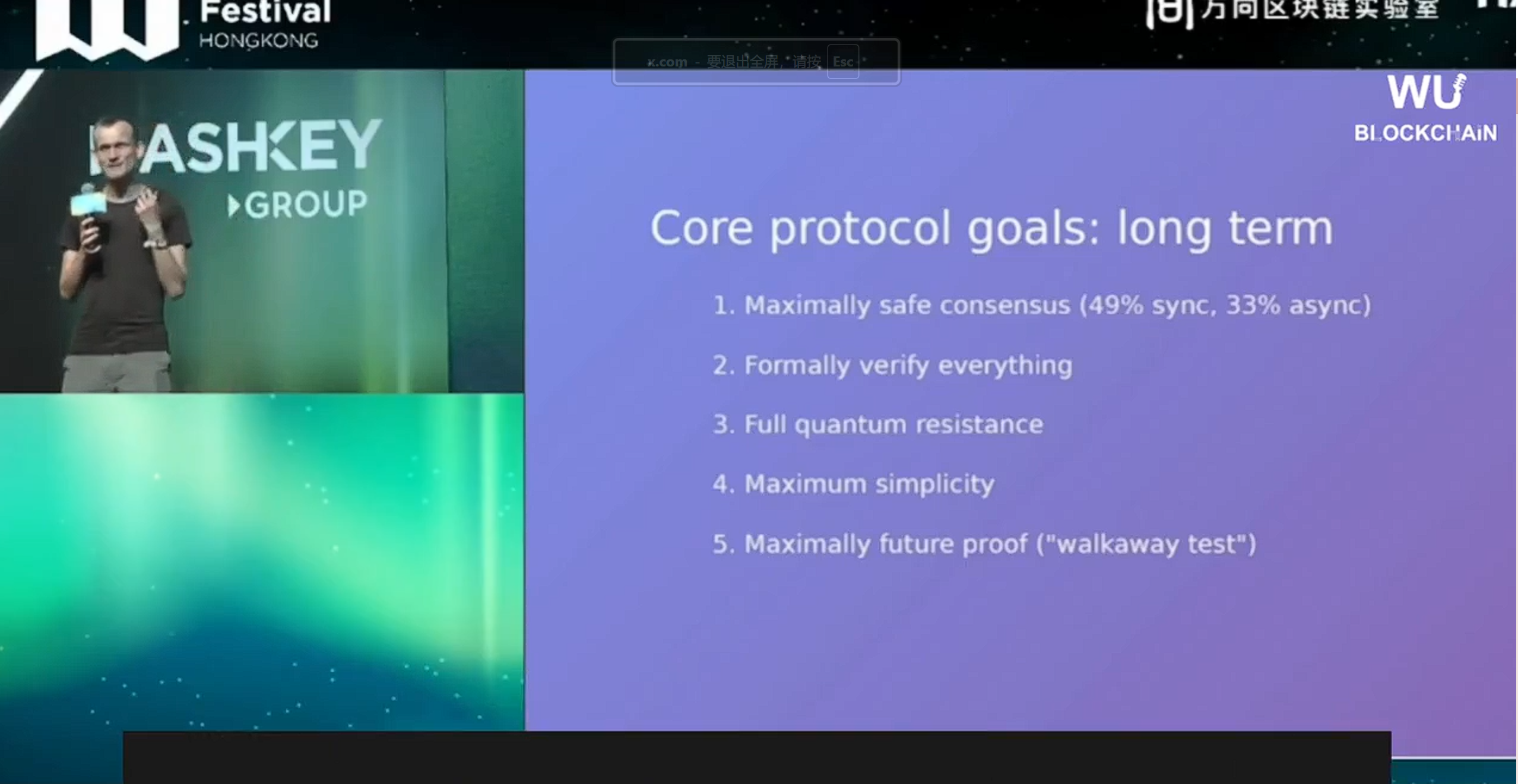
On the occasion of the 2026 Hong Kong Web3 Carnival, Vitalik Buterin continues to talk about safety, decentrization, probabilities, resistance and long-term sustainability, trying to answer "what the Taifung should look like over the next five years", while on the other side, from Bitmine to Beled, institutional investors and capitalists are increasingly inclined to view ETH as a bottom asset that can access balance sheets, generate collateral gains, and be packaged by ETF and traditional account systems。
In other words, when Vitalik is still talking about the world's computers, the agency has considered ETH as a "cash-flow asset", but the trick is that both describe the same Etheum。
This brings with it an interesting and well-documented sense of division。

Vitalik's eyes on the Ether and institutions' eyes on the Ether are becoming two different things. One belongs to protocol design, encryption, secure boundaries and long-termism, the other to asset allocation, pledge proceeds, ETF packaging and balance sheet management。
BUT THE QUESTION IS NOT WHO IS RIGHT OR WRONG, BUT HAS THE FOCUS OF ETH'S NARRATIVE CHANGED QUIETLY WHEN BOTH PERSPECTIVES BEGIN TO APPEAR? TO GO FURTHER, WHAT DOES THIS CHANGE MEAN FOR THE MAJORITY OF COMMON E-MAIL USERS WHO ARE NEITHER INSTITUTIONS NOR WRITE PROTOCOL CODES
First, Vitalik still says, "Why does the Ether House exist?"
Vitalik's public statement in Hong Kong almost fully recast the focus of the Taifeng Road Map for the coming period。
Individually, each keyword is technical, such as amplification, account abstraction, back quantum, ZK-EVM, Lean Consensus, formalization, state-level optimization, but if put back into the same question, it turns out that he is actually doing a very uniform thing — designing a long-term structure that can continue to operate safely even if he leaves any particular team。
He gave Ether's two core functions very simple:
One is a public notice board. It's not what they are, it's not what they are, it's what they are, it's what they are, it's what they are, and it's what they areFrom "Global Computer / Clear Layer" to "Public Notice Board": What does Ether and Vitalik want to do》);
THE SECOND IS SHARED CALCULATIONS. THE PROVISION OF A CODE-CONTROLLED SHARED DIGITAL OBJECT LAYER, TOKENS, NFTS, ENS, IDENTITY, DAO CONTROL, RULES OF CHAIN ORGANIZATION, WHICH APPEAR TO BE DIFFERENT APPLICATIONS, IS IN FACT AN ABSTRACT EXPRESSION OF THE SAME LAYER: THEY ALL REQUIRE AN OPEN, VERIFIABLE AND UNWIELDY REGULATORY ENFORCEMENT ENVIRONMENT
And around these two functions, Vitalik is very clear about ranking the value of the Taifung: self-sovereignty, probabilities, equitable participation, ahead of pure efficiency. In other words, speed is important, and expansion is important, but they cannot justify sacrificing their roots in the Taicha, which is not to be the fastest chain, but to be the most dependent。
This sequencing also determines every technical trade-off in the road map for the next five years。
In the short term, it is important to continue to expand and improve account abstraction, block construction processes, nodal synchronization and privacy support. For example, by continuing to improve Gas limit, achieving better parallel validation through block-level access lists, and by ePBS, allowing certifiers to check blocks more fully, while further optimizing nodal synchronization。
In the medium term, the real difficulty is not an executive layer enlargement, but a state layer expansion, which can after all be optimized, can be carried out in parallel, and can be continued through hardware and engineering, but the state must be stored, synchronized, validated, and, if not handled properly, the ordinary nodes and light-scale certifiers will gradually be squeezed out of the network. This is why Vitalik has repeatedly stressed the problem of the state layer, and if the threshold of certification continues to rise, the Ether Workshop will suddenly lose its most precious decentrized base。
The latter quantum is another long-term main line, and Vitalik uses an image metaphor: imagine a country where there has never been rain, where all houses have no rain-proof designs, and when the first rains, there may be only 5% of the houses leak, but the residents don't get anxious at first, because they haven't seen the rain, until one day they're told that five years later, ten years later, the rain will really come。
At this point, society as a whole has to learn again how to fix houses, schools and offices. Quantum calculations are like the rain that has yet to come, but must be prepared in advance。
The antiquant signature algorithm itself is not entirely new, and the real difficulty is that the efficiency of Hashi-based signatures may reach 2-3 KB, while the current common signature is only a few dozen bytes, and the cost of chain proof of antiquant signature Gas may be much higher than the current option, and if each transaction is simply and rudely replaced with an antiquant signature, the efficiency of the inn will be directly undermined。
SO THE SOLUTION IS NOT TO BURDEN EACH TRANSACTION WITH A HEAVY COST ALONE, BUT TO SHIFT THE PRESSURE FROM A "SINGLE SIGNATURE" TO A "PACKING OF THE WHOLE PACKAGE," WHICH MEANS THAT ONLY WHEN THE ZK TOOL MATURES WILL THE ANTIQUATED QUANTUM MIGRATION REALLY HAVE A LANDABLE ENGINEERING PATH。
In the longer term, Vitalik's road map describes almost a final state of affairs for the Taicha: Lean Consensus, ZK-EVM, formalisation and walkaway test。
In fact, by combining these technology entries, Vitalik really wants to solve the problem of how to keep the ETA safe, independent of the persistence of a particular team, a particular client, a particular hardware hypothesis or a certain generation of encryption tools, which is, in the end, the position where the ETA is not central, safe, credible and neutral, which "others do not do well, but it must do " , and where efficiency, experience, vertical demand is left to L2 and application。
II. FROM "WORLD COMPUTERS" TO "LIFE ASSETS", INSTITUTIONS RE-EVALUATE ETH
The organization ' s understanding of ETH is much clearer than that of Vitalik。
They do not necessarily discuss Lean Consensus, state tree optimization or resistance to quantum migration, nor do they use the "public bulletin board" to describe the ETA. Their concerns are often more immediate: can ETH be safely held? Can gains be generated? Can we enter the balance sheet? Can it be packaged as a compliance product? Can larger funds be secured
Bitmine's move is a central expression of this institutional language。
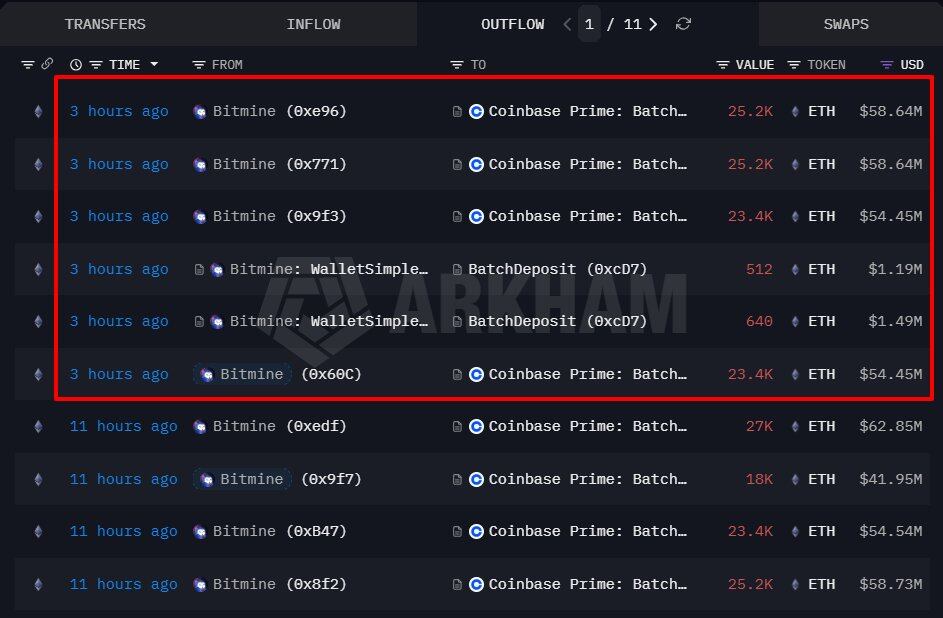
As at 24 April, Bitmine held 4,976,485 ETHs, or approximately 4.12 per cent of the total supply of ETHs, of which co-committing 3.471,000 ETHs, or 70 per cent of its total holding of ETHs。
It is visible that Tom Lee and Bitmine are accelerating the pledge of their own ETH, so that the ETH in hand is no longer just an encrypted asset awaiting price increases, but a chain-based asset with the ability to generate primary income。
THAT'S THE BIGGEST DIFFERENCE BETWEEN ETH AND MOST ENCRYPTED ASSETS. WHILE THE VALUE OF MANY ASSETS REMAINS HIGHLY DEPENDENT ON NARRATIVES, LIQUIDITY AND RISK PREFERENCES, THE ASSET ATTRIBUTES OF ETH ARE BEGINNING TO BECOME MORE COMPLEX, WITH DEMAND FOR USE, PLEDGE MECHANISMS, DESTRUCTION MECHANISMS, CHAIN-BASED ECONOMIC ACTIVITIES AND THE POTENTIAL FOR CONTINUED REPACKAGING BY TRADITIONAL FINANCIAL PRODUCTS。
BELAID'S ETHB REPRESENTS ANOTHER PATH。
As an iShares-based Staked Ethereum product, it places the ETH price opening and pledge proceeds distribution in the traditional regulatory framework, emphasizing that investors can obtain ETH-related openings through traditional voucher accounts without having to directly manage the private key, transport node or chain pledge process (extension readingWHEN THE ETH ON WALL STREET BEGAN TO "LIVE": FROM THE ETHB IN BELED, IT TURNED TO THE FINANCIAL PROPERTIES OF THE TAIFENG)。
This is essentially a translation, encapsulating the complexity of specialized terms such as self-custody, Stating, Validator, Slashing, Gas in the Etherwood world, and retranslating more understandable concepts such as Custody, Monthlyization/Annualization Gains, which may not feel much for encrypted primary users, but which, for traditional funds, is the interface they need to enter new asset classes。
More interestingly, the Etherdorf Foundation itself has begun to use the ETH properties more proactively. On 24 February, the ETA Foundation announced the launch of the Treasury Staking Initiative, which will use approximately 70,000 ETH for pledge and the pledge proceeds back to the Foundation's vault to support long-term operations and ecological development, while emphasizing that the process would maximize open-source software, reduce client concentration and manage risk through multi-geographical, multi-operator configurations。
It's interesting, from Tom Lee's Bitmine, to Beled, to the EF, to put ETH in a new asset framework, so that the ETH in the agency's eyes began to present a mixture of "infrastructure assets" and "interest assets." It has a bitcoin-like, scarce asset properties and a similar growth properties for network units, as well as some of the primary benefits of the POS mechanism。
THIS HAS ALLOWED THE ETH VALUATION FRAMEWORK TO MOVE AWAY FROM RELYING SOLELY ON WHETHER THE "COW MARKET WILL RISE" AND TO ENTER INTO MORE TRADITIONAL DISCUSSIONS, SUCH AS THE PLEDGE RATE OF RETURN, TOTAL SUPPLY, DESTRUCTION, INSTITUTIONAL HOLDING RATIO, PRODUCT SIZE, NET FINANCIAL INFLOWS, AND WHETHER FUTURE SETTLEMENT DEMAND WILL CONTINUE TO GROW。
This does not mean, of course, that ETH has become a low-risk asset, which remains highly volatile and exposed to regulatory, technical, market cycle and liquidity risks, but the difference is that agencies are repricing these risks within their familiar asset management framework, rather than simply using ETH simply as a high Beta encryption mark。
Three, two Ethers, two discounts on the same set of values
In writing here, it's easy to create the illusion that Vitalik's Ether and the Ether of the institution are two things:
One is an evolving agreement on the technical route, one is an interest-bearing asset that continues to generate cash flows from a financial perspective; one is a developer and one is on Wall Street; and one is a long-termism and one is an asset return。
But on the contrary, the two perspectives are not mutually negative, but are actually achieving each other。
Because, in the end, institutions are willing to buy, " hoard" and pledge ETH precisely because Vitalik is committed to this medium- and long-term vision of the ETH, providing a precondition for long-term asset attributes。
After all, it is not short-term price fluctuations that are a real fear for agencies with a silo cycle that the rules for the bottom assets themselves become unforeseeable, if an agreement's signature programme may suddenly fail in quantum computing, if a client's loophole may lead to the network becoming out of place, if the end of the chain and the security of consensus cannot withstand extreme environmental tests, and if the road map relies heavily on a team for continuous online access, then a more beautiful revenue model is a digital game built on the sand。
So, the words on Vitalik's road map that turn the tech community on -- Quantum resistance, Lean Consensus, ZK-EVM, formalisation, walkaway test - translated into institutional languages, condensed into four words:
Long-term credibility。
SO, WHILE EXIT TESTING IS A ENGINEERING LANGUAGE, IT IS VERY CLEAR TO THE AGENCY THAT THE STABILITY OF ETH DOES NOT DEPEND ON THE PRESENCE OF A SPECIFIC TEAM AT ALL TIMES, ON A TYPE OF ENCRYPTION HYPOTHESIS AND ON A FEW CLIENT TEAMS AT ALL TIMES, WHICH IS A SINE QUA NON CONDITION FOR THE LONG-TERM ASSET。
Of course, in turn, institutional funds and large-scale pledges are also providing economic support for Vitalik ' s route。
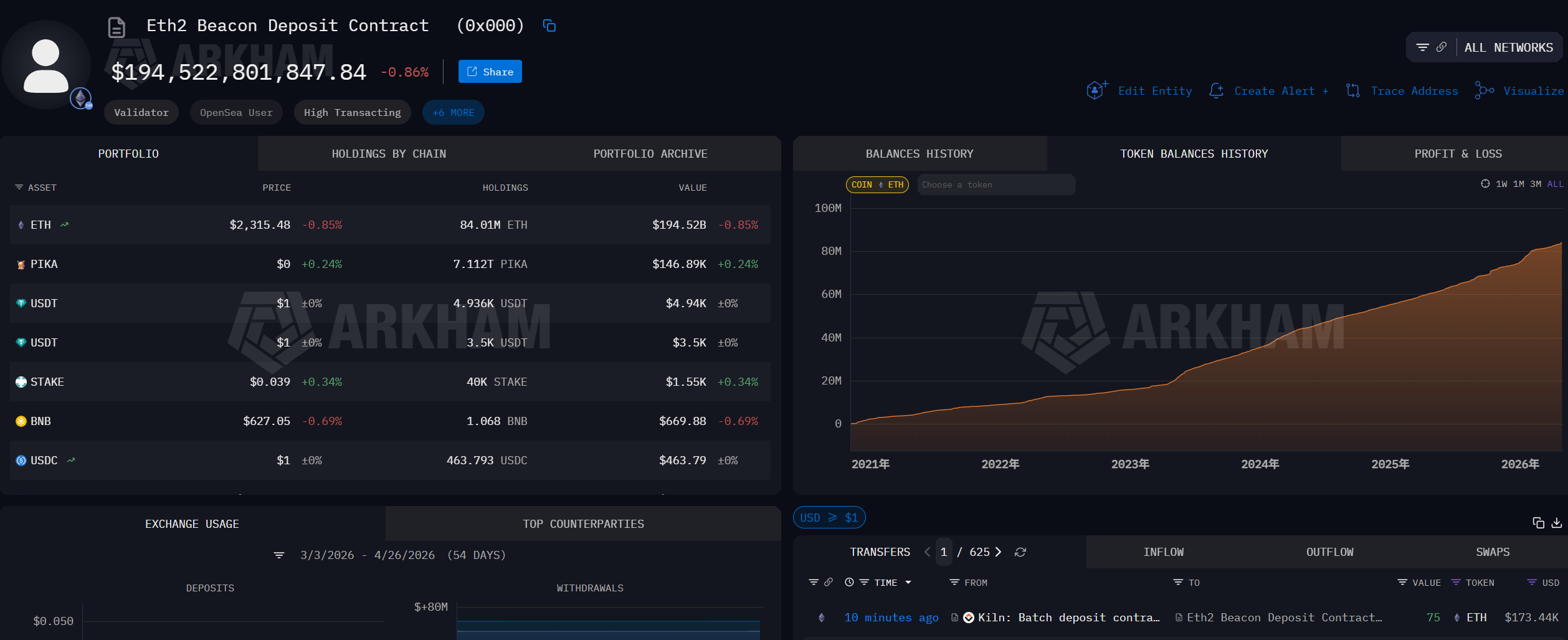
As we all know, security after the ETA has entered the POS is no longer only from encryption and customer engineering, but also from the pledged ETH size, distribution and punishment mechanisms, and the more ETH is pledged, the higher the market value, the greater the economic cost to the attackers of influencing consensus, so that each ETH pledged by Bitmine is not a slogan at least at the level of consensus, but is actually involved in the construction of the security budget for the THCP。
In other words, Vitalik ' s technical promotion of resistance to quantum, Lean Consensus and ZK-EVM is a technical sub-limit to lift the ETA; the agency ' s large-scale holding and pledge of ETH at the economic level is raising the economic sub-limit of the ETA, while the two curves are pushing each other up to make ETA more dependent。
And that's why the terms "world computer" and "interest-bearing cash-flowing assets" appear to be two definitions, which are not in fact contradictory, different definitions, but the same path, which is to be used as an Ether。
A mature global infrastructure would have required both perspectives to exist。
At the end
To be objective, the Ethera has long been a network that can only be interpreted in a single narrative。
It is both a public bulletin board and a world computer in Vitalik ' s mouth, an interest-bearing asset and infrastructure exposure in the eyes of the institution; a digital asset that is being re-priced by developers and capital markets; and a self-sovereign, verifiable and credible neutrality that is beginning to be incorporated into the ETF, balance sheet and revenue model。
The market will not necessarily price ETH in the language of Vitalik in the coming years, but the agency’s willingness to buy, pledge, package ETH on a continuous basis is precisely due to Vitalik’s insistence on safety, decentrization, validation and long-term stability, which is slowly becoming a “system dividend” that can be discounted by capital markets。
This may be the most important change in 2026。
