
AI FOAM WARNING: AI INVESTMENT IS NEGATIVE FOR MOST TECHNOLOGY GIANTS
IPO OF THE BIG AI COMPANY, MAYBE JUST PASSED THE RISK ON TO THE FAMILY
Original title: The Internet Maths of the AI boom
Photo by Joachim Klement
Photo by Peggy Block Beats
EDITOR: AI IS MOVING FROM TECHNICAL NARRATIVE TO FINANCIAL TESTING。
Over the past year, market discussions on AI have focused more on modelling capabilities, computational gaps and application prospects, but this article reminds us that the real need to be counted is the return on capital behind this round of prosperity. Mega-scale cloud service providers, such as Microsoft, Alphabet, Amazon, Meta, Oracle, are investing hundreds of billions of dollars in the AI data centre, while the implicit return on investment of most companies, with the exception of the Amazon, is likely to be negative, according to current analysts ' expectations of income and capital expenditure。
THIS MEANS THAT THE SIMILARITIES BETWEEN AI BUBBLES AND THE LAST ROUND OF INTERNET BUBBLES ARE NOT JUST MARKET SENTIMENT, BUT RATHER THAT CAPITAL SPENDING IS HIGHLY TIED TO MACRO-GROWTH AND STOCK PRICES. THE AUTHOR NOTES THAT 93 PER CENT OF GDP GROWTH IN THE UNITED STATES OVER THE PAST FOUR QUARTERS CAN BE EXPLAINED BY INVESTMENT IN TECHNOLOGY; ONCE CLOUD MANUFACTURERS CUT DOWN ON DATA CENTRES, CHIPS AND INFRASTRUCTURE INPUTS, NOT ONLY WOULD INDUSTRIAL CHAIN COMPANIES SUCH AS THE BRITISH VIRGIN ISLANDS, THE TOWERS AND THE ASML BE HIT, BUT THE ECONOMY ITSELF COULD BE UNDER PRESSURE QUICKLY。
Of even greater concern is the fact that if OpenAI, Anthropic and other AI companies push IPOs at high levels of market sentiment, they may not be just a financing event, but rather a risk shift: early capital and existing shareholders pass on the uncertainty of AI narratives to the diaspora, pension funds and other investors willing to continue buying growth stories。
THE CENTRAL QUESTION HERE IS NOT WHETHER AI HAS A FUTURE, BUT WHO WILL PAY FOR THIS EXPENSIVE INFRASTRUCTURE COMPETITION WHEN THE MARKETING BOOM GOES AWAY。
The following is the original text:
IN DECEMBER 1996, FEDERAL RESERVE CHAIRMAN ALAN GREENSPAN DESCRIBED THE BOOM IN TECHNOLOGY, MEDIA AND TELECOMMUNICATIONS STOCKS AS SHOWING SIGNS OF “UNRATIONAL PROSPERITY.” NEARLY 30 YEARS LATER, WE CAN MAKE THE SAME JUDGMENT ABOUT TODAY'S AI HEAT。
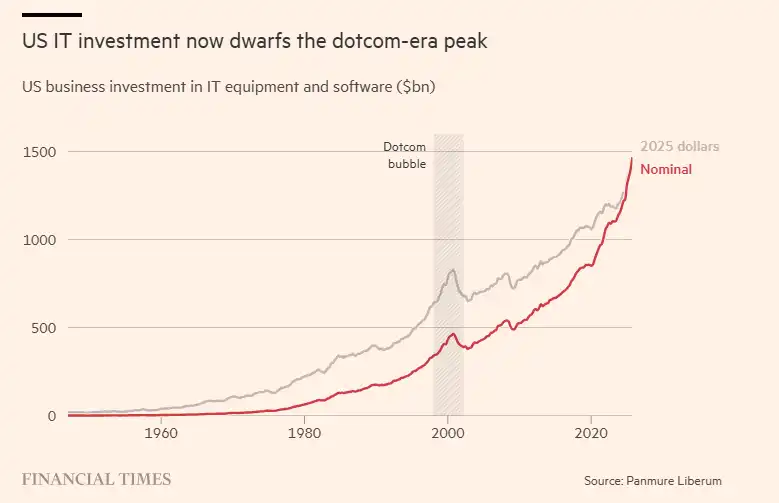
HOWEVER, ALTHOUGH THE CURRENT TECHNOLOGICAL BOOM IS SIMILAR TO THE PREVIOUS GENERATION OF INTERNET BUBBLES, THERE IS AN IMPORTANT DIFFERENCE: SOME PART OF THIS BOOM TODAY IS MUCH LARGER THAN THE TNT FOAM OF THE YEAR. IN 2025, UNITED STATES ENTERPRISES INVESTED CLOSE TO $1.5 TRILLION IN IT EQUIPMENT AND SOFTWARE. AT THE PEAK OF THE TNT BUBBLE, THE FIGURE WAS $46.6 BILLION, OR $829 BILLION, EVEN AFTER INFLATION ADJUSTMENTS。
IN FACT, THE UNITED STATES ECONOMY IS GROWING ALMOST ENTIRELY ON THE BASIS OF THE TECHNOLOGICAL BOOM. ACCORDING TO MY CALCULATIONS, 93 PER CENT OF GDP GROWTH IN THE UNITED STATES OVER THE PAST FOUR QUARTERS CAN BE EXPLAINED BY INVESTMENT IN TECHNOLOGY. EVEN AT THE PEAK OF THE TNT BUBBLE, IT BARELY REACHED 60%。
Large language model developers like OpenAI and Anthropic are preparing a heavy IPO later this year to take advantage of investors’ optimism about their growth prospects. At the same time, mega-moderate cloud service providers such as Microsoft, Alphabet, Amazon, Meta and Oracle plan to invest hundreds of billions of dollars in data centres over the next five years to provide the means to run these models。
AND HERE'S THE PROBLEM: THE MATH BEHIND AI'S HEAT IS STARTING TO GET TRICKY. FOR THESE SUPER-MASSIVE CLOUD SERVICE PROVIDERS, I COLLECTED THE SAME MARKET EXPECTATIONS OF ANALYSTS FOR THEIR CAPITAL EXPENDITURES AND REVENUES FROM 2025 TO 2030。
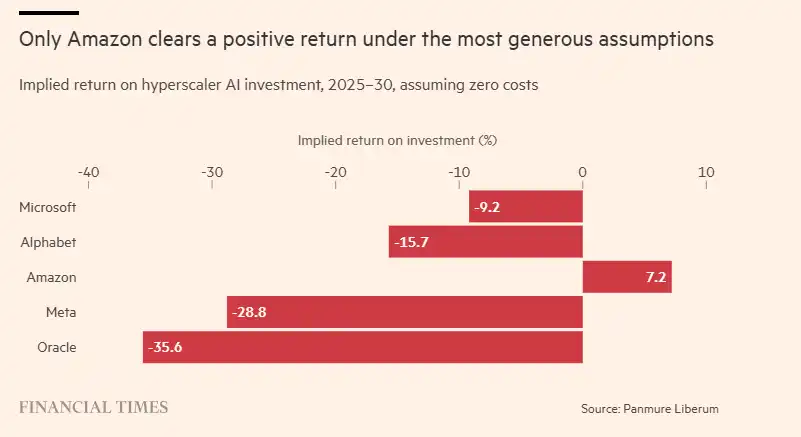
IN THESE FIVE YEARS, THEIR CAPITAL INVESTMENT IS EXPECTED TO GROW AT A RATE OF 20 PERCENT PER YEAR, A RATE THAT THE INDUSTRY HAS NEVER SEEN BEFORE. AT THE SAME TIME, REVENUE IS EXPECTED TO INCREASE BY 15 PER CENT PER YEAR. IF WE MAKE AN EXTREMELY BOLD ASSUMPTION — THAT THESE COMPANIES HAVE NO COST — THEN THE NEW REVENUES CAN BE CONSIDERED AS THE PROFITS THEY DERIVE FROM THE NEW INVESTMENTS IN THE AI DATA CENTRE. EVEN UNDER THIS EXTREMELY OPTIMISTIC SCENARIO, HOWEVER, THE IMPLICIT RETURN ON INVESTMENT I CALCULATED WAS HIGHLY NEGATIVE FOR ALL COMPANIES EXCEPT THE AMAZON。
THESE FIGURES SUGGEST THAT IF THE SUPER-LARGE CLOUD SERVICE PROVIDERS CONTINUE TO FOLLOW THE CURRENT TRAJECTORY, THE AI BOOM WILL TURN INTO ONE OF THE LARGEST SHAREHOLDER VALUE DESTRUCTION EVENTS IN HISTORY. BUT THEY STILL HAVE TWO WAYS OUT。
THE FIRST IS THAT THE RISE OF AI HAS BROUGHT THESE COMPANIES FAR MORE THAN THEY CURRENTLY EXPECT. BUT THIS IS ALSO A MATHEMATICAL CHALLENGE. ASSUMING THAT THESE SUPERMASSIVE CLOUD SERVICE PROVIDERS WANT TO ACHIEVE A RETURN ON THEIR INVESTMENT OF 10 PER CENT, THEY HAVE TO FIND AN ADDITIONAL $2 TRILLION TO $5 TRILLION IN REVENUE PER YEAR. THIS IS ALMOST IMPOSSIBLE FOR A GROUP OF COMPANIES WITH A TOTAL CURRENT ANNUAL REVENUE OF $1.5 TRILLION。
The second is that the investments that were intended to be made in data centres, chips and other areas will not eventually actually land. This may be due to the fact that equity investors are beginning to be more cautious about the industry or that data centre debt financing is becoming more difficult。
So what happens if these companies announce partial investment cuts
FROM BRITAIN TO THE ASML, SAMSUNG AND STATIONS BUILD ON THESE INVESTMENT PLANS AND THE RESULTING DEMAND EXPECTATIONS。
DON'T FORGET, THE CURRENT GDP GROWTH IN THE UNITED STATES IS ACTUALLY DRIVEN ENTIRELY BY RISING SPENDING ON TECHNOLOGY. IF THESE EXPENDITURES BEGIN TO DECLINE, THE UNITED STATES ECONOMY WILL SOON FALL INTO RECESSION. EVEN THOUGH INVESTMENT IN TECHNOLOGY IS ONLY A SMALL DECLINE, FOR EXAMPLE, 4 TO 6 PER CENT, THIS IS THE CASE. HISTORICALLY, AFTER THE RELATIVELY SMALL TECHNOLOGICAL BOOM OF THE 1960S AND DURING THE 2009 RECESSION, THERE WAS A SIMILAR DECLINE IN INVESTMENT。
This moderate revision of investment spending remains likely to push the United States, the United Kingdom and European stock markets into the new bear market. Repetition of technological stock collapses at the beginning of the twenty-first century is a real risk; stock markets fell 50 per cent or more in the first year。
The next question is: When can we see these super-massive cloud service providers announcing similar investment cuts
I think this is unlikely to happen in 2026. OpenAI, Anthropic and others will still try to maintain market heat at least until their IPOs are completed, which may continue to sustain the boom in the short term. But what happens after that? The “magnetic impossibility” faced by a super-large cloud service provider will not change, and the marketing boom may eventually recede. Eventually, reality will come。
Maybe not in 2026, but it could happen in 2027 or 2028. After all, Greenspan spoke of "unrational prosperity" in December 1996, and the real bubble burst in 2000 three years later。
FROM THIS POINT OF VIEW, THE IPOS OF THESE AI COMPANIES ARE LIKELY TO BE A LARGE-SCALE INVESTMENT RISK TRANSFER: THE RISK IS TRANSFERRED FROM EXISTING OWNERS TO BULK INVESTORS, PENSION FUNDS AND OTHER INVESTORS WILLING TO PAY FOR NARRATIVES。
[ Chuckles ]Original Link]
