
30 years of early death in exchange for trillions of dollars, and Silicon Valley's starting to reward those who don't. People
In this age of narrative inflation, hard work is a narrative art. 。
This post is part of our special coverage Syria Protests 2011
Silicon Valley has been arguing about how much a life cost。
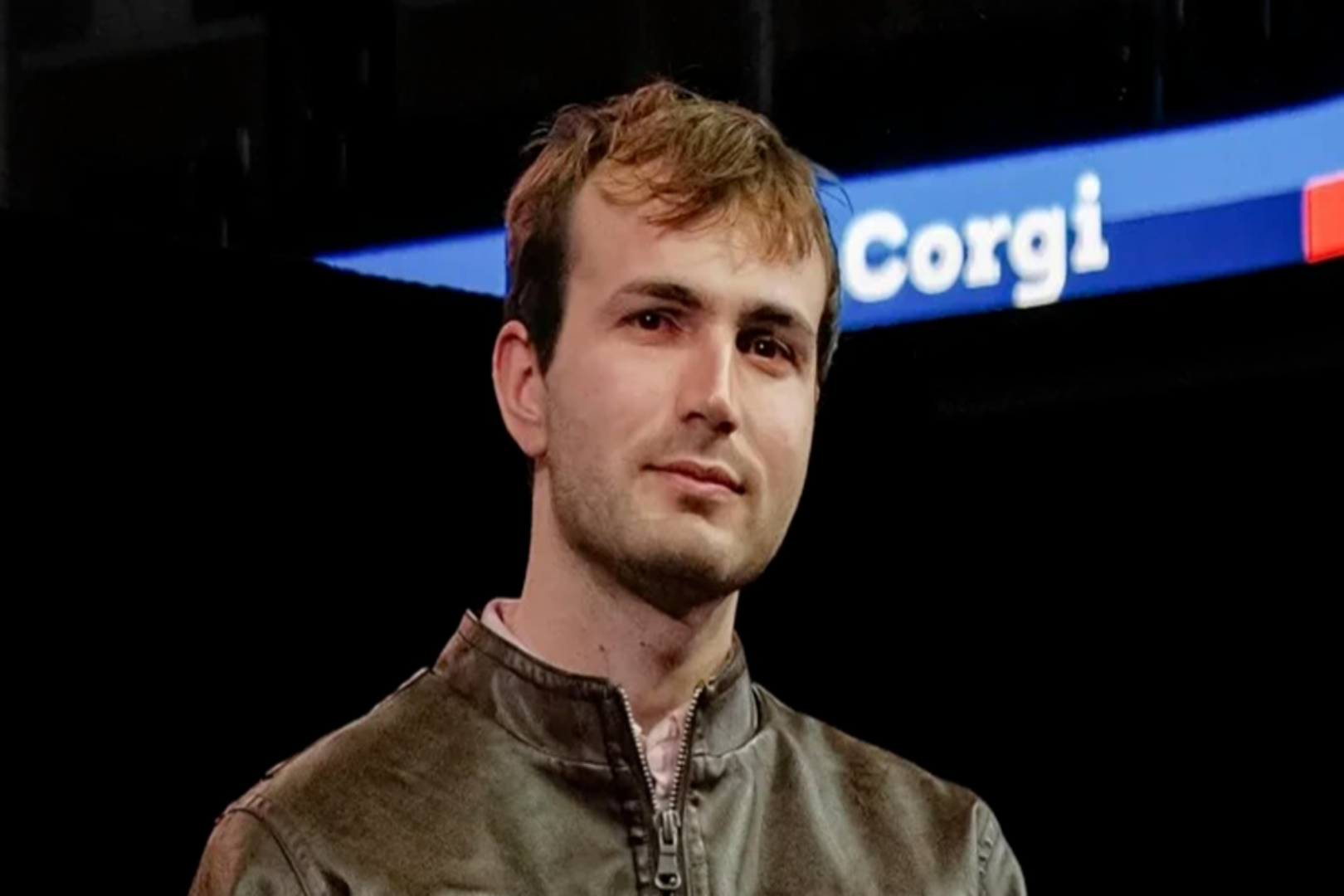
A young man named Nico Laqua, aged 25, grew up in San Diego. Father was a lawyer for life at American Military Insurance. From childhood, Nico saw his father sitting in front of a computer, typing, filling out forms, flipping articles and stacking the house with paper。
And then ChatGPT came out, and he looked at the paper, and insurance was one of the most written industries in the world, and ChatGPT was supposed to handle it very well。
So in the summer of 2024, he and Emily Yuan, who had dropped out of Stanford, went into Y Combinator and became an insurance company, named Corgi, and Logo was also a Koki。
Corgi is not a broker, they're insured, they're on their own, they're on their own, they're on their own, they're on their own. For this licence, they spent $35 million on an old insurance company with decades of history, and they bought it together with the shell。
Corgi officially opened in July 2025. By the end of the year, annualized recurrent revenue exceeded $40 million, covering more than 40,000 start-up company clients, spread over 49 counties, with a loss rate of less than 1 per cent. In an industry that has a profit margin, these figures are so solid。
But Corgi was not seen recently because of this beautiful performance。

At the end of May 2026, Nico went to Harry Stebbings' podcast 20VC. The title of the show is "The most extreme working culture in America"。
He lived in the office of the San Francisco Financial District, and the mattresses were laid directly on the floor, and he took a bath to the Equinox gym next door. "They closed at 8 p.m. on Friday." He said, "This is not good."
He sleeps three or four hours a day, suffers from silver crumbs and is a little upset. He spoke calmly about these cases, as if he had read a medical report from someone else。
He also claims that the financial district café was closed too early. The San Francisco Financial District has almost no "night living" after 6 or 7 p.m. So he changed the old front of a barber shop on the bottom of the office building to a coffee shop for less than $100,000 for 24 hours, so that he and his staff could have coffee at any time during the 7*24 hours of overtime。
Corgi's interview was deliberately scheduled for the weekend, and Nico said, "If your rest day happens to be Saturday and Sunday, then Corgi has no place for you."
He said that the offices of the high-growth start-ups should be full every day, that employees could take an occasional day off, but a fixed weekend break does not exist. “If you can do it in five days, you can do more in six days and seven days. You should do your best
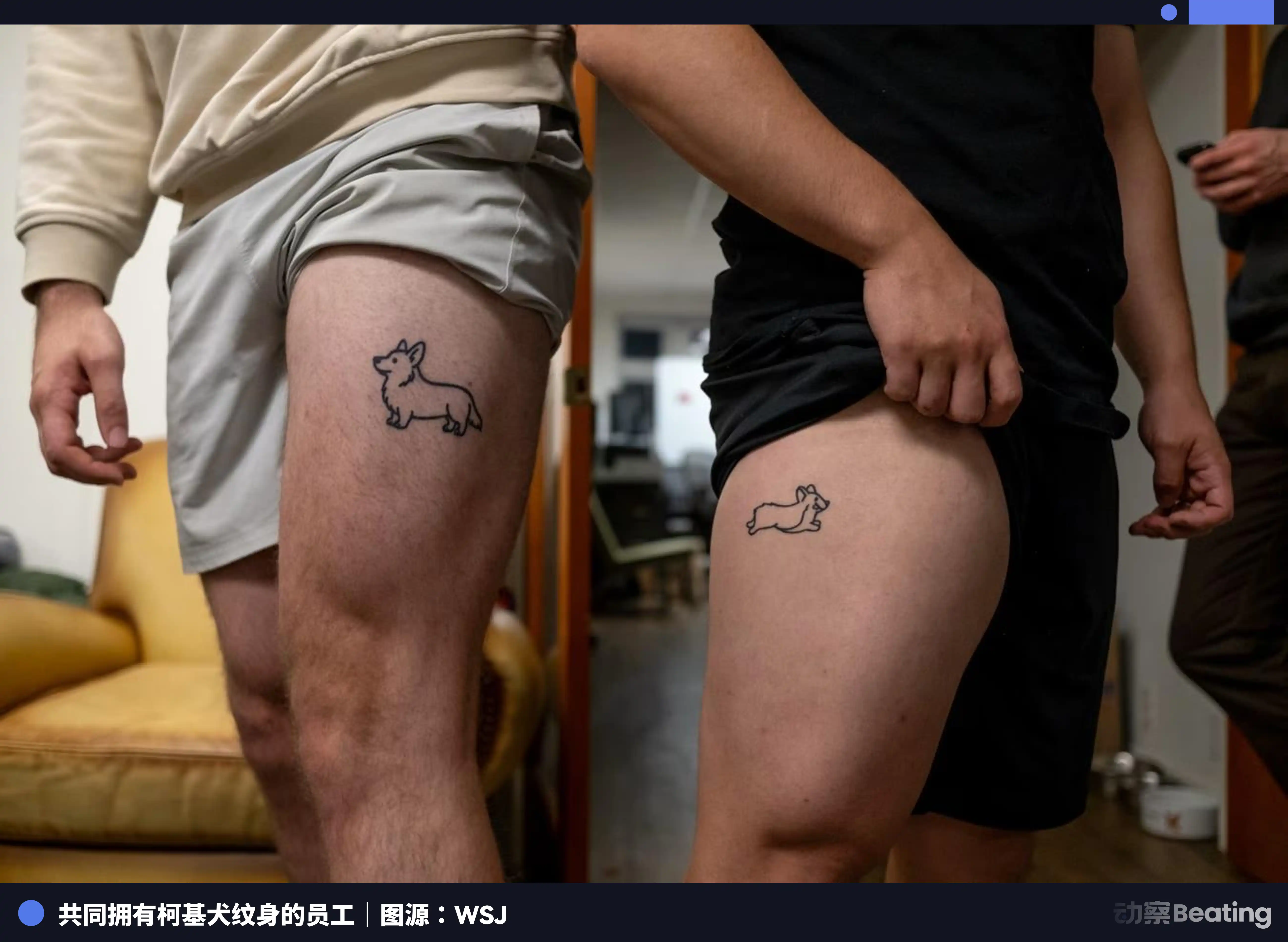
It's one of those companies, the early 30 employees, and two-thirds of the Logo of the Corkid tattooed him。
At the end of the interview, the moderator asked a choice: Corgi did trillions of dollars, but you died at 50. Or the company is yellow, you live to 80, which one you choose。
"Too simple. I'll die sooner or later. Nico also quotes a set of data saying that 98 percent of Olympic athletes are willing to exchange their 10-year life expectancy for a gold medal。
I've heard that word several times, and I don't feel right。
Not because he chose to die 30 years early. How do you choose him? What's confusing me is that he thinks it's simple. He didn't hesitate to answer the question of the price of life, as if it had already been thought out, or he never thought it was worth thinking about。
People who are so desperate for their own lives either really get it or they don't think at all, they look the same from the outside. But I am more concerned about the third scenario: he thought about it, but the logic itself was wrong, and he was unaware。
After the show, he received death threats and numerous private letters. Linear founder, Karri Saarinen, wrote on X that this thinking "often represents the young founders who see entrepreneurship as their own." It is difficult for them to do anything other than work, and they cannot understand that your work is not the same as yours."
Nico replied, "If you are concerned about a question, you will certainly fight hard."
He didn't think he was crazy。
You'll be in trouble
To understand why this thing is twisted, you have to tell us where the insurance business is going。
In the 17th century, London, there was an ugly cafe on the Thames Tower Street, owned by Edward Lloyd. Shipowners, merchants and brokers crowded in to drink coffee, talking about bad news. The ship may sink, the cargo may be lost, the storm is ruthless and every brave sailor will be treated equally. Maritime trade is profitable and risky. A boat goes out, it doesn't come back, no one can shoot the chest。
They're talking about a business. I'll take the risk you can't afford. The Lloyd's Cafe was later transformed into the Laureate and continues to be the totem of the global insurance industry。
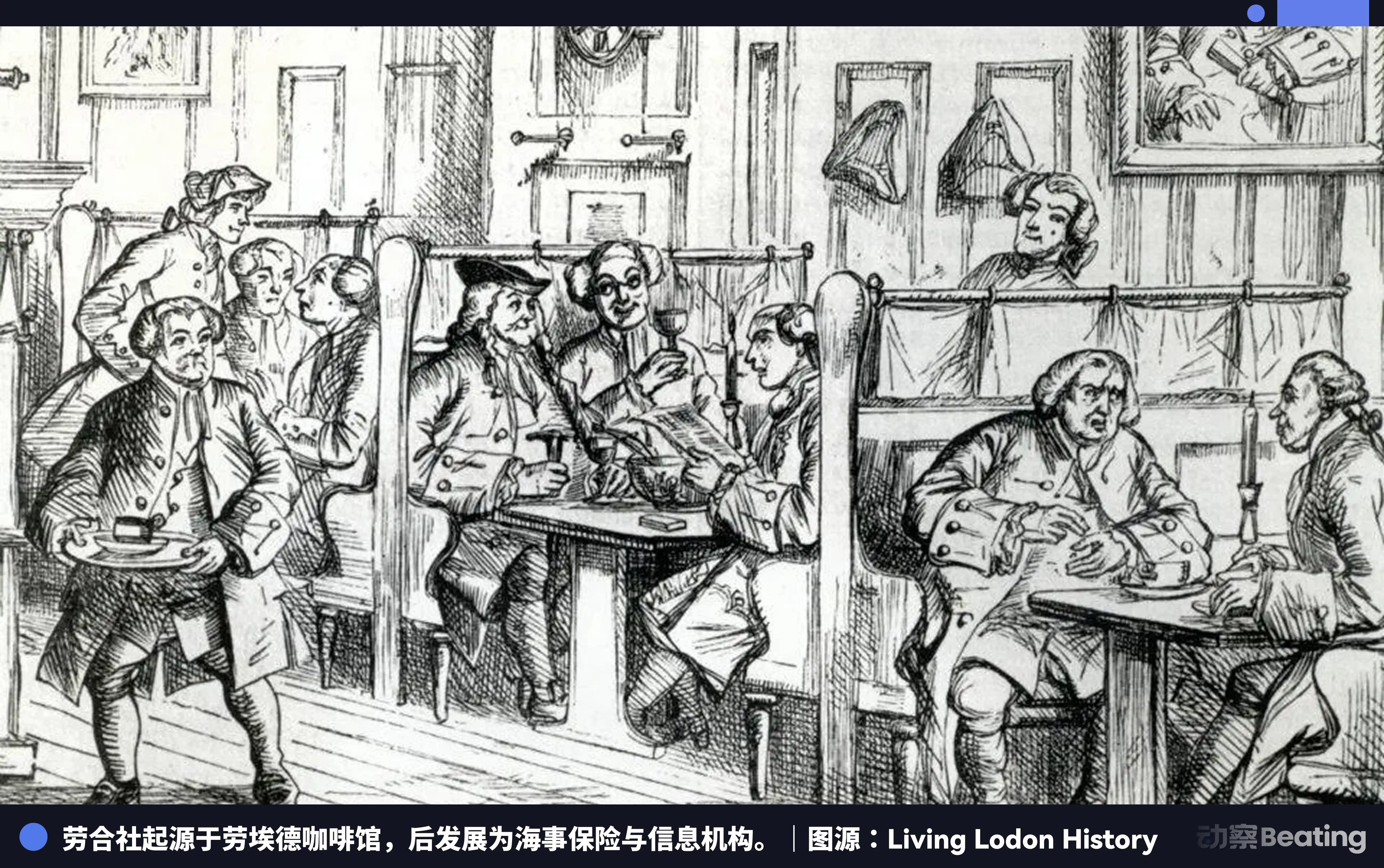
A café for over 300 years. And since the start of the insurance business, there are five words in the head: you'll be in trouble。
It's not a curse. It's a statement of facts. The house will burn, people will get sick, cars will crash, sales will get yellow, and you'll be in trouble the last time。
The industrial revolution came and the machine ate human fingers, so it had an accident. Your product may hurt others, so you have liability insurance. The economic cycle turned out to be unpopular, and there was unemployment insurance. Life is becoming more complex, to the extent that no one can take all the bad luck alone with his teeth。
Insurance never expects people to survive. It's a direct assumption that you can't make it。
The last thing such an industry should do is worship a lifeless man. Corgi's biased. A company that sells risk management relies on its founders to prove their worth。
It's a valuation art
But it's not really complicated. Don't think at the spiritual level. It's easy to think about the valuation。
AI made the company lighter and lighter. Fifty people worked for five years and now five people save one demo to take the table. Corgi 177 has achieved an annualized income of $40 million for individuals, and per capita output is indeed staggering. The AI system runs the entire security, billing and settlement process. Efficiency is there, investors can see。
However, the increase in its valuation was exaggerated. At the beginning of May 2026, the valuation was 1.3 billion, which by the end of the month was 2.6 billion, doubling by three weeks, and cumulative financing was $269 million. A two-year-old insurance company, the valuation has exceeded many of its older colleagues who have been doing so for decades。
The valuation is on the future, and now the future is light. If you don't have any weight, you'll have to put it down. So the mattress in the office came out, the lights went up all night, the tattoos of the employees were out, and Nico's silver crumbs and heart attack were mentioned。
Pilgrimage has never been a management technique or even a working attitude. Pilgrimage is a narrative art, especially in this age of narrative inflation. The shared office says it's "human awareness," the taxi software says it's "restoring the future of the city" and the coin-seller says it's "rebuilding financial freedom"。
BY THE TIME OF AI, INFLATION HAD INCREASED. INDEED, TECHNOLOGY WAS DOING THINGS THAT IT HAD NOT DONE BEFORE, WHICH, ON THE CONTRARY, BLURRED THE LINE BETWEEN BRAGGING AND DOING. PILGRIMAGE IS THE BEST DISGUISE FOR BUBBLES. IT PULLS ASIDE THE VISION BACK TO THE FLESH, MAKING YOU THINK IT'S MORE THAN JUST A PPT WORD. PEOPLE RISK THEIR LIVES。
"I do."
The best way to start a business is not to pay, not to give options, but to give identity. To make a 25-year-old feel like he's not working, he's involved in something that's worth living. Nico says he wants someone who wants to do something important with his life。
That sounds nice and sincere. But you turn around, a system that selects those who tie their self-worth to work, replaces normal labour security with mission and meaning, and defines those who need to sleep, need weekends, and need to go home to cook for their children as insufficiently committed. Is this system the dream of young people, or is it consuming their dreams。
THE YOUNG PEOPLE OF THE AI ERA WERE AFRAID OF BEING THROWN OUT OF THE WORLD, OR OF NOT COMING IN, OR THAT ONE DAY THEY WOULD WAKE UP AND FIND THEMSELVES THE LAST OF THE LAST ERA。
So they say the three words, I do。
But the three words stand behind much more than they think. The imagination of wealth, the fear of falling, the anxiety of the times. I doubt that the choice made in front of these things is free will。
To describe consumption as an option, to describe anxiety as an ambition, to describe overdraft as love, and finally to teach you to say the most cost-saving words. Once exported, the management cost is zero. You are no longer a worker in need of protection, but a believer in voluntary burning. The boss doesn't owe you overtime, you owe yourself a great future。
The rule also has a function that can filter people. It is not people with insufficient capacity, it is people with normal life, with children in the family, with elderly people taking care of them, with red lights on their bodies, who want to fall in love and sleep late on weekends。
Those who are sifted will certainly not know these reasons, and they receive only their "all in" feedback。
We must imagine Sissy Fors being happy
Kamu wrote at the end of The Myth of Sisyphus: We must imagine that Sisyphus is happy。
The gods punished Sisyphus with the stone. Upon the top of the mountain, the stones will be raging, and he will descend from it, and from it will never end。
Camu said he was happy. It's not because the stone is at the top, it's because he knows it's gonna roll or he's gonna push it. No end, still do. And the stones belong to him, and the mountains to him, and the falsehood to him. Sobriety is in itself freedom。
Silicon Valley also speaks of Sisyphus, but it doesn't mean that at all. The Silicon Valley ' s Sisifers did not accept that the stones would roll to the foot of the mountain, and they concluded that this was enough to keep the rocks on the top. They always say it's different, and they always think it's gonna work。
Camus Sisyphus has destiny, and Silicon Valley's Sisypus is possessed by destiny。
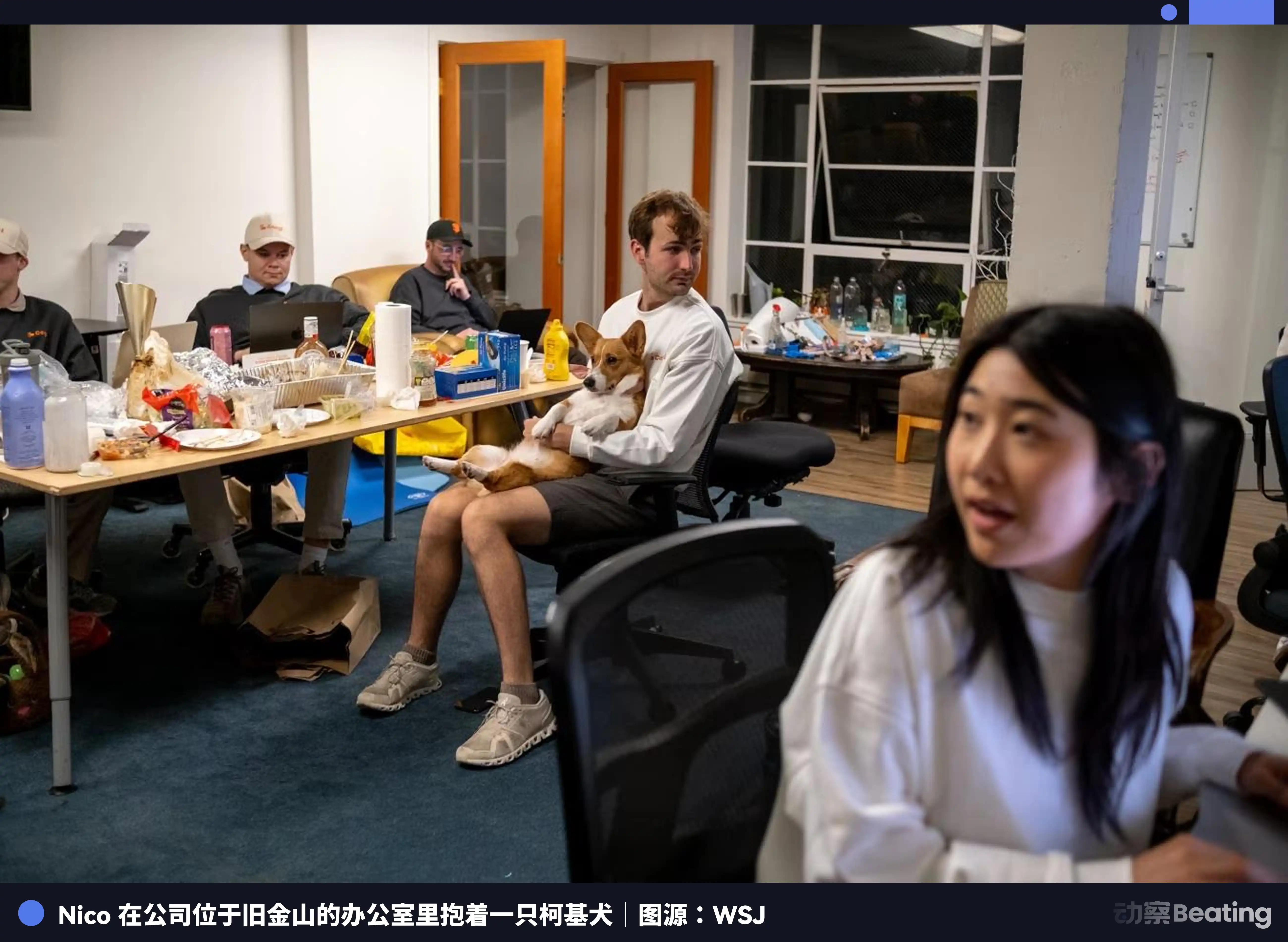
Nico has a founding shares, started a business before the age of 25, went to Forbes, went to YC. He can tell another story without it. The young men, aged 23, who came to San Francisco with their suitcases and laid their mattresses on the floor of the office, lost what they could start again。
Insurance is intended to acknowledge failure as a probability, not a fault. To admit that people are going to fall down, bad luck is going to take the wrong decisions at the wrong time. To admit that some stones are destined to roll down the mountain has nothing to do with how much you've done。
There is a goodwill in this perception. I don't want to ask you why you're down. Just lay the mat before you fall. It is a well-being that is seriously underestimated。
Corgi technology is real, efficiency is real. 24 hours to issue a policy, AI handles the entire claims processing process. If that's all it is, it's a very good company。
But it has to tell another story. No sleep, no death, overtime. It's worth $2.6 billion not only because it's good, but also because people here are worse off than others。
We must imagine Sisyphus as happy, if the stone is his own。
