
Binance Wallet Prime Sale New Project Re: Moving Reinsurance Fund Pools to Chain Let's go
Re, 50 per cent of the token economy model is allocated to ecosystems for community incentives, points exchange schemes, etc。

Original title: TGE set! Binance wallet today Prime Sale Project Re Read First
Original by @angelilu, Foresight News
Update: The Decentroization Reinsurance Agreement Re announced today, June 17, that the RE token will be officially launched on June 18, 2026, after Coinbase had included it in the road map to the currency。
Before going online, the two main trading platforms pioneered the opening of early participation channels: OKX will be on line today at 18:30 for a pre-re drive contract, and Binance's wallet will open today at 20:00-22:00 for phase VIII of the Prime Sale Pre-TGE subscription, with a participation threshold of 255 Alpha points。
Binance's wallet was sold to a total of 10 million rees (1 per cent of the total supply) at a unit cost of approximately US$ 0.05 (in BNB) and planned to raise the equivalent of US$ 500,000 BNB with a single-user ceiling of 3 BNB. The activity follows an over-requirement, proportional distribution pattern, after which non-tradable chain vouchers will be generated in the user ' s wallet at the end of the subscription and the actual token will be dropped directly to the Binance Alpha account on June 18, at 2000 hours, and will support the Alpha limit list transaction。
Published in the original language on June 15, 2026, the original title is " Insurance veterans start up again, Re open the reinsurance door with a chain agreement " 。
The following is the original text:
REINSURANCE MAY BE THE LAST LARGE FINANCIAL MARKET NOT DIGITIZED. LAST YEAR, THE GLOBAL RWA MONETIZATION GREW MORE THAN TENFOLD, WITH A MARKET VALUE OF $320 BILLION IN STABLE CURRENCY, BUT LITTLE SUBSTANTIAL CHAIN INFRASTRUCTURE HAS LANDED ON THE REINSURANCE TRACK。
One reason is the very high regulatory threshold. Reinsurance subjects need to be licensed in jurisdictions, meet solvency requirements and meet the standard of isolation hosting - a common DeFi team that is difficult to circumvent。
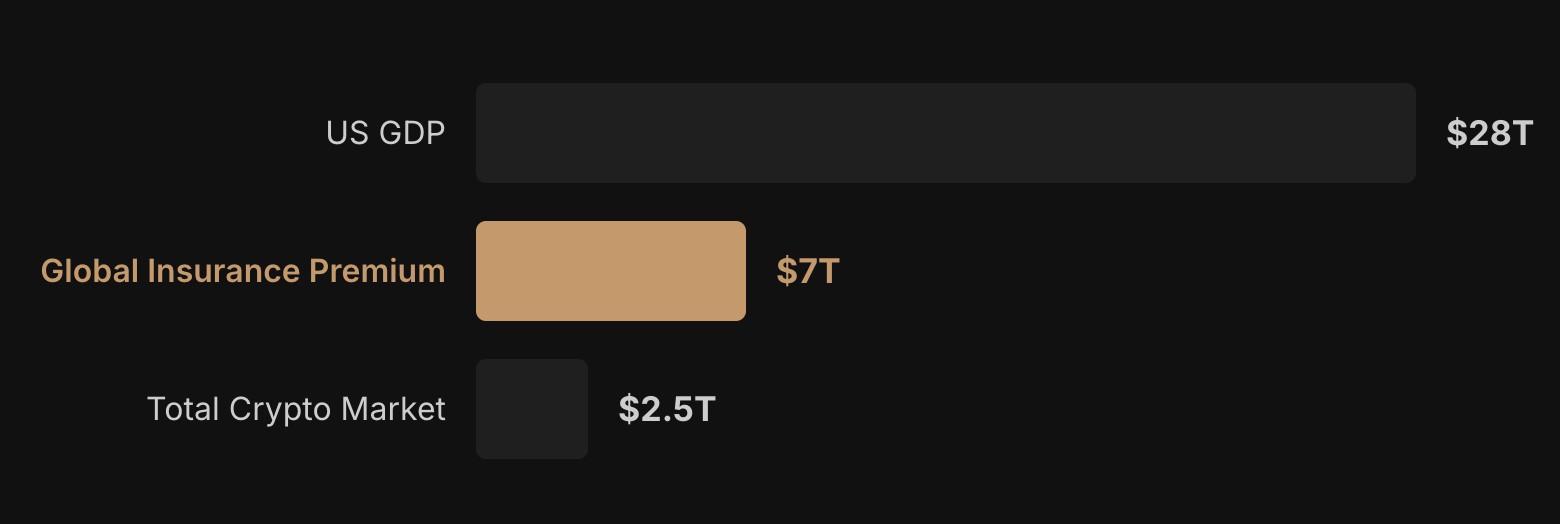
A team of insurance technology veterans and chain developers is breaking the "global reinsurance market" door。
Move the reinsurance pool to the chain
The global reinsurance market is dominated by a small number of giants, such as Munich reinsurance and Swiss reinsurance, with no access to external capital, non-transparent terms of insurance coverage and failure to verify solvency. The agreement was to move the pool of reinsurance companies into the chain so that anyone could put money in it and receive the premium income。
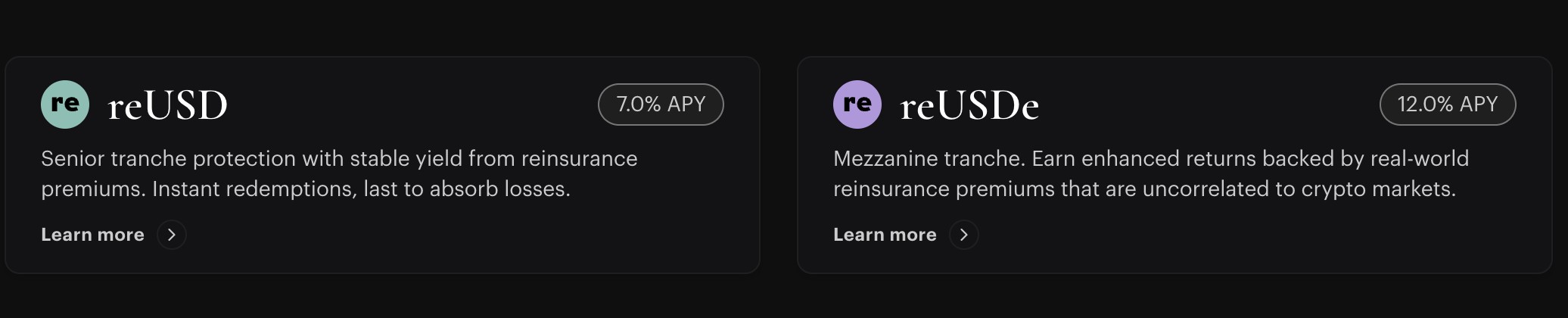
Its core model is not complex: insurance companies package part of the risk into reinsurance contracts, complete compliance with the flag-held reinsurance subject Cover Re, and decentralised liquidity providers can obtain insurance underwriting gains at two monetized warehouses, with different risk preferences for the two product forms:
reusdIt is a priority (stable) warehouse, with fixed returns (base rate + 250 basis points) that provide principal protection, and the risk is absorbed by the lower step priorityoh, dearIt is a high yield and carries the risk of loss, with current annualized returns of about 23 per cent. The order in which the loss is triggered is: it is absorbed by the reUSDe holder and Re Capital before it is reUSD。
With respect to the regulatory threshold, Re was deconstructed to separate chain agreements from licensed entities: Cover Re/SPC (Cayman Islands) assumed compliance contracts as an independent reinsurance subject, and Research Foundation was responsible for issuing governance tokens. Legally separate compliance risks from the technical risks at the level of the agreement through separate holder entities。
SCORES AND TGE
Re is about to issue a governance token RE, whose central role is to enable market users to establish protocol rules, but specific income, earnings or insurance flows are still operated by licensed entities。
Re ' s credit scheme is designed to reward wallets that provide and store funds in an ecosystem. Its Season 1 score activity has recently ended, and 7 per cent of the total RE supply will be allocated to Season 1 participants, and a specific access window and locking mechanism has not yet been published. Season 2 was opened on 1 June 2026, with 2904 active users with a total score of 41.2 billion。
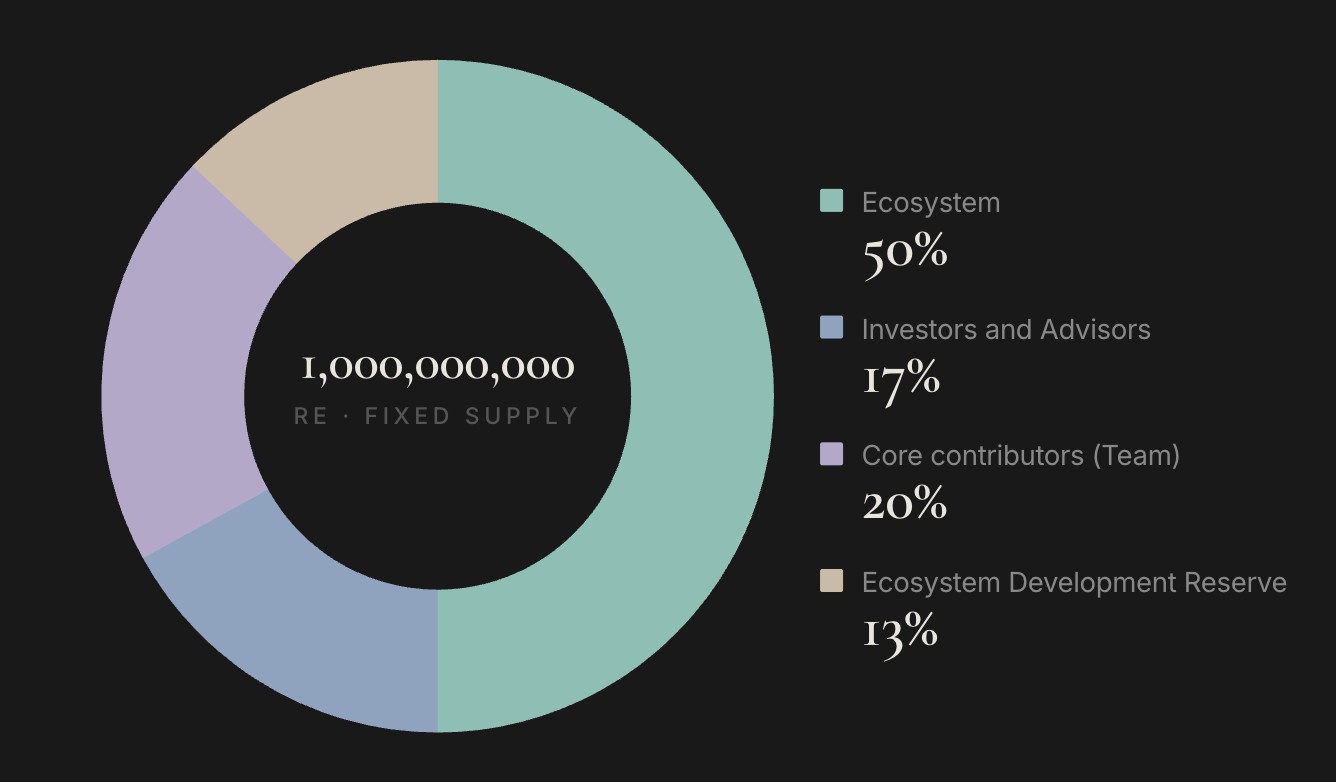
THE TOTAL SUPPLY OF RE IS FIXED AT 1 BILLION, IN FOUR PARTS:
• Ecosystem (ecological) 50 per cent: 500 million for ecological distributions such as community incentives, credits, etc., from which 7 per cent of Season 1 supply is allocated。
• Core Contractors / Team (core team) 20 per cent: 200 million, team share, usually with attribution period, with specific locking arrangements not yet published。
• Investors and Advisors (investors and consultants) 17 per cent: 170 million, corresponding to seed and strategic-wheel investors, are also expected to be locked on a regular basis。
• Ecosystem Development Reserve 13 per cent: 130 million for future cooperation, protocol development, etc., managed by the Foundation。
RE has been included in the previous currency road map, but the specific TGE time has not yet been published。
Reinsurance data
Another large feature of Re is the low relevance of assets. The proceeds of reinsurance are derived from the rate of car accidents, the incidence of injuries at work, and the frequency of damage to houses, and these figures do not fluctuate with BTC prices. The scarce value of genuinely unrelated assets is being reprioritized when the encrypted market is convulsed under geo-conflict, macro-policy pressures。
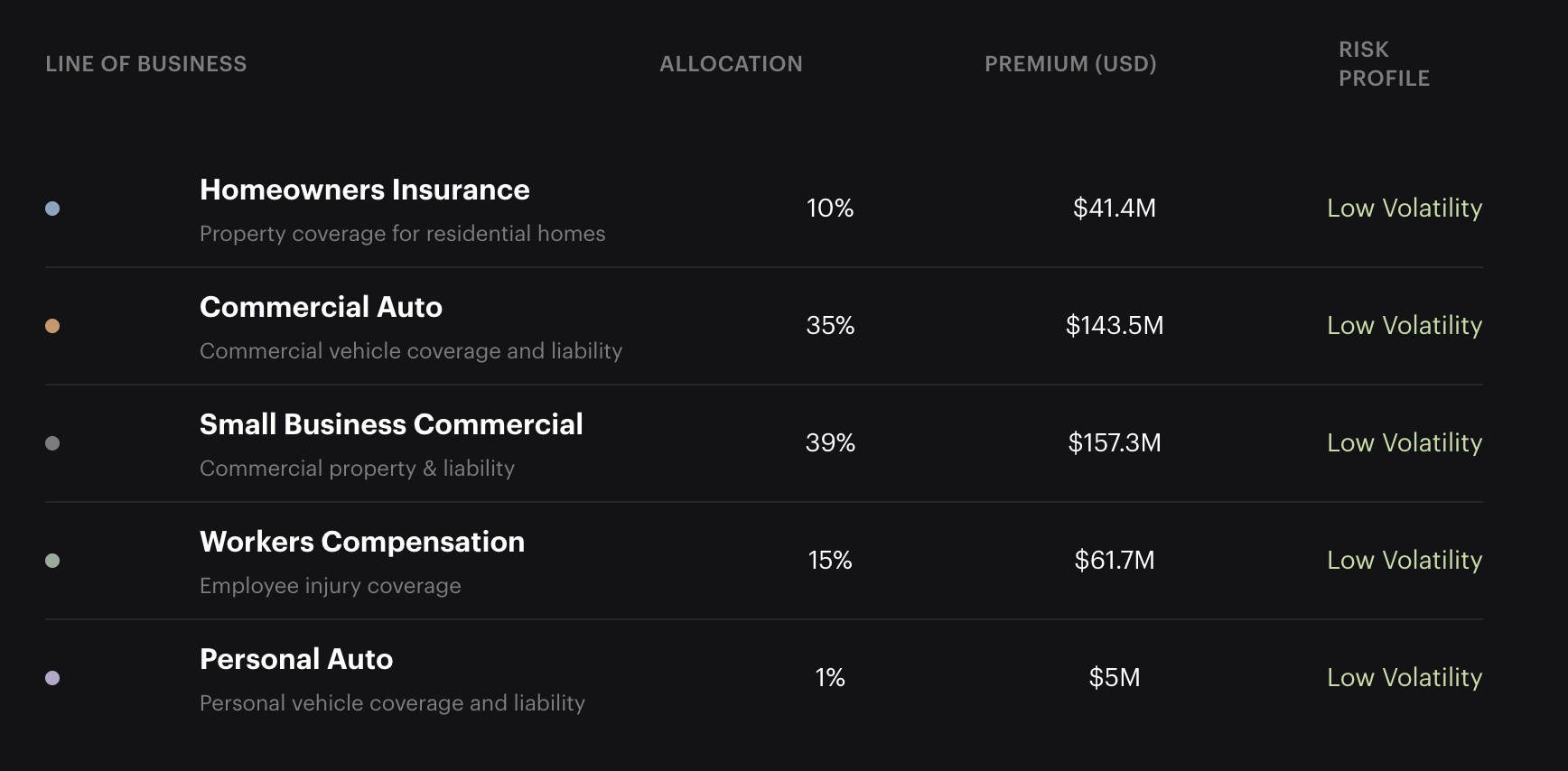
According to its official network data, as of early June 2026, its bottom insurance portfolio amounted to $409 million as of June 2026, spread over commercial vehicle insurance (35 per cent), micro-enterprise business insurance (39 per cent), industrial injury insurance (15 per cent), residential insurance (10 per cent) and personal vehicle insurance (1 per cent), all of which were low-volatility day-to-day insurance and high-volatility hazard exposures。
Each reinsurance contract is fully mortgaged and 100 per cent of cash or investment-grade assets are placed in a segregated Regulation 114 trust, with solvency being verified on the chain。
Team and financing
The CEO Karn Saroya of Re has had a full-blown entrepreneurship in insurance technology. He had previously co-founded the insurance technology platform Cover, which had come online in 2016 and accumulated $27 million in financing from the Exor, Tribe Capital and others, which was subsequently closed due to operational adjustments. Earlier, he also created fashion applications, Stylekick, which were acquired by Shopivy。
Other co-founders include Anand Dhillon, Ben Aneesh, Cliff White, and Arjun Sethi, co-founder of Tribe Capital (the project started under the Tribe Capital encryption hatching system). The division of functions among specific members is not fully disclosed through official channels。
Re completed $14 million in seed ship finance in September 2022, with investments covering Tribe Capital, Framework Ventures, Morgan Creek Digital, Global Reinsurance Company SiriusPoint, Exor, Stratos, and a post-seed wheel valuation of about $100 million. In May 2024, an additional $7 million was added to the strategic wheel, with the participation of Electric Capital and Nexus Mutual and Avalanche Labs, totalling approximately $21 million。
Competing in the track
Comparable projects with the track have different directions。
Nexus Mutual is the longest-standing agreement in the field of chain insurance, but it covers the encrypted primary risks of DeFi's smart contract leaks, hacker attacks, and not real world insurance contracts。
The Neptune Mutual Focus Parametering Insurance (Automous Payment with Preset Trigger Conditions), TVL, approximately $13 million, is very different in size from Re, and is mainly oriented towards the DeFi security scene and does not enter the real world insurance market。
Ensuro Positioning is closest to Re — obtaining regulatory plates in Bermuda, working with Nexus Mutual on chain capital and real insurance risks, but publicly disclosed scale data are limited and not yet visible in the mainstream market。
The core differences with all three are: Re, which covers the commercial vehicle insurance, industrial injury insurance, etc., which is of very low relevance to the encrypted market; Cover Re, the licensed reinsurance owner, whose compliance structure allows legal access to institutional funds; and $400 million, the size of the insured premium, which is currently the only chain agreement to reach real commercial volumes on the track。
Original Link
