
30 years of experience decoded on Wall Street: asymmetrical opportunities for horse racing, poker and bitcoin
A race of horses, a poker book and the wisdom of three investment legends have led me to the most miscalculated investment in my career. 。
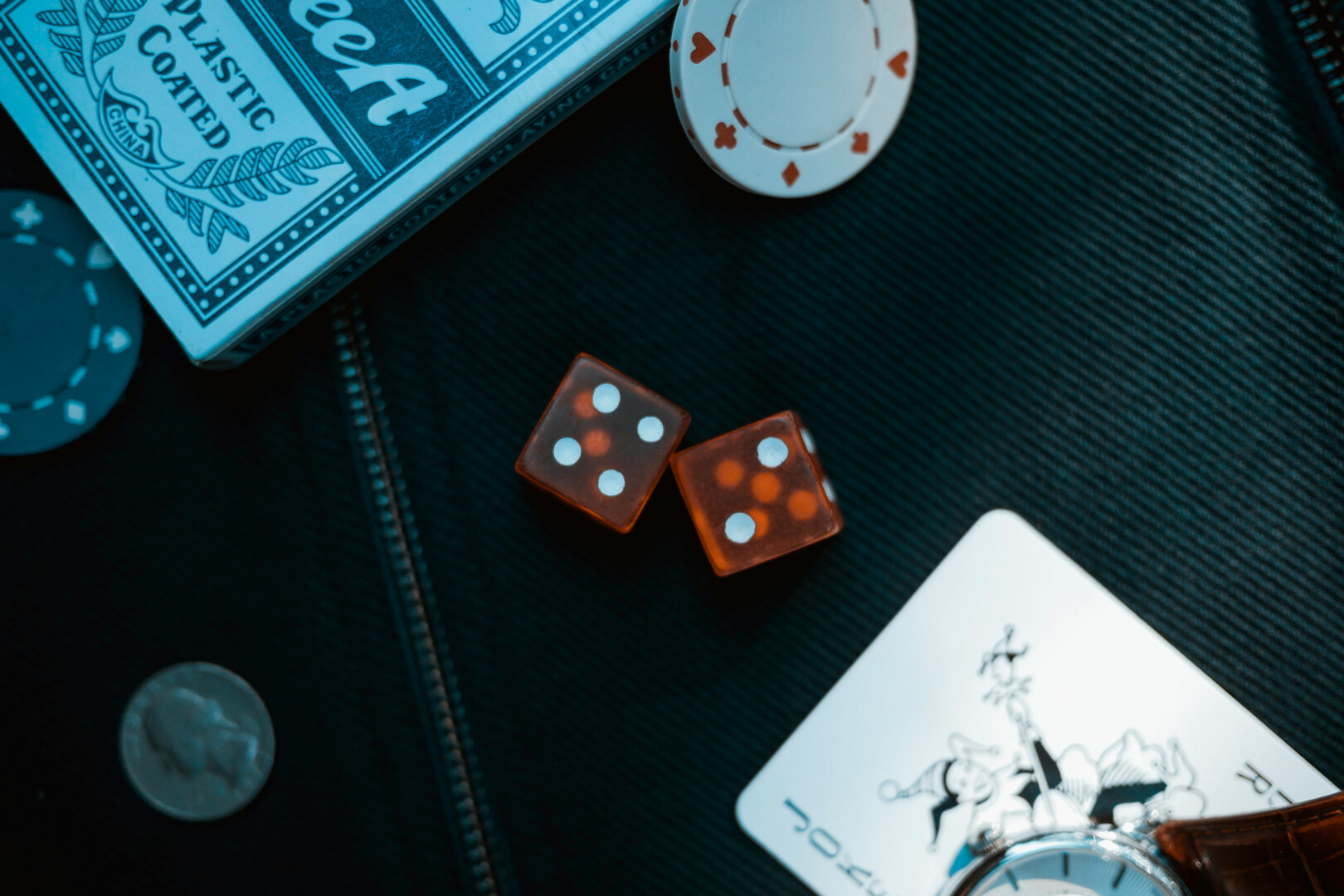
Original by Jordi Visser
Published in English: Luffi, Foresight News
When I was five, my father took me for the first time to the Montiseros race track in northern New York。
He handed me a guide to the race and began to teach me how to read the message: past performance, horseback records, track conditions. Those numbers and symbols are like a mysterious language to me。
We've been going there for years. That track became his class. He never asked me to "find the champion," but he was always directing me to another thing: is there value in this game
Every time I finish a game, he asks me for the basis of my assessment. He would then use his own experience to point out the information that I had omitted or the dimensions that I should have dug into. He taught me:
- We'll be able to identify patterns from the track record
- Balance the weights of the different factors affecting them
- Give a real, not hypothetical, rate of return
- The most important thing is to continuously reassess the rate based on new information
He inadvertently trained me to predict the probability of future results using the Bayesian method. This skill I used in every decision I made in my life, especially in the 30 years of Wall Street。
Today, this analytical framework locks me into the most miscalculated mark of my career: bitcoin。
When I analyzed Bitcoin using the horse-racing rate method that my father taught me, I saw an asset with a 3:1 rate, but many of the smartest people I knew had a 100:1 rate, and even thought it was worthless。
This difference in valuation is not only significant, but also an excellent opportunity that is rarely encountered in that career。
Learn to bet for the future
My father taught me this approach, strict, not casual. I have to work hard before I can set the odds for any horse. I'm doing this as a success course:
- The horse's past under different conditions
- A rider with a particular scene
- The horse races, changes in equipment and prognosis of the pace of the race
- Blood and discipline
He even taught me to remain skeptical and not to easily believe in human factors. Not every horse will do its best; some horses are "push" for the next race, and some trainers have fixed tactics. These factors must be taken into account。
And then to the actual point。
I learned to observe the timing of the arrival of smart funds and the fluctuations in the odds of the last few minutes before the race. But there is only one rule at the core: it is necessary to write down its own predetermined rate of compensation before you can see the input screen。
This is not to let me guess, but rather to build a sound logic for my own judgement. For example, why should the horse have a 20 per cent chance of winning (corresponding to a 5:1) instead of 10 per cent (10:1) or 5 per cent (20:1). It is only when these studies have been completed and his reasoning has been clearly explained that he will allow me, as a newcomer, to see the general opinion。
And that's when the wonderful opportunity came. Sometimes I predict a 5:1 horse, and the real rate on the bet screen is 20:1。
This advantage does not stem from being smarter than others, but from the fact that the majority of those who set the rate do not have enough to study, and the greatest opportunity lies in their omissions。
He also inculcates me with another key principle: if the odds of a race are fully reflected in its value, then simply abandon the bet. "There will always be another race. I don't know
The choice to remain passive when there is no advantage is one of the most difficult disciplines in the market and one that many investors have never learned。
Noted thinking
It took me years to find out that my father taught me this approach, which is actually a professional poker player and a decision-maker theorists have studied for decades。
Annie Duke's Gambling: How to make smart decisions when information is not enough provides a theoretical framework for the lessons I learned at the racetrack. Her core insight is simple but profound: all decisions are about the uncertain future; the quality of decisions must be judged separately from the outcome itself。
You may have made an extremely wise decision, but you lost. Even if the valuation is reasonable, there's an 80% chance that the five-to-one horse will lose the game。
What really matters is:
- A criticality of the decision-making process
- Whether or not the rate of compensation is justified
- Is there an advantage in betting
A few years ago, I spoke to Annie in person and told her that her book and my father taught me the same thing at the racetrack. I have always known that this logic has helped my investment, and it has even shaped my way of thinking about health and happiness。
We talk more about her psychological background than about poker or the book itself, because it's inherently connected. The framework applies not only to poker or investment, but to decision-making in all areas where information is incomplete。
But the core message is the same: we are in a world where information is incomplete, where we learn to use probabilistic thinking for decision-making and to strip decision-making processes from results is the key to long-term progress。
Mange: The market is like a racetrack
Charlie Manger once put forward the idea of linking all the logic together: the stock market is essentially a race-chamber betting system。
In the lottery system, prices are not determined by some objective intrinsic value, but by the collective betting behaviour of all participants. The odds on the bet screen don't tell you how much a horse is worth, but only how much each horse is in the pool。
The same applies to the logic of the functioning of markets。
Stock prices, bond yields, bitcoin valuations are not determined by television commentators or social media narratives, but are defined by the actual flow of capital。
WHEN I LOOKED AT BITCOIN IN THIS PERSPECTIVE, THE REAL ODDS WERE NEVER THE VIEWS OF A FEW RICH PEOPLE ON THE CNBC, BUT RATHER THE RELATIVE SIZE OF THE VARIOUS ASSET POOLS:
- Bitcoin versus legal currency
- Bitcoin versus gold
- Bitcoin versus the total wealth of families worldwide
These proportions and trends in relative performance reflect the real views of the group and are not related to public statements。
What is even more interesting is that, if someone says bitcoin is worthless, from the point of view of the pool, they are not completely wrong。
Despite the outstanding performance of the Bitcoin, the growing size of its users and the global experience of a round of currency experiments and devaluations over the past decade, the volume of the Bitcoin remains small. Compared to traditional value storage tools, the capital allocated to Bitcoin is minimal。
In the words of the lottery, the public has taken action to show their attitude: They're barely on bitcoin。
And that is the starting point of my odds。
The power of Jones, Drukken Miller and his position
Two of the top macro traders in history -- Paul Durdo Jones and Stanley Drukken Miller -- are the core principles of their careers that most investors ignore: the configuration of positions is often more important than the basics。
“The public will always be slow. “The valuation does not tell you when to enter, but the position tells you all the risks.” I don't know
Once everyone is on the same side of the deal, marginal buyers disappear. Market dynamics are not dependent on perceptions, but rather on passive buying and selling behaviour。
This coincides with the drops of Manga. The real key is not only the size of the pool, but also:
- Who's betting
- Who's watching
When I looked at bitcoin from that perspective, a phenomenon of concern emerged: the wealthiest group in the French currency system, that is, the ones who hold the most capital, most of which do not like bitcoin。
Demographic statistics clearly show:
- The older you get, the lower the probability of holding bitcoin
- The higher the level of traditional financial education, the easier it is to treat bitcoin as a scam
- The more wealth, the greater the potential loss to bet on bitcoin
That is why I never talk about bitcoin at a party on Wall Street, which is as sensitive as political or religious issues。
But the experience of Jones and Droken Miller tells us that you don't have to determine the future of bitcoin。
All you have to do is realize that global capital holders are creating an asymmetrical opportunity that they have been using in their careers, with their very low profile。
Prejudicing bitcoin like a horse
So, how do I predict a bitcoin
I started with the first step my father taught me: to do my homework and then to see the market rate。
Bitcoin was born in an era of exponential growth in science and technology, and it was born out of the global financial crisis and the mistrust of government and centralized regulation。
Since its birth:
- The scale of government debt has grown explosively
- Traditional system rehabilitation programs are exhausted
- Future development paths will rely heavily on technological innovations such as artificial intelligence
In my view, artificial intelligence is a force for accelerated deflation, but paradoxically it will further push governments to increase spending and accelerate currency depreciation, especially in the context of the global race for artificial intelligence with China。
We are moving towards an era of abundance, but this path will destabilize almost all large institutions。
Businesses built on code, with power and wealth in hand are now forced to act like governments:
- In the form of large-scale data centre capital expenditures
- More debt
- Early overdrafts for future dominance
- The empty focus is on bubbles, and I am concerned about the despair of the rich。
Ultimately, artificial intelligence also makes such expenditure deflationary, squeezes corporate profits and triggers large-scale redistribution of wealth。
In a world like this, the financial regulatory framework needs digital currencies that keep up with the speed with which artificial intelligence agents operate, which is the value of the network effect。
But Bitcoin has long been more than an innovation, and it has evolved into a system of faith。
Innovation may be subverted by better innovation, but belief systems operate with a different logic. Once it reaches critical scale, it acts more like religious or social movements than ordinary commodities。
When I give probability for different future paths of Bitcoin, the risk-benefit ratio is between 3:1 and 5:1, which incorporates risk factors such as quantum computing threats, government support shifts and the emergence of new competitors in encrypted currency。
And then I went to the "vote screen."。
I am not concerned with the price of bitcoin per se, but with the configuration of the positions of the people I know best, that is, those who are well-educated and have managed to recover capital for decades。
Most of them still have a rate of 100:1 or even less, which many simply say is worthless. And their portfolio confirms this view: either bitcoin is not allocated at all or it is extremely low。
The difference between me and them in the judgment of the odds is huge。
This is a combination of "Quality Marks + Extreme Low Position Configuration" according to the Drukken Miller framework, which is the most interesting moment。
Control the size of the bet, and avoid losing all the plates
Even if the rate is favourable and the position is extremely low, it does not mean that it can be reckless。
Father never asked me to deposit the entire principal on that 20:1 horse, the same principle applies here。
Drucomer Miller has a simple rule of experience: high-quality marker + very low position = higher investment, but "greater" is always linked to the strength of conviction and risk tolerance。
For most people, this affordability is determined by the factors rarely mentioned in two bitcoin discussions:
- Age and duration of investment
- Future expenditure requirements and obligations
If you're still young and you've had decades of human capital, your ability to cope with fluctuations is quite different from those who are in their 70s and need a pension from the portfolio. A 50% retreat at the age of 30 is a growth lesson; and an equivalent retreat at the age of 70 could turn into a crisis。
Therefore, I believe that bitcoin ' s allocation should follow the principle of gradient:
- The longer the investment period, the more future income, the smaller the short-term liabilities, the better the allocation
- The shorter the duration of the investment, the fixed income, and the existence of realistic short-term expenditure obligations (child tuition, medical expenses, pension withdrawal, etc.) need to be more conservative
In fact, the industry is moving towards a new normal. Institutions such as Belaid and major banks have now publicly proposed that between 3 and 5 per cent of the diversified portfolio be allocated to bitcoin or digital assets. I don't think that this number deserves to be taken blindly, but it's a useful reference -- it shows that the focus of the market discussion has shifted from "zero configuration" to "how much configuration."。
My point is clear: each person needs to do his or her own homework to get his or her own ratio。
But I also think that the "recommended space" proposed by the agency will not remain the same. Over time, the destabilizing exponential development of artificial intelligence has made it more difficult to predict traditional cash flows over the next three years, and asset configurors will be forced to look for growth opportunities in a world where business models are continually recast by algorithms。
By that time, bitcoin's attraction will be more than just digital gold, and more like the existence of a "belief moat" than the traditional "competitive growth moat"。
Competition growth depends on codes, products and business models, which can be easily subverted by better codes, products and new entrants. In the age of artificial intelligence, the life cycle of such moats is significantly reduced。
The belief in the moat, on the other hand, is based on a collective narrative that is constantly being entrenched, a collective belief in the value of the assets of a given currency in an era of currency devaluation and technological acceleration。
As artificial intelligence accelerates, it will become increasingly difficult to select the next top software or platform winner, and I expect to have more asset configurations, shifting some of the "growth asset silos" to those that build advantage based on network effects and collective conviction, rather than those industries that are vulnerable to artificial intelligence shocks. The exponential development of artificial intelligence is compressing the lifetime of the innovative moat. And Bitcoin's belief in the moat is time-defensive -- the faster artificial intelligence grows, the more powerful it is, like a hurricane that cuts across warm waters. It's the most pure trade mark of artificial intelligence。
Therefore, there is no configuration figure applicable to all, but the framework is generic:
- The initial position is small enough to make sure that even if 50 to 80% of the retreat takes place, the future will not be buried
- Positioning by age, investment duration and actual needs
- It is important to recognize that, as artificial intelligence makes traditional growth harder to predict, and as bitcoin's belief in the moat continues to deepen, bitcoin's "acceptable ratio" in the institutional portfolio is likely to increase gradually
You don't put your entire family on a 3:1 scale, but you shouldn't take this opportunity as a $5 small bet。
Beyond the eternal wisdom of bitcoin
Back in the afternoons at Montiserose, I couldn't remember a specific match or horse, but the analytical framework。
My father never taught me how to choose the champion, but he taught me a way of thinking that could grow over decades:
- We'll do our homework, then we'll see the market rate
- Establish an independent system of probability assessment, rather than blinding the public
- Focusing on staffing and financial flows rather than on narratives and headlines
- Choose to watch when there's no advantage
- When your research findings are very different from the consensus and the calibrated positions are extremely low, you make a decisive increase
The racetrack taught me how to predict the rate, Annie Duke taught me how to make decisions with a bet and strip the process and the results, Manger taught me the market, the pool system, and Jones and Druken Miller taught me that staffing is sometimes more important than valuation。
Looking at the current bitcoin through this framework, it's like the horse in the father's mouth, which "is actually three to one, but is marked 20 to one," and, more specifically, very few of the investors with the heavy money are betting on it。
Fathers often say that when there is no advantage, it is as important not to place a bet when there is no advantage and to make a bold bet when there is an advantage。
At this point, it seems to me that bitcoin is at a very rare moment: research findings, compensation rate prognosis and position configuration are all the same。
The public will eventually enter, and they always do. And by that time, the odds had been very different。
