
High frequency scratch, 100,000 years old: the most "silent" profit myth on Polymarket
Polymarket's previous player traded 61,793 transactions over a year, making some $106,000. 。

Original by Mah, Foresight News
Polymarket has another miracle。
Large-scale surveillance, crazy bets, one year, a single address on a micro-interest net profit of $100,000。
This address we're going to reset, Plankton XD (0x4fe49ba2a4cae123536a8af4fda48faeb609f71), is a very typical high-frequency quantitative player. It's been a year since February 2025It's got a net profit of 160,000 dollars through more than 61,000 projectionsI don't know。
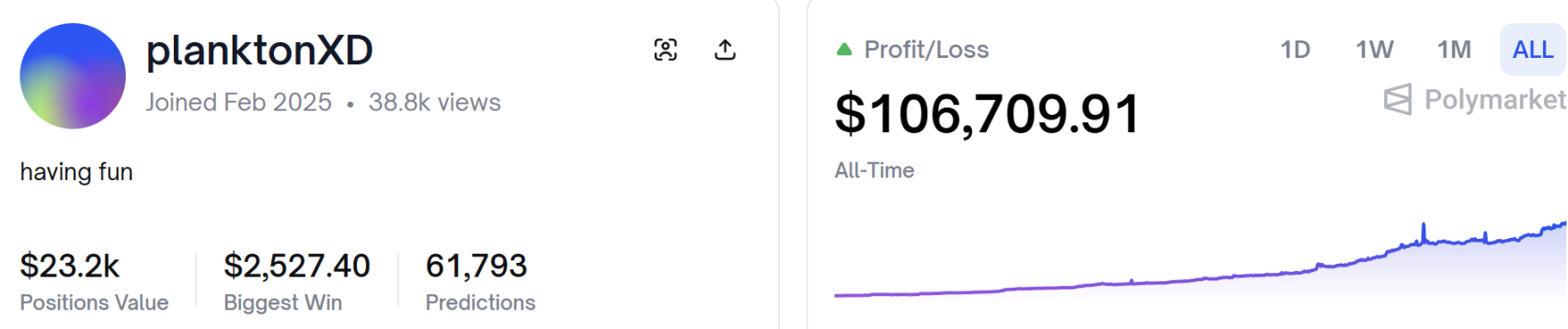
Most people in the forecast market are playing "black swans" or chasing big news, but Plankton XD is going along a completely different path: extreme certainty and the frequency of horrific execution。
Turning back historical transactional data from PlanktonXD, the most striking is its 61,000 predictions. From February 2025 to February 2026, an average of about 170 transactions took place per day。
This frequency goes well beyond the limits of human manual operations and it can be concluded that the player uses automated trade scripts (Bot). It's not "predict" results, it's "harvest" price differentials。
The interesting thing is that the "Biggest Win" of Plankton XD is only $2527.4. In comparison to its total profit of $100,000, this single maximum profit appears to be very "small" (only about 2% of total profits)。
Some of the bulk players, hoping to make a big profit, have all the chips in their confident judgement。
Win, win, lose, it's hard to get back to the table。
TEN THOUSAND STEPS BACK, EVEN IF ALL THE ALL IN WINS EVERY TIME, ONE LOSES BIG。
Looking at its trading history, it is never an All-in single extreme event, nor is there a high rate of double recovery. Its yield curve shows a perfect 45 degrees smooth rise, with almost no big retreat. This suggests that it has adopted a marketing strategy by placing orders on both sides of the order book, earning trade price differentials (Spread) or using price fluctuations between different markets for micro-arbitrage。
It does not always have a long-term hold (Buy and Hold), but rather frequent access to the market. This "light silo, quick swing" approach significantly reduces single-point risk. Even if an unexpected event occurred in a forecast market (e.g. a sudden change in election results), the impact on its overall pool would be minimal。
This quantitative robot does not trade vertical tracks, such as weather, but rather multi-tracks that choose bets, sports, weather, currency prices, politics, etc. It monitors thousands of forecast markets across the platform on a 24-hour basis in search of the moment when pricing lapses。
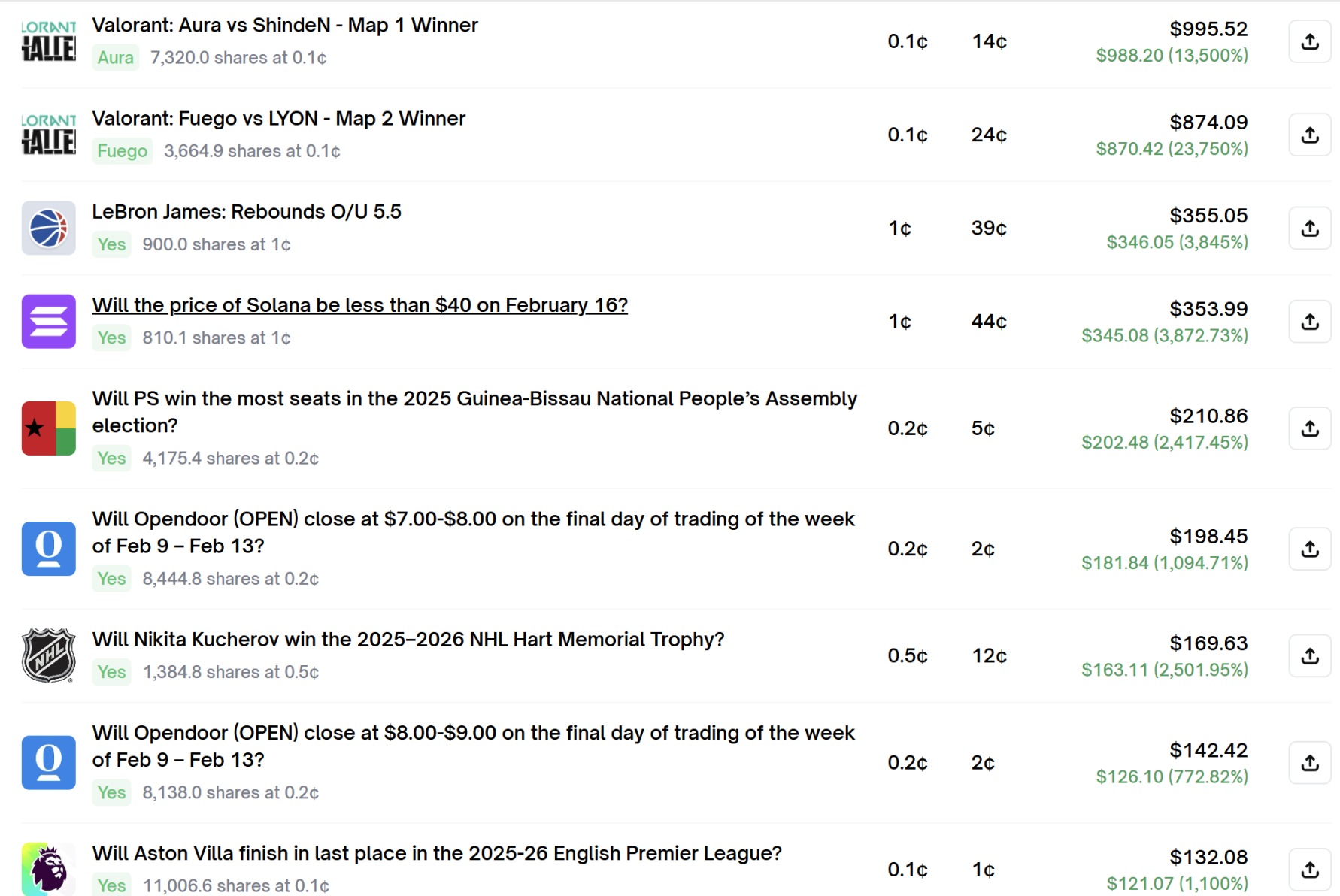
VALORANT Challenges (Dauntless Compact Challenge) is the classic operational case of the trader。
You can interpret it as a "secondary league" or "regional league" in the electric ring. Fuego and Lyon are professional teams in Latin America. Because of its small audience and highly asymmetrical information, this happens to be a arbitrage paradise for quantitative robots。

It won 3 664.9 copies of Fuego at a unit price of 0.1, and eventually the return was $874.09 and the return was 23,750
This is a typical "small-positioned ratio." It uses Bot to monitor options that are mispricing to near zero. It does not need to predict who wins, but it needs to know that Fuego's chances of winning are definitely more than 0.1 per cent. This is essentially an "extreme emotion" and a "mobility deficit" in the harvest market。
Speaking of emotions, the price of money is the best。
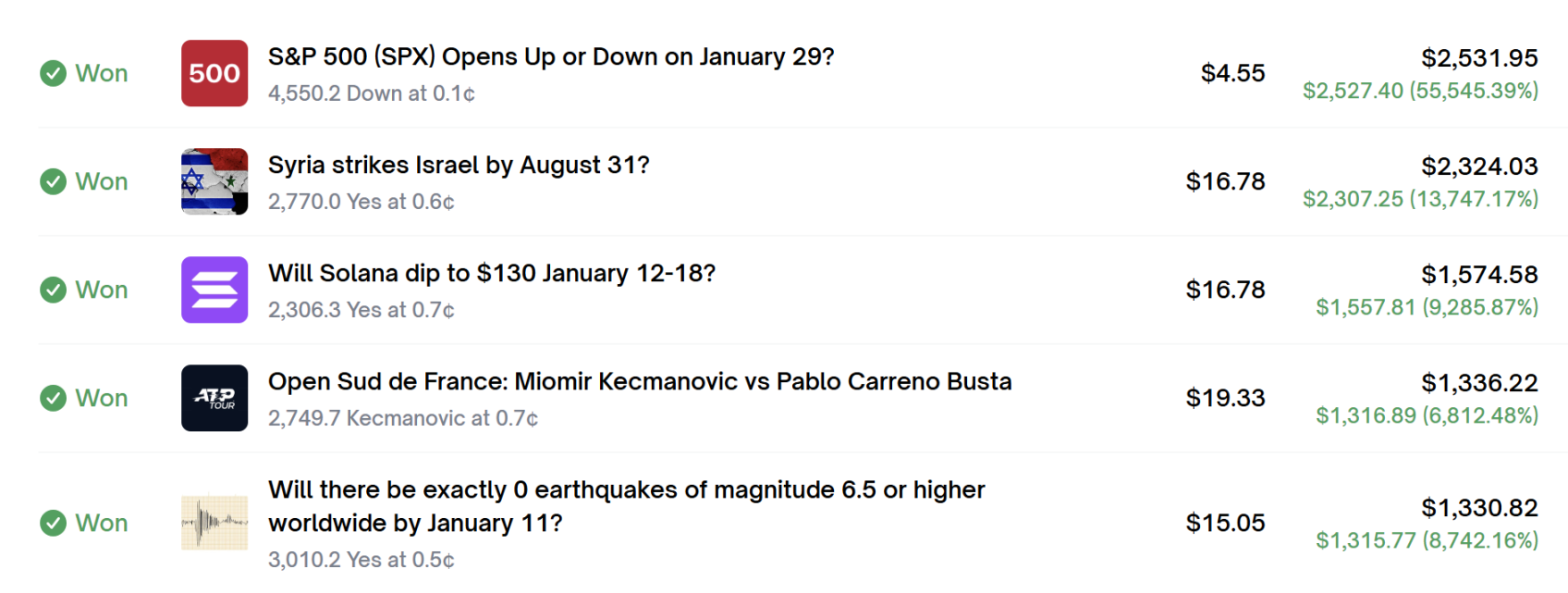
DOES THE SOL PRICE FALL TO $130 ON JANUARY 12-18
It invests about $16 at 0.7% (the market considers the odds to be less than 1%) and eventually takes away $1574, with an impressive return of 9,285%。
Why would this "almost impossible" prediction make it a lot of money
In the case of sharp fluctuations in the encrypted currency market, the mainstream forecast tends to look up or cross. The plakton XD captures the "extreme look down" options that are priced 0.1-1 times a day. These options are in the eyes of ordinary people as waste paper, but in quantitative terms as insurance at extremely cheap prices. As long as there is a deep plug in the market or an explosion of space, these “scrap paper” will suddenly increase by a thousand times. In addition, in some specific price ranges (e.g. SOL & lt; $40), the order book is often very thin because current prices are far from the forecast. PlanktonXD uses automated scripts to hang lists in these "no-man's-man's-man's-man's-man's-man's-man's-man's-man's-man's-man's-man's-man's-man's-man's-man's-man's-man's-man's-man's-man's-man's-man's-man's-man's-man's-man's-man's-man-man's-man's-man-man-man-man-man's-man's-man's-man's-man's-man's-man's-man-man-man-man-man-man-man-man's-man's-man-man-man's-man-man-man's-man-man-man-man-man's-man-man-man-man's-man's-man-man-man-man-man-man-man-man-man。
the SOL strategy of PlanktonXD shows that buying "unlike" in Polymarket does not mean that it believes it will happen, but because the "probability" is underestimated by the market. It costs a few dollars to buy one-tenth of the panic in the market, a typical "anti-vulnerability" transaction。
the success of PlanktonXD provides three core inspirations for the general diaspora:
The power of retrieving is not smallAnd, with 0.5% per day, with a high-frequency deal, one year later, it's much more robust than a ten-fold bet。Technology is a necessityIn the Crypto era, quantification tools and API callability capabilities are the standard set by top players. One last pointThe certainty is greater than the rateI don't know. In predicting markets, looking for small profit opportunities with high probability (e.g. 90% or more certainty) is easier to survive than the big event of the game 50/50。
After allThe most advanced way to predict markets is not to predict the future, but to manage probability and liquidity。
